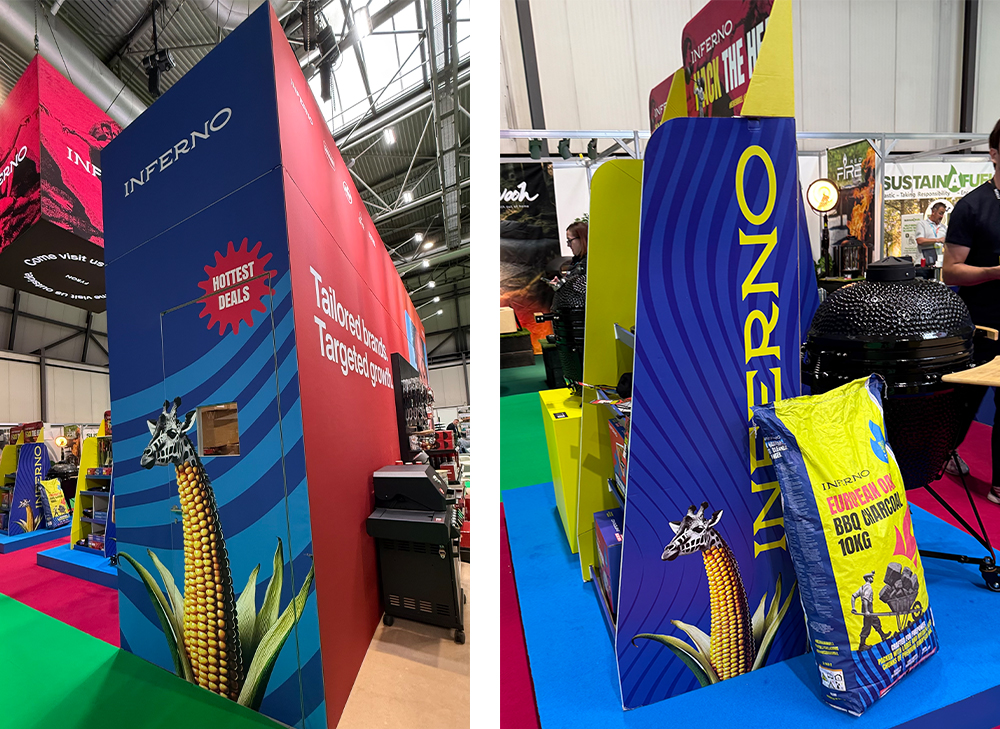
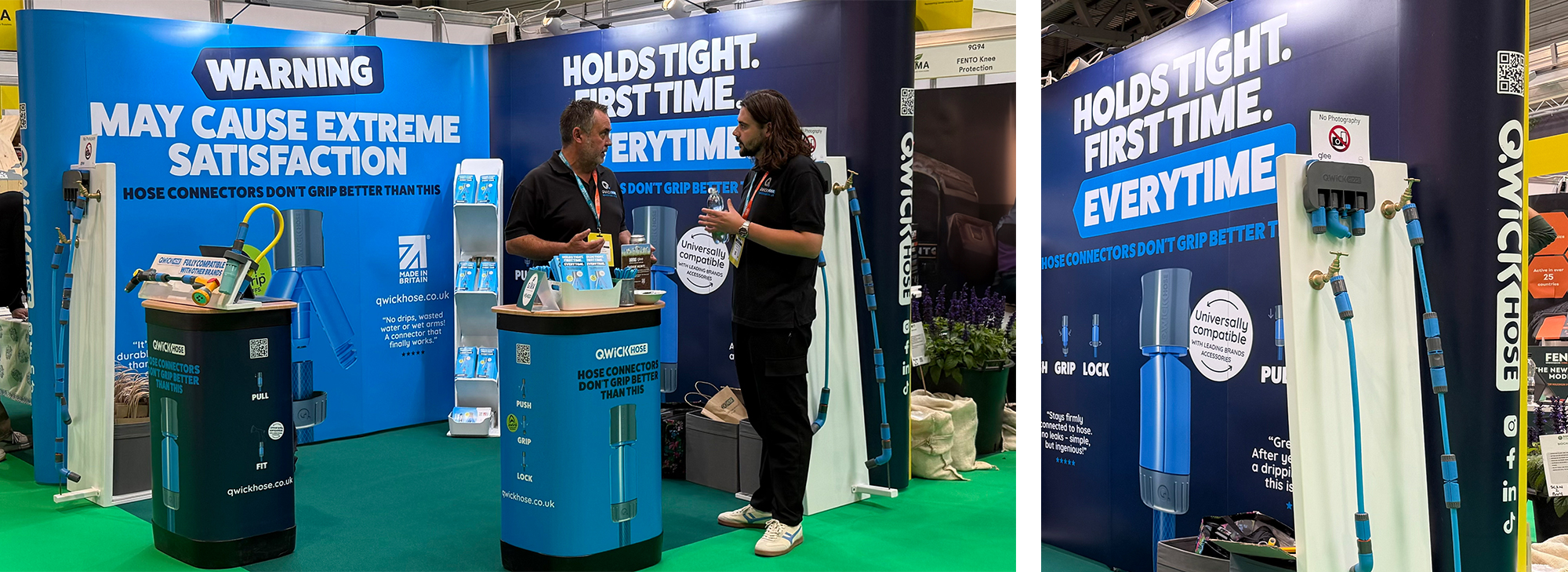
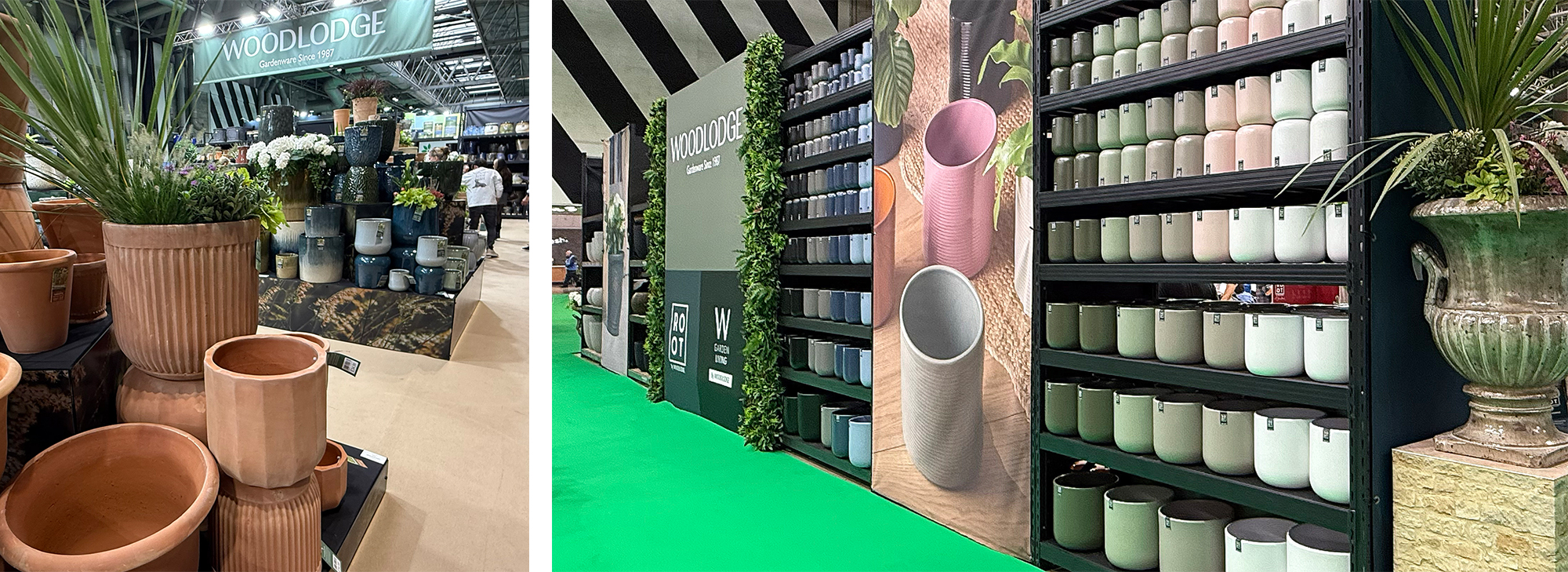
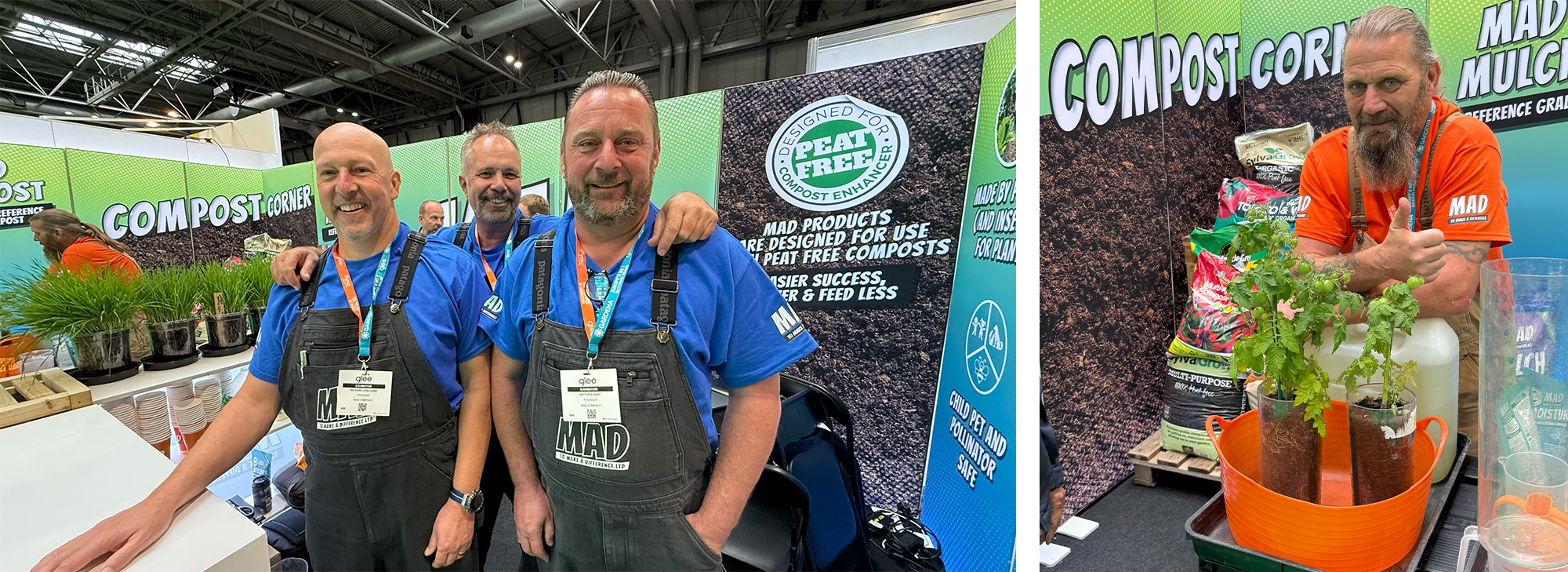
“Our product appeals to all gardeners.”

On the face of it, that sounds perfectly reasonable. You have a gardening product, so why exclude anyone? Big gardens, small spaces, experienced hands and complete novices. If you define your audience as “all gardeners”, your market feels enormous.

In this article, I’m going to keep coming back to the idea of a bullseye audience. Not the only people who might buy your product, but the people you’re aiming at first, so your message lands with real force. And that’s where things start to feel uncomfortable.

But what if you decide to target small-space gardeners? The moment you name a bullseye, it can feel like you’ve just shrunk your opportunity overnight. So why on earth would you want to turn your back on a vast pool of potential customers. It just doesn’t make sense! Or does it?

The trouble is, when you try to appeal to everyone, your message becomes so broad it stops meaning anything. Broad appeal creates generic marketing, and generic marketing gets lost in the noise. On a crowded garden centre fixture, it doesn’t compete. It blurs.

Put bluntly: wide focus often leads to small sales. Narrow focus tends to lead to bigger sales, because you become the obvious choice for someone, not a vague option for everyone.

In this blog, I’ll show you how to find your bullseye audience without feeling like you’re leaving money on the table.

The most dangerous sentence in garden marketing

What could possibly be so dangerous about “it appeals to all gardeners”? For many garden brands, this is such an easy trap to fall into, because the instinct is: the more people you appeal to, the bigger the opportunity.

So why does it feel like the safe option? Home and garden brands often have much smaller teams than their colleagues in FMCG. They don’t have the time, the budgets or the data. There’s a feeling around the business that they can’t afford to make the wrong decision. And there’s an innate fear of missing out; surely a bigger audience increases the chance of a sale, not diminishes it?

Other sectors tolerate a bit of trial and error. In garden brands, there’s often a feeling you only get one shot. “We don’t have the budgets to do this more than once – we have to get it right first time!” And so, they take the risk out of the equation and plump for the seemingly safe option. They spread their bets and hope for the best.

This broad appeal waters down any messaging, it becomes conservative and generic. There’s nothing that rocks the boat or stands out from other brands in the category. Your product is seen as a “me too”, and probably inferior to the market leader. So shoppers default to what they recognise, or they choose on price.

If you’re wondering, this is what this looks like in practice: bland pack messages that on the face of it may be true, but don’t distinguish you from the competition, claims such as “feeds and strengthens” or “for healthier plants”. You look at the other products you’re competing with and make a list of the things you “must” include on your pack. You use a similar colour palette and imagery to the rest of the category, your product shots feel like they “fit in”.

Nothing you do says to a customer “this is for you”.

You don’t stand out, you don’t resonate, and you end up competing on price, not preference.

The real cost of trying to please everyone

The fear is real. I get it. What I’m describing here can feel counterintuitive: you’ve probably heard it yourself “let’s make sure we don’t alienate anyone” or “we’ve got a list of features, we need to see them all on pack”.

But without checks in place, you’ll find that your product messaging has just a long feature list, where “everything is important”, instead of prioritised benefits that speak to the customer. You’ll find yourself using generic claims and safe language, or even worse, technical language that has come straight from R&D; sure, the underlying message may need to be included, but it’s your job to turn the technobabble into something more human.

Take a moment to picture your product on the shelf in a garden centre. The fixture is full; it’s a packed category with several competing products to choose from. Each pack has a similar vibe, packaging formats, colour ways, imagery and messaging claims. A shopper is browsing the shelves. They have a rough idea what they need, but they’re not reading each pack. The broad claims on each pack blur into one homogeneous group, nothing seems better than anything else. You’ll either go for the market leader, the brand you’ve heard of or purchase on price.

Now let’s take that scenario one-step further: your shopper only has a small garden and is aware of the limitations they must work with. Think about the internal dialogue that’s going on in their mind while they’re browsing: “I’ve only got a patio; I need something that works in pots” or “I don’t want a big bag that I can’t store anywhere” or “I need quick, visible results – we’ve got guests coming to stay in a couple of weeks.” It’s these types of insight that help focus your communications.

And this is what it costs you, commercially. You’re never the preferred choice; you haven’t built that rapport with your customers where they naturally gravitate towards you. Compared to other products in your category, you end up being chosen less often, unless your product is on a deal. So, your growth flat lines, any marketing campaigns you create feel like you’re spending budget without seeing any return.

Apple is a good reminder that focus can create momentum. PageMaker launched on the Macintosh in 1985 and helped drive graphic designers to the Mac, alongside tools like the LaserWriter that fuelled desktop publishing. I remember using QuarkXPress desktop publishing software on the original Macintosh II on my graphic design course back in 1988. Apple wasn’t “only for creatives”, but it shows how winning a bullseye first can give you the right to broaden.

By focusing on your bullseye, it doesn’t mean that you’re excluding sales; instead, you’re positioning yourself to become the obvious choice for a particular group of people.

You’re never the preferred choice; you haven’t built that rapport with your customers where they naturally gravitate towards you.

How focus makes you the obvious choice

Talking to people in sales, I’ve seen the involuntary twitch, when it’s mentioned that we’re going to be focusing on a particular group. People hear focus and they assume you’re turning customers away. But it’s really not like that.

When you identify your bullseye, everything has a direction. The messaging and creative you design are specifically aimed at someone, where you know the message will land.  You’re not excluding other people from buying your product, if other customers identify with your message, even if you believe they sit outside your bullseye, that’s great! Think of it like an archery target. You’re aiming at the bullseye, but you’ll still catch plenty of people around the edges.

Let’s look at an example: let’s say you’ve identified a bullseye of small-space gardeners and we’re going to imagine we’re presenting a compost product. Our key selling point for this product is that it is compressed and dehydrated to create mini cubes of compost for easy storage (light weight and taking up much less room than a normal bag of compost) and can be rehydrated as required.

When you commit to a bullseye audience, the pack stops trying to say everything. The hierarchy changes first: Compact compost for small-space gardens. Then the product cues do some of the heavy lifting: A smaller, box-like format (a fraction of the size of a conventional compost bag), easy to carry, easy to store, in recyclable packaging. The claims become specific, not generic: brilliant in pots on balconies and patios, lightweight, no faff. Even the tone shifts, speaking to time-poor, urban gardeners who want good results without lugging a huge bag home.

You can see that this messaging isn’t for “all gardeners” instead we’re talking directly to our bullseye. When they’re in store, looking for the right compost for their situation, this messaging will resonate and make it the easy choice.

We’re hitting their pain points: “I have nowhere to store a big bag of compost.” “I don’t have a car; how will I get the compost home?” “I don’t have a big garden; I only need compost for the few pots I’ve got on my balcony.” This direct alignment creates clear reasons to believe and stronger recall.

When a product aligns with its bullseye, the advantage isn’t only that initial sale, but you’re far more likely to see repeat purchases too. The customer feels that this product is specifically for them, it gives them a reason to choose you again. They’ll also recommend the product to their friends and family who may also fall into the bullseye target.

And the commercial reality of all of this, means that you’re more likely to sell more without having to rely on special offers or undercutting the market to make the sale. It gives you a route to growth that isn’t just ‘more discount’. And it helps retail buyers too, because it becomes easier to understand what role your product plays in the range.

I have a little test that you can employ to see if you’ve got your bullseye and messaging aligned, I call it the ‘guess what’ test. You want your customer to be able to finish this sentence: I bought [your product] and guess what…

That ‘guess what’ is not luck. You’ve engineered it. It’s the thing people remember and repeat because it’s genuinely different, and it resonates with them.

So, what about everyone else? What about all those people who you’re not connecting with who won’t buy your product? It’s fine if some people choose a different product. The point is to be the obvious choice for the people you’re best placed to win. Have the confidence to say: we’re not for everyone, we’re for [your bullseye]. That can be really powerful.

We’ve been on a bit of a journey and I’m hoping by now that you can see how targeting your bullseye rather than limiting your sales, it can unlock growth you’ve been struggling to find. But how do you choose your bullseye without guessing?

Choosing your bullseye without guesswork

You’re probably thinking: “We’re not FMCG, we don’t have access to shopper insights or brand tracking, how can we possibly choose our bullseye without guessing?” That’s a perfectly rational question to ask, but don’t panic, there’s a simple way to narrow your focus and choose your audience.

Here’s an approach you can use to move you from “for all gardeners” to a targeted audience that gives you a great foundation from which to build. I’m going to introduce you to a set of simple questions that you can use to define, test and refine your bullseye.

  1. What are they trying to achieve? “I want a balcony that’s full of life and colour.”
  2. What gets in the way? Storage, weight, mess, confidence, time, cost, no car.
  3. What are they doing instead? Making do with a familiar brand, searching online (Google/social), or doing nothing.
  4. What would make them switch? A clearer promise, proof, reassurance, ease, design, or format.
  5. What phrases would they use? “I’ve got nowhere to store a massive bag.” / “I only need a little bit.”
  6. What do you want them to feel about your brand? “This is made for my situation.”

If your answers still sound like they could apply to any gardener buying any product, you haven’t found a bullseye yet. If they sound specific enough to write something that would speak directly to them, then you’re on the right track.

Here are a couple of further sanity checks you can perform that will help ensure that you’re on the right track. The first I’m calling the “say no” test. To put it simply if your bullseye doesn’t help you say no to something, it isn’t focused enough. Here’s how it would play out:

Our focused bullseye might be something like this: Small-space gardeners who grow in pots and need easy storage and transport.

You can see that we can say no to: Big, bulky pack formats and claims such as “perfect for beds and borders.” Basically, anything that implies you would need a shed, a wheelbarrow or a car.

But what if our bullseye was too broad and not focused enough such as: “Urban gardeners.” It fails because “Urban” could mean anything from houseplants to community allotments.

You can’t say no to claims about lawns or veg-growing claims. You can’t even say no to a big-bag format – our bullseye is just too vague. So, you end up keeping everything “just in case”.

The second test I’m calling the “five-second fixture” test. In reality this is the whole ballgame. Picture your product on a shelf in a crowded garden centre fixture, would your bullseye spot it and would the messaging speak directly to them? Or does it just blur into the rest of the category?

You’ve identified and tested your bullseye and you’re comfortable that it’s passed the sanity checks. Next you aim to get buy-in from the rest of the business. But the first thing that your MD or sales say to you is: “we can’t afford to alienate anyone” or “surely we need to include all our Key Selling Points?”

Naturally there will be some things that can be universal, for example quality and trust can have broad appeal, but they shouldn’t be what you build your messaging around. Your ‘reason to choose’ must be bullseye specific.

One practical trick is to create a “not for us” list. This isn’t a public manifesto, and it’s not you being arrogant, but it will stop the dreaded decision-making by committee. For example, if your bullseye is small-space gardeners, you’re not trying to win the bulk-buyer who wants the biggest bag for the lowest price. You’re not trying to be the most technical compost in the category. Having that written down makes it easier to stay focused when someone inevitably says, “Can we include this as well?”

I’d suggest that having 3 short lists could be helpful: Not for us (your audience e.g. people with large gardens who buy bulk compost). Not trying to be (product features e.g. a professional grade product). And not promising (benefit claims e.g. ideal for beds and borders). It doesn’t mean these people won’t buy your product, but it does mean you’re not trying to contort your message to please them.

If you’re unsure about going “all in” on your bullseye, or colleagues remain unconvinced, you could put your chosen audience to the test. Potentially the easiest way to do this would be to create some bullseye-specific POS to be used at the fixture. This is a low-risk trial that won’t require new packaging or a full campaign. Your POS (it could be a header board, a wobbler (or barker), or a shelf talker) should speak directly to your bullseye, addressing their primary pain point with a clear product promise. If the test sees longer dwell time, more questions from shoppers or an uplift in sales, then you’re onto something.

Depending on your product and current circumstances, you might find that a paid social ad might work too, but the POS catches the shopper at fixture, so is probably a more immediate test.

Naturally there will be some things that can be universal, for example quality and trust can have broad appeal, but they shouldn’t be what you build your messaging around. Your ‘reason to choose’ must be bullseye specific.

Where to start

What I would say is that you don’t need perfect insight to start, you may well already have a fairly good hunch about who you want to be targeting. What you will need is a clearly defined bullseye, and the confidence to test it where it matters. Because “for all gardeners” isn’t a target audience, it’s a brand that’s hedging its bets.

If you’d like a second opinion, book a strategy call. We’ll quickly diagnose whether “for all gardeners” is creeping into your pack, POS and messaging, and leave you with a clear bullseye hypothesis and a simple test you can run without redoing everything.

If you’re running a challenger brand in home and garden, your pain point is rarely subtle.

Your brand feels invisible. Sales are patchy. Retailers aren’t interested in ranging you. And when you do get a trial, you’re left thinking, how on earth do I make sure this actually sells through and earns a proper listing?

That is the commercial reality. And it’s why “more content” or “a few ads” rarely fixes the problem.

Because invisibility isn’t caused by lack of activity. It’s usually caused by lack of clarity.

The “guess what” test

A line I heard last year in a conversation about garden centres has stuck with me.

You want customers to finish this sentence: “I went to ___ and guess what…”

That “guess what” isn’t luck. It’s designed. It’s the thing people notice, remember, and repeat.

For product brands, the test becomes:

“I bought ___ and guess what…”

If customers can’t finish that sentence in a way that is specific to you, meaningful, and easy to repeat, you don’t have a visibility problem. You have a message problem.

And if customers can’t repeat it, retailers can’t sell it.

Two audiences, one job: make it easy to range and easy to choose

Most home and garden brands are trying to convince two audiences at once: the retail buyer and the end customer.

A buyer wants confidence: will it earn its space, will it move, will it reduce risk, will staff be able to explain it, will it add something useful to the category?

A shopper wants reassurance: does this solve my problem, is it worth the risk, and can I trust it?

Your job is to make the answer obvious to both. Not with a long story. With one clear idea that holds up under scrutiny.

Why challenger brands stay invisible

This is the pattern I see again and again.

A brand “infrastructure” exists. There’s a vision, a mission, a list of values. It might even be beautifully written. But it’s been put in a drawer and never referred to again.

So, when a decision comes up, the team improvises.

Someone writes a pack claim that doesn’t match what sales are promising. Someone posts something on social that’s in a totally different tone. The website reads like a company history lesson rather than a reason to buy. Customer service tries to be helpful but doesn’t have a clear set of behaviours to follow when things go wrong.

The brand becomes two-dimensional. It has no personality. It doesn’t behave like a consistent entity. It behaves like a collection of disconnected activities.

And if that’s what’s happening inside the business, it’s what customers feel outside it.

The thing that changes everything: a clear platform the business believes in

When challenger brands start selling, it’s not usually because they “did more marketing”.

It’s because they built a clear platform that the whole business could buy into, and they used it as a filter for everything.

Not a 60-page brand guideline. A plain-English foundation that is easy to understand and hard to misinterpret.

Here’s the difference.

A brand platform that works is something you refer to weekly. It sits next to the day-to-day work. You use it to ask:

  • Does this activity align with what we’re here to do?
  • Does it reinforce what makes us different?
  • Would our customer recognise this as “us”?
  • Can a buyer understand it quickly and repeat it accurately?

If the answer is no, you don’t add more words. You strip it back.

That’s the job. Clarity, then consistency.

Start with the only question that matters: why would someone choose you?

Challengers don’t lose because their products are bad. They lose because they’re not the obvious choice.

If customers can’t see a meaningful difference between you and the obvious alternative, they’ll default to what’s familiar or shop on price. That’s not personal. It’s how people behave when they’re unsure.

The trap is trying to be everything at once: performance, sustainability, premium design, “for everyone”, “works in every garden”, “great value”, “trusted”, “innovative”.

You can hear the fear in it. A fear of missing out. A fear of narrowing. A fear of being wrong.

But challenger brands rarely win by being “a bit better”. They win by being more specific.

A point of difference is a decision. Every decision comes with a trade-off.

If your difference is durability, you might have a higher price. If it’s refillability, you may need education. If it’s non-toxic, you may need to be disciplined about claims and careful about proof.

The discipline is simple:

In one sentence, why would someone choose you over the obvious alternative?

If you can’t answer it, your buyer won’t range it confidently, and your customer won’t choose it quickly.

Your fundamentals aren’t for the website. They’re for the team.

This is where vision, mission and values come in. Not as marketing language, but as decision tools.

If your brand is established and everyone instinctively understands how it should act, you might not need to refer to them every week.

But most challenger brands aren’t there yet.

They need the foundations because they stop the business improvising. They stop you drifting. They stop you saying one thing on pack and another thing in a buyer meeting.

In plain English:

  • Vision is the future you’re trying to help create.
  • Mission is what you do every day, and who you do it for.
  • Values are how you behave while you do it.

Here’s the rule that matters: if they don’t change decisions, they’re just words.

So don’t put them in a drawer. Put them to work.

Brand personality: making the brand three-dimensional

This is the part that gets dismissed as “fluffy”, but it’s one of the biggest reasons challengers feel forgettable.

Brand personality is simply the human feel of the brand across every touchpoint. It’s not a mood board. It’s behaviour.

It’s the way you speak. The way you look. The things you would never say. The way you respond when something goes wrong. The way you behave when nobody’s watching.

A two-dimensional brand says “quality” and “innovation”. It could be anyone.

A three-dimensional brand sounds confident in its own skin, consistently. You can recognise it on pack, on POS, on the website, in a social reply, and in customer service.

And that consistency builds belief.

Shoppers decide in the moment, which is good news for challengers

One of the most overlooked opportunities for challenger brands is on the retail shelf.

Many brands assume shoppers arrive having their purchases already decided. But research in grocery suggests a surprising amount of the basket is still open to influence, with choices made during the shop.

Home and garden have their own version of this. People browse. They compare. They take photos. They look something up. They ask staff. They pick up and put back.

That raises the stakes and means packaging and POS aren’t decoration. They’re decision tools.

If you want your retail trial to become a listing, you need to win that moment.

A word on proof

Proof matters, but it shouldn’t overshadow the main point.

Proof is not the strategy. It backs up the strategy.

If your point of difference is the reason to choose you, proof is the reason to believe you. The receipt, not the idea.

In practice, that means turning claims into demonstrations. Showing the product working. Making the trade-off feel worth it. Reducing risk.

You don’t need a Hollywood production. A clear demonstration filmed well on a phone can do more than pages of claims.

Three things to try if you want to stop being invisible

You don’t need to do everything. Pick what fits your brand and commit to it.

1) Strip your message down to one core idea
If you need a paragraph to explain the benefit, it isn’t clear yet. Make it simple enough that a customer can repeat it, and a buyer can sell it.

2) Choose a specific group and speak directly to them
If you target the same people in the same way as everyone else, you’ll be compared on the same terms. Find a group the category neglects and take them seriously. That’s how challengers get noticed.

3) Make your difference visible where decisions are made
On pack. On POS. On your product page. In a short demonstration that removes doubt. You’re not trying to entertain. You’re trying to make the decision simple and confident, so a customer thinks: “Yes, this is the one for me.”

The part marketing teams forget: the customer hasn’t seen it enough yet

One final point that’s worth saying plainly.

Marketing teams get bored of campaigns and messages. They’ve lived with the same line for months. They’re desperate to try something new.

The customer may have only seen it once.

That’s why consistency is such an advantage for challenger brands. If you have a clear platform the business believes in, repetition stops feeling like laziness. It becomes discipline.

And discipline is what turns a trial listing into a product that earns its space.

So, back to where we started.

“I bought ___ and guess what…”

If you can get that sentence right, you’re a long way closer to being chosen.

Standing in the Glee podcast booth this year, we asked every guest the same question:

“What’s one change you’d love to see in the garden sector over the next five years?” 

The answers were varied, but the threads were surprisingly consistent. Young people. Confidence with technology. Stronger community roots. And, running underneath it all, a sense that garden retail has more reasons to be optimistic than it sometimes remembers.

This piece is my attempt to draw those threads together and ask what they might mean in practice for garden centres and suppliers planning their next five years.

How can we attract more young people into the garden sector?

If you take nothing else from the episode, take this: almost everyone talked about younger people.

From British Garden Centres to Woodlodge, Empathy, Sipcam and children’s gardening advocates, the message was the same. We need more young faces in our garden centres and in our teams: children, teenagers, students and adults in their twenties and thirties who don’t yet see themselves as “proper gardeners”.

What struck me was how often this was framed as both a commercial and a social opportunity. Younger customers are the future core of spend, not a side project. At the same time, guests talked about mental health, social connection and the simple lift that comes from “seeing some greenery” when life is busy and complicated.

The question is not whether young people matter. It is whether our current formats really invite them in.

Many garden centres still feel designed for confident, experienced gardeners. If you already know your way round a plant area, that’s fine. If you’re a first-time balcony owner with a tiny budget, or a parent trying to entertain children for a couple of hours, it can feel much less intuitive.

Which brings me to the point several guests made in different ways: if you start by connecting with children at school age, you’re not just “doing a good thing”, you’re opening the door to families.

Keeping your core customers, while widening the circle

No sensible garden centre is going to walk away from its core demographic. For many businesses, older loyal customers are the backbone of turnover. They come often, they buy seasonally and they value expertise.

The challenge, then, is not replacement. It is addition.

From a marketing and experience point of view, that means asking “and as well as?” rather than “instead of?”. For example:

  • Can your existing events calendar make space for a small number of youth-focused sessions, rather than trying to reinvent everything?
  • Can you revise a few key pieces of signage and merchandising so that a nervous first-timer can work out what to do without feeling foolish?
  • Can you give your team simple scripts and tools that help them translate horticultural knowledge into plain language quickly, without dumbing it down?

None of this undermines your existing customers. If anything, it protects them. The sector needs a pipeline of new gardeners who are confident enough to keep visiting, keep learning and eventually become those experienced, higher-spending visitors.

It is also worth noting that younger people are not only future customers. They are future colleagues. Several guests talked about education, funded training and clear development pathways as an area where the industry has ground to make up.

That matters commercially. If your proposition rests on knowledgeable, approachable staff, then the absence of a skills pipeline is not just an HR issue, it is a strategic risk.

When technology simply helps customers choose well

Technology was another strong thread through the Glee conversations, but the nuance here is important.

Meg Warren-Davis from the YPHA talked about being open to change and “seeing what you can do with technology”, not for its own sake, but to find different ways of selling, reducing costs and improving margins. Her advice was to “look to the tech industry… look at all these other different industries and really try and take what they’re doing and apply it to your own business in some way.”

That, to me, is a useful framing for garden retail. We do not need to mimic other sectors. We can, however, learn from them.

There are already good examples in the market. Systems like Joy of Plants give customers clear, accessible information about soil, light, aspect and aftercare, either on a phone or via touchscreens in store. They help someone standing in front of a bench to answer the questions: “Will this work in my garden? Will it cope on my balcony? Am I about to waste this money?”

We also heard a strong case for AI as a practical tool rather than a buzzword. Vanessa Cranford talked about using AI to pull together local data – soil type, climate, position of the sun – into recommendations that help time-poor, budget-conscious gardeners make better choices.

That future is not hypothetical. Brands like Empathy are already experimenting with AI assistants such as Emily: tools that help gardeners navigate soil health, biofertilisers and product choices, while still signposting back to human expertise where it really counts.

The pattern here is clear:

  • Start with a real customer problem: confusion, lack of confidence, fear of wasting money.
  • Use technology to remove friction and support decision-making at that moment.
  • Keep people and plant knowledge at the centre, with AI and digital as amplifiers, not replacements.

If we borrow that mindset from other sectors, the tech conversation in garden retail becomes much less daunting and much more useful.

Schools, community hubs and reasons to feel optimistic

One area where garden centres have a natural advantage over many other retailers is their potential as community hubs.

Dave Walker from Birleymoor Garden Centre spoke about the economic and social value of independents, and the risk of losing that “community bit” if we do not support them properly. Others highlighted how every pound invested in community engagement can multiply in local economic benefit.

We see that play out whenever a garden centre or garden care brand commits seriously to schools.

We’ve been working with a garden care client that doesn’t just write a cheque for school gardening initiatives; their team turns up as well. Colleagues have taken time out to help children plant, dig and learn. One of them told us those days were “the best days I’ve spent at work all year”. That is a powerful outcome: not just for the children, but for the culture of the business.

For garden centres, the canvas is even bigger. There are opportunities to:

  • Invite schools to use the centre as an outdoor classroom
  • Co-create simple, seasonal projects that families can continue at home
  • Follow up with content and offers that make it easy for parents to repeat the experience

Do those things consistently and you become more than a place to buy compost and have lunch. You become part of how local families mark the seasons, unwind at weekends and introduce their children to nature.

When I look across the conversations in this episode, that is what gives me confidence. Yes, the sector has work to do on skills, on sustainability, on digital. But it already has the raw materials so many other industries envy: purpose, place and a genuine role in people’s wellbeing.

Smiling towards the next five years

Towards the end of the episode, consultant Paul Pleydell offered a deceptively simple wish for the next five years: more smiling. His view was that if everyone in the sector is smiling, things are probably going well.

It raised a laugh in the booth, but it stuck with me.

Smiling is not a strategy, but it can be a signal. If we can look five years ahead and imagine:

  • More young people and families feeling at home in our centres
  • Staff who are proud of the work they do and the impact they have
  • Technology making life easier for customers and colleagues, rather than getting in the way
  • Stronger roots in local schools and communities

…then there are plenty of reasons to be positive.

The conversations at Glee this year felt realistic, but hopeful. People are honest about the pressures, yet hungry to try new ideas. If we can harness that appetite – for younger audiences, for smarter tools, for deeper community connections – then the next five years for garden retail needn’t be something to fear.

They can be something to look forward to.

And if, in the process, we manage to get a few more genuine smiles that might be one of the most useful metrics of progress we have.

Check out the full episode of The Underground Podcast, featuring all our guests from Glee 2025, below:

The Home & Garden sector faced significant challenges last year, with shifting consumer habits, economic pressures, and unpredictable weather all playing a role. Many brands found themselves competing for a shrinking share of consumer spending, making it more important than ever to stand out. In an industry where products can often seem interchangeable, the brands that succeed are those that offer more than just goods—they create an experience, cultivate loyalty, and build a compelling identity. The question is no longer just about what you sell, but how and why you sell it.

Understanding the Competitive Landscape

With both heritage brands and independent businesses competing for consumer attention, differentiation goes beyond price or product features. Consumers today expect brands to align with their values, whether that’s sustainability, craftsmanship, or exclusivity. Brands that succeed in a saturated market are those that understand their audience’s motivations and reflect them back through everything they do. The challenge for many Home & Garden businesses is ensuring that they are more than just a supplier; they need to be seen as an authority, a lifestyle choice, or a trusted partner in creating beautiful and functional spaces.

Defining and Owning Your Unique Selling Proposition

Every brand has something that makes it different, but few truly capitalise on it. A unique selling proposition (USP) needs to be more than just a statement; it must be deeply embedded in your brand’s operations, communications, and customer experience.

Consider a UK garden tools brand that built a loyal following by focusing on craftsmanship and durability. Rather than competing on price with mass-market alternatives, they emphasised heritage, the skill involved in manufacturing, and the superior quality of their tools. Every element of their branding, from packaging to website copy, reinforced these values, creating a clear reason for customers to choose them over cheaper competitors. Their success lay not just in their product, but in how they positioned it.

The Power of Brand Storytelling

People don’t just buy products; they buy into the stories behind them. A compelling brand narrative goes beyond listing features and benefits, it evokes emotion, fosters connection, and makes your brand memorable. Home & Garden brands have a unique advantage in this area because their products naturally lend themselves to storytelling. The transformation of a garden, the craftsmanship behind a piece of furniture, the environmental impact of sustainable sourcing – these are all powerful narratives that can strengthen a brand’s presence and influence purchasing decisions.

The most successful brands ensure that storytelling isn’t confined to a single campaign but is interwoven across all marketing efforts. From the language used in product descriptions to the behind-the-scenes content shared on social media, every touchpoint should reinforce what makes the brand special.

A Cohesive and Recognisable Visual Identity

In an industry that is highly visual, design plays a crucial role in brand differentiation. A strong visual identity isn’t just about an attractive logo; it’s about ensuring that every element: colours, fonts, photography, and packaging, works together to create a seamless and recognisable presence. Customers should be able to identify your brand at a glance, whether they’re browsing your website, scrolling through social media, or seeing your product on a store shelf.

Beyond aesthetics, consistency is key. A brand that has a polished website but lacks cohesion on social media or in-store displays risks confusing customers and diluting its impact. Developing (and consistently applying) clear brand guidelines can ensure uniformity, reinforcing credibility and trust.

Customer Experience as a Competitive Advantage

The most enduring differentiator in a crowded market is not a product but an experience. When every business is offering similar products, what makes customers return is how they feel about the brand. This encompasses every interaction; from the moment they visit your website to the after-sales service they receive. Businesses that invest in customer relationships rather than just transactions see far greater long-term loyalty.

Personalisation can be a game-changer in the Home & Garden sector. Brands that understand their customers’ preferences and offer tailored advice or recommendations build stronger emotional connections. Exceptional customer service, thoughtful packaging, and proactive engagement all contribute to shaping an experience that customers will remember and share.

Leveraging Digital and Social Media to Build Authority

Digital channels provide a unique opportunity for Home & Garden brands to educate, inspire, and connect with their audience. Unlike traditional advertising, digital marketing allows for two-way engagement, where brands can build communities rather than just push messages.

A well-executed content strategy that combines inspiration, education, and storytelling can position a brand as an industry leader. High-quality blog articles, expert tips, behind-the-scenes videos, and user-generated content all contribute to building authority and credibility. Visual platforms like Instagram, TikTok and Pinterest are particularly powerful in this sector, as they allow brands to showcase their products in real-world applications, giving potential customers ideas and inspiration.

Strategic Partnerships for Market Differentiation

Collaboration can be a powerful way to expand reach and credibility. Partnering with industry experts, designers, or sustainability advocates not only exposes a brand to new audiences but also reinforces its expertise and values. Co-branded products, event sponsorships, and strategic alliances with complementary brands can create additional layers of differentiation, offering something that competitors do not.

Conclusion: Positioning Your Brand for Longevity

In a crowded and challenging market, differentiation is no longer about competing on price or features, it’s about creating a brand that people connect with and trust. A strong USP, compelling storytelling, a cohesive visual identity, and an exceptional customer experience all contribute to making a brand not only stand out but endure.

The brands that thrive are those that evolve beyond being mere providers of products. They position themselves as indispensable, shaping trends, influencing purchasing behaviour, and becoming part of their customers’ lifestyles.

For businesses looking to refine their positioning, now is the time to assess what truly sets them apart and ensure that message is consistently delivered across every interaction. WrightObara can help brands elevate their strategy and carve out a meaningful presence in the Home & Garden sector.

A company’s brand is more than just a logo or colour scheme—it shapes how customers perceive and remember the business. Whether a company actively manages its brand or not, it already exists, and how well it is defined influences customer trust, loyalty, and overall success. In the Home & Garden sector, where authenticity and emotional connections play a key role, a strong and consistent brand is essential. However, many small and medium-sized businesses (SMEs) lack a clear brand strategy, leading to confusion and missed opportunities.

Branding: More Than Just Looks

Branding goes beyond visual elements; it reflects a company’s reputation, values, and messaging. Customers in the Home & Garden industry seek brands they can trust. A well-managed brand differentiates businesses from competitors and fosters long-term customer relationships. Companies that actively shape their brand’s story tend to attract more loyal customers, while inconsistent branding can make it harder to build recognition and credibility in the marketplace.

As SMEs grow, marketing often takes a back seat, managed by business owners or sales teams without branding expertise. Without a clear strategy, marketing efforts may become scattered, resulting in inconsistent messaging. Social media posts, advertisements, and promotions may all have different tones and styles, making it harder for customers to connect with and remember the brand. Without a well-defined brand identity, businesses struggle to establish a strong market presence.

The Power of Storytelling in Branding

One of the most effective ways to build a strong brand is through storytelling. A compelling brand tells a clear, engaging story that emotionally resonates with customers. In the Home & Garden sector, consumers gravitate toward brands that align with their values, such as sustainability, quality craftsmanship, or a passion for design. A brand story helps customers choose one company over another by creating a meaningful connection.

Successful brands ensure their storytelling is consistent across all marketing channels. From websites to social media and product packaging, every interaction should reinforce the same message and values. When a company tells a clear and meaningful story, customers are more likely to remember it and develop a personal connection. However, if branding is inconsistent across platforms, it can create confusion and weaken customer trust.

The Consequences of an Inconsistent Brand

Without clear marketing leadership, an SME’s brand can become inconsistent. This often happens when multiple people manage marketing without a shared strategy. If a company’s website, social media, and promotional materials present different messages or styles, customers may struggle to understand what the brand represents.

Inconsistent branding also results in wasted marketing efforts. Businesses that invest in short-term campaigns without a long-term plan often struggle to build recognition and loyalty. Instead of spending money on isolated marketing efforts, companies should focus on a long-term branding strategy that fosters growth and relevance in their industry.

Why SMEs Need a Marketing Leader

One of the biggest challenges for SMEs is determining who is responsible for brand management. Many assume marketing can be shared among employees or outsourced without strong leadership. However, without a dedicated leader shaping and maintaining the brand’s identity, a company may struggle to stand out in the market.

For many SMEs, hiring a full-time marketing director is financially impractical. A great alternative is working with a fractional marketing director—an experienced marketing professional who provides leadership on a part-time basis. This allows businesses to benefit from expert guidance without the expense of a full-time hire. A fractional marketing director can oversee brand messaging, campaign execution, and overall marketing strategy to ensure all efforts align with long-term goals.

Additionally, a fractional marketing director brings fresh perspectives and industry insights. Internal teams can become too focused on day-to-day tasks, missing new opportunities for improvement. A marketing expert introduces innovative strategies and modern techniques to help businesses adapt to changing customer expectations.

The Long-Term Benefits of a Strong Brand Strategy

At WrightObara, we believe a brand is an evolving story that requires careful attention and planning. Our approach focuses on long-term brand growth, helping Home & Garden businesses establish a strong, lasting presence in their industry. A well-managed brand is not just about what a company sells—it’s about what it stands for and how customers connect with it.

A structured branding strategy helps businesses scale effectively. When a company expands its product range or enters new markets, a clear and recognisable brand simplifies the transition. Without a strong brand foundation, growth efforts can lead to mixed messaging and confusion. By ensuring a consistent brand identity, businesses can maintain customer loyalty and build new relationships with confidence.

Putting Strategy to Work: The Delivery Model Behind Consistency

Strong brands are built in the day-to-day. Consistent messaging across channels, disciplined planning, and the right capacity at the right moment turn positioning into performance. Whether that capability sits fully in-house or with an embedded partner, the mechanics matter: clear campaign plans, comms calendars, status rhythms and accountable workflows keep strategy honest and execution on time. The outcome is targeted communication that resonates with the audiences that matter most and compounds value with every cycle.

Is Your Brand Helping or Hurting Your Business?

Business owners should ask themselves: Is our brand helping us grow, or is it holding us back? If marketing feels unorganised or inconsistent, it may be time to rethink the company’s branding approach. Branding is not an afterthought—it’s a crucial factor in long-term success. A clear and well-managed brand makes a company more competitive, increases customer trust, and creates new opportunities for growth.

Investing in branding provides long-term benefits. Companies that prioritise brand management gain stronger recognition, greater customer loyalty, and a competitive advantage. Instead of treating branding as a secondary concern, businesses should make it a core part of their success strategy. Whether working with a full-time marketing director or a fractional leader, having someone dedicated to brand management can make all the difference in achieving long-term growth.

When you work in the garden sector, you get used to trade shows, open days and industry dinners. A reception at the House of Lords is a little different.

Recently, Phil from WrightObara was invited to the Parliamentary Reception of the All-Party Parliamentary Gardening and Horticulture Group (APPGHG), hosted with the Environmental Horticulture Group (EHG). It brought together MPs, members of the House of Lords, trade bodies and industry representatives to recognise the people and organisations championing horticulture in the UK.

It was not a debate in the chamber or a formal policy meeting. It was a chance to mark the sector’s contribution, share the latest evidence and start conversations about where horticulture goes next.

For us, it was also a useful reminder: the work this industry does is being noticed, and the commercial side of gardening is increasingly part of a much bigger story about the UK’s green economy.

This blog is about why that matters, and how we see WrightObara’s role in supporting the business of gardening.

Horticulture: A serious green industry, not a Cinderella sector

The Environmental Horticulture Group’s latest economic analysis puts the sector’s total contribution to UK GDP at around £38 billion in 2023, supporting hundreds of thousands of jobs once you include supply chains and tourism.

The coverage of the APPGHG reception in the trade press underlined this point, highlighting that ornamental plant producers alone generated well over a billion pounds of value and that environmental horticulture and landscaping directly contributed many billions more to UK GDP.

These are not niche numbers. They put horticulture firmly in the green economy mainstream, alongside other sectors that are far more visible in Westminster and in the business pages.

Crucially, the Environmental Horticulture Group’s research suggests this contribution could grow significantly over the 2020s if the right policy and investment conditions are in place.

That growth will not come purely from “more plants”. It will come from:

  • Better designed and better used domestic gardens
  • Smarter, greener housing and infrastructure
  • More productive, innovative suppliers and retailers
  • A workforce that sees horticulture as a credible career path

Which is where the themes touched on at the reception start to intersect with the day-to-day decisions made by brands, retailers and their marketing teams.

Gardens as green infrastructure – and a growth engine

The Horticultural Trades Association’s Value of Gardens report reframes gardens as infrastructure: millions of domestic gardens across the UK, making up a significant share of our urban area.

These spaces are not just environmentally useful, they are economically active.

The HTA estimates that UK households spend several billion pounds a year on products for their gardens, with further billions on professional gardening and landscaping services. Garden centres support substantial contributions to GDP and tens of thousands of jobs, with hundreds of millions of visits each year.

There is also a long tail to all this. Modelling in the Value of Gardens report suggests that when new homes are built with decent-sized gardens, they generate decades of additional demand for plants, tools, outdoor living and services. Remove the gardens, and that value disappears.

For marketing and commercial teams, this is not abstract research. It is the demand side of your category, quantified.

If you sell plants, pots, irrigation, décor, tools or outdoor living products, you are not just in a “nice lifestyle” market. You are part of a long-term economic system that depends on how policymakers think about housing, planning, tax, water and skills, and on how effectively the industry explains its value.

What was being talked about on the night (and why brands should care)

Water resilience and climate risk
Drier summers, wetter winters and the lack of new reservoirs are putting pressure on the water system. The Environmental Horticulture Group is calling for a more joined-up approach to water resilience, including better support for growers to capture and store water, and smarter public communication than simply “hosepipe bans”.

For brands, that means:

  • Designing products and services that help gardeners and professionals use water more efficiently
  • Communicating in a way that acknowledges public concern about water use without undermining confidence to plant and invest in gardens
  • Working with retailers to position gardening as part of the solution, not part of the problem

Skills, careers and workforce
The sector supports a large and diverse workforce, but horticulture is still too often seen as a “Cinderella” industry of small businesses and seasonal jobs. The EHG and HTA are pressing for horticulture to be recognised within green skills strategies and for education to embed plants and growing throughout the curriculum.

Commercially, this is about:

  • Ensuring there are enough skilled people to design, grow, sell and care for plants and green spaces
  • Positioning your brand as a place where people can build meaningful, future-facing careers
  • Using your marketing to make the sector look as modern and opportunity-rich as it actually is

Trade, regulation and the cost of doing business
From plant health regimes and border processes to the peat-free transition and vehicle taxation, the reception surfaced a familiar list of pressures on growers, manufacturers and retailers. The Environmental Horticulture Group’s growth plan calls for regulatory frameworks that enable investment, innovation and fair competition with international producers.

For brands, this reinforces the need to:

  • Build resilience into supply chains and product portfolios
  • Invest in storytelling that makes the cost and value of higher standards (for example peat-free production or biosecure sourcing) visible to buyers and consumers
  • Keep a watching brief on the policy landscape as you plan long-term ranges, pricing and capital investment

Evenings like this do not set policy, but they do reflect the mood of the sector and the priorities that industry bodies are taking into more formal discussions. The question for brands is whether they are aligning their own story with those priorities, or leaving that work to others.

How WrightObara is helping to give horticulture a stronger voice

We are not a lobby group. We are a creative marketing agency that happens to specialise in the commercial reality of gardens and home.

Our contribution sits in three areas.

1. Bringing the industry’s evidence to life
The EHG and HTA have done an exceptional job of quantifying the value of environmental horticulture and domestic gardens. But research only shifts behaviour when it is translated into stories, campaigns and experiences that people can relate to.

That is where we spend most of our time:

  • Turning sector-level data into retailer-ready propositions for specific brands, categories and NPD
  • Designing trade show stands, POS and launch assets that help buyers see the commercial upside of backing greener products and better ranges
  • Creating consumer campaigns that connect policy themes like water resilience or biodiversity with everyday gardening decisions

We see our role as taking the spreadsheets and strategy decks and turning them into something a buyer can say “yes” to and a shopper can act on.

2. Using The Underground Podcast to explore the real issues
Through The Underground Podcast, we’ve been able to give airtime to growers, manufacturers, retailers, designers and charity partners who are wrestling with the same issues highlighted in the reports and on the night: skills, sustainability, housing, water, trade and the future of garden retail.

That matters because the sector’s voice is more credible when it reflects what is happening on the ground, in businesses of all sizes. The podcast is our way of joining those dots and keeping the conversation practical, not theoretical.

3. Championing gardens where the social impact is most visible
Our support for Greenfingers Charity has given us a different lens on the value of gardens: not just as economic infrastructure, but as spaces that transform the experience of life-limited children and their families.

When you see that impact up close, it strengthens the conviction that commercial success and social value are not competing outcomes. They are part of the same story. When the sector grows, so does its capacity to fund charities, support communities and invest in meaningful green spaces.

Keeping the conversation going

A reception at the House of Lords will not decide the future of horticulture. What it can do is shine a light on the people, organisations and evidence that are pushing the industry forward, and create space for honest conversation about what comes next.

For WrightObara, being in that room was a small but encouraging sign that the commercial side of gardening is being taken seriously alongside its environmental and social roles.

Our job now is the same as it was before:

  • Help brands build strategies that are rooted in the real economics of gardens, not just in seasonal trends
  • Craft brand stories that speak to retailers, consumers and stakeholders in a clear, confident way
  • Create campaigns and content that show horticulture’s value in pounds, jobs and long-term resilience, as well as in wellbeing and beauty

If you are a brand or retailer in the home and garden space, this feels like a moment to sharpen how you talk about what you do. The sector has stronger data, better coordination and more visibility than it did a few years ago.

Events like the APPGHG reception are one part of that momentum. The rest is built, day by day, in the way we present, position and promote the business of gardening. That is where we are focused, and where we are proud to play our part.

A spade that bends in clay soil is never just a broken tool.

It’s a gardener who quietly decides not to bother with that retailer next time. It’s a one-star review that lives online for years. It’s a neighbour telling three other people that “those garden centre tools are a waste of money”.

In a category that depends on trust and repeat visits, that is expensive.

Recently, a LinkedIn post from Simon Cox at Anderson & Mulch posed a simple question: do customers buy garden tools by brand or by price? It is a good provocation, and it prompted this piece. The more you look at how people actually choose tools, the more it becomes clear that the answer is more nuanced than either/or.

Gardeners are rarely weighing up price versus brand in isolation. They are reacting to what a tool looks like, how it feels in the hand, what it promises on the label, what they already own, and whether they trust this purchase to last in real conditions.

The trouble starts when those signals contradict one another.

Gardeners are visual people. That matters for tools too.

It is worth stating this plainly. Many gardeners care deeply about aesthetics. They notice the curve of a handle, the warmth of timber, the way a row of tools looks lined up in the garden shed. They care about beauty, design and form in plants, borders and outdoor spaces. It is entirely natural for that sensibility to extend to the tools they use every week.

Often, the first reason a hand fork or trowel is picked up is simple: “I like the look of that one.” The colour, the materials, the proportions and the branding feel right. A well resolved bit of design can act as a shorthand for care and quality, at least in that first moment.

That instinct is not the problem. The problem is when the aesthetic promise, the heritage cues and confident language are not matched by what the tool actually does. A fork styled like an heirloom piece but built like a disposable product sets a gardener up for disappointment, however appealing it looked at the start.

Brand or price? A better question to ask

Visit any garden tools aisle and you will usually see a familiar pattern. There is an own-label or unbranded “value” offer. There are one or two recognisable names trading on history and quality cues. There may be a darker, sleeker “premium” tier at the top.

From the supplier side, it is tempting to frame the issue as a straight fight between brand and price. From the shopper’s point of view, the decision is more layered.

Most gardeners are quietly asking themselves things like:

  • Will this do the job in my garden, with my soil and my strength.
  • Will it last a reasonable amount of time or am I back here next year.
  • If it fails, will I feel foolish for choosing this one.

Brand and price both play a role in that calculation. So do retailer reputation, staff advice and how well the offer has been laid out. When the fixture is a jumble of visual styles, quality levels and confusing claims, price quickly becomes the only clear metric left. In that situation, people gravitate to the cheaper option and hope for the best.

So, brand versus price is not the wrong question, but it is an incomplete one. The more useful question is: how well do all the cues around this product line up to help the gardener make a confident choice.

How gardeners really choose tools

Spend time watching customers at the tools bay and certain behaviours repeat.

They do not simply compare logos or pick the middle price. They reach out, lift, test and scan. A few of the real decision drivers:

First impressions and visual appeal
Visuals are the first filter. Colour, materials, branding and the overall look dictate which tools are even picked up. For many gardeners, there is genuine pleasure in owning tools that look as considered as their planting. A coherent, attractive range can be a quiet draw in its own right.

Hand feel and weight
Once in the hand, weight, balance and grip become critical. If the shaft feels flimsy or the head feels loose, the brand on the handle matters less. Equally, some gardeners deliberately avoid the heaviest option. Not everyone is chasing “professional grade” heft for weekend jobs. Many women and older gardeners in particular may be drawn to lighter tools, or tools with a smaller form factor, that feel easier to control and less physically demanding, especially over a long session in the garden.

Signals of construction quality
People look, often subconsciously, at the joint between head and shaft, the finish on the metal, how the handle is fixed, the choice of timber or composite. These details act as practical proof points, especially for more experienced gardeners.

Reassurance at the point of choice
Guarantees, clear usage guidance and simple icons that indicate soil type or intensity of use all help people feel safer spending more. Staff recommendations are powerful too, but only if teams have been equipped with a straightforward way to explain the range.

The job to be done
New homeowners, allotment holders, landscapers, gift buyers and keen retirees all stand at the same fixture with very different needs. A one-size-fits-all story rarely serves them well.

When a tool looks premium, is priced mid-range and behaves like a single-season product, it fails at almost every one of these tests. That is when one bent spade can sour an entire category.

From “one spade” to “a trusted set”: How brand loyalty actually forms

This is where brand does come back in, but in a specific way.

Often, a gardener’s relationship with a tool brand starts with a single purchase. A digging spade that feels good, performs well in their soil and does not give them a nasty surprise. If that first experience is positive, the brand has quietly earned the right to be considered next time. A fork, a hand trowel, a cultivator, perhaps a pair of matching gloves.

At that point, the visual language of the range starts to matter more. People enjoy having a set that looks coherent. Handles in the same timber and colour, heads with a consistent finish, branding that feels like a family rather than a lucky dip. For visually minded gardeners in particular, there is satisfaction in gradually building a toolkit that both works and looks right together.

Not every gardener behaves like a collector. Availability, price and urgency will always influence decisions. However, brands that join the dots between reliable performance and recognisable design make it much easier for this kind of loyalty to form. Each good experience makes the next purchase in the same family feel like the low-risk, natural choice.

The hidden cost of “value” that fails

The obvious cost of a failed tool is a refund or replacement. The less obvious costs are the ones that accumulate quietly over time.

There is erosion of trust. If gardeners come to feel that “you can’t trust the tools there”, they either trade down permanently, buying cheap and expecting failure, or they shift to another retailer entirely.

There is the loss of trade-up potential. A poor experience in a value tier makes it harder to persuade someone to invest more in a better range next time. The ladder from “good” to “better” to “best” becomes much harder to climb.

There is pressure on staff and service. Time spent handling complaints, processing returns and trying to rescue negative experiences is time not spent selling, advising or adding value.

There is the environmental impact. Tools that bend, snap or loosen after a handful of uses are wasted material and wasted transport. For brands talking about sustainability, that inconsistency is difficult to explain.

Once again, the root cause is rarely price alone. It is a mismatch between promise, specification and use-case.

Designing a clearer tools offer: Honest good, better, best

A more constructive question than “brand or price” is this:

Does each product clearly signal what it is built to do, and what it is not built to do?

That is where a disciplined good, better, best structure can make a real difference, provided it is backed by genuine differences in specification and clearly communicated.

You might think about it in these terms:

  • “Good” for lighter soils, small spaces and occasional use, openly described as a sensible entry-level choice.
  • “Better” for regular gardeners and typical British conditions, with stronger materials, more robust fixings and a meaningful guarantee.
  • “Best” for heavy digging, clay soils and professional or high-intensity use, with forged heads, reinforced shafts and serviceable parts where possible.

The crucial part is the honest edge between these tiers. A “good” tool dressed in “best” visuals is not a clever way to drive margin. It is a recipe for complaints.

Range architecture, positioning and creative direction have to be developed together. If every season brings a new message, a new visual theme or a different promise, the fixture becomes a record of internal debates rather than a coherent story for shoppers.

Where storytelling and POS earn their keep

Tools are a tactile category, but words and images still matter. Storytelling should not be decorative. It should help gardeners understand what they are buying and help retailers keep their promises.

Plain, practical language on packs and shelf strips can set expectations with more precision than any number of brand lines. “Ideal for lighter soils and raised beds” is a very different promise from “Built for heavy digging and clay”. It is better to dissuade someone from choosing the wrong product than to deal with their disappointment later.

Proof is more persuasive than personality. Guarantees, testing protocols, material specifications and real user feedback all have more weight than generic statements about craftsmanship or “quality you can trust”.

Consistency across channels matters. If the website calls a range “professional grade”, the in-store copy describes it as “great value for beginners”, and the packaging hints that it will last a lifetime, expectations are being set three different ways.

POS and simple range guides can turn staff into confident guides rather than reluctant problem-solvers. When teams understand how the offer works and how it should be explained, they are more likely to steer gardeners towards the right product for their soil, strength and ambitions.

For agencies and internal teams working on the category, this is where strategy, visuals and storytelling come together: clarifying the promise, designing the tiering and carrying that thinking all the way through to packs, POS, web and training.

Turning tools into trust-builders

Garden tools are not the most glamorous part of the garden centre, yet they have enormous potential to build or erode trust.

Get them right and you have gardeners who feel their money was well spent, who are happy to add to their set over time, and who are more open to trying better ranges because earlier promises were kept. You have fewer complaints and a stronger sense that “this is where you go for proper tools”.

Get them wrong and a single bet spade can undo a lot of careful work elsewhere.

The opportunity is not to choose between brand and price. It is to bring the whole offer into focus: how tools look, how they perform, how honestly they are described, and how consistently that story appears at shelf, online and in the hands of staff.

For brands and retailers willing to do that work, the rewards are long term: quieter confidence in the fixture, stronger loyalty, and a category that feels less like a gamble and more like a reliable part of a gardener’s life.

In the latest episode of The Underground, recorded live at Glee 2025, Phil and Kate sit down with Steve Harper, MD at Grass Gains and Chair of the Responsible Sourcing Scheme, and Simon Taylor and Helen Thomas from Empathy, Plantworks. Together, they paint a clear picture of where plant nutrition and soil health are heading next – and what that means commercially for garden centres and suppliers.

This is not a technical debate about fertiliser for its own sake. It is about how you future-proof your ranges for peat-free, protect category reputation, and use clever attachment selling to grow basket value without compromising customer trust.

From NPK to soil health: A shifting foundation

Grass Gains’ roots are firmly in the professional turf world. Its products were developed for Premiership football pitches and high-pressure sports surfaces before ever reaching a garden centre shelf.

That background shows in the way Steve talks about lawn care. Rather than simply pushing more nitrogen to make the lawn look green, Grass Gains builds in bio-stimulants to help the grass cope with stress. As he explains, grass is “the most stressed plant” in the garden, trampled on, played on and abused by pets, so supporting it with bio-stimulants and fungi makes a measurable difference over time.

The wider message for retailers is simple: customers are ready to move beyond basic NPK. Positioning ranges around resilience, soil life and visible results – backed by credible product stories – is where the growth is going to come from.

Peat-free needs different feeds, not just different bags

One of the most pointed moments in the conversation comes when Steve talks about plant food for peat-free compost.

“The market has been moving to peat free rapidly,” he says, “but we’re just selling the same legacy plant foods to it.”

His argument is straightforward:

  • Most peat-free blends, whether coir, bark or wood fibre, are already “stacked out with potassium”.
  • Legacy feeds simply add more potassium to a system that doesn’t need it.
  • Excess potassium can actually block uptake of nitrogen and phosphate, leaving customers with underperforming plants and a sense that peat-free compost “doesn’t work”.

Grass Gains’ response has been to launch Bloom, a plant food formulated specifically for peat-free: the nutrients and trace elements gardeners expect, but no potassium, plus added magnesium to help stressed plants make better use of the nutrients already there.

For retailers and suppliers, the commercial point is clear:

  • Think about compost and feed as a single system, not separate categories.
  • Matching the wrong feed to peat-free risks complaints, lower repeat sales and more work for staff at the information desk.
  • The right matched nutrition can protect both the category and your brand’s reputation.

Overlay this with Steve’s work on the Responsible Sourcing Scheme, which is developing a quality standard and accreditation mark to show not only how responsible a compost is, but whether it actually works.

His call to action for retailers is very practical: treat compost like a perishable product, not a once-a-year bulk buy. “Compost needs to be rotated… buying 200 pallets in January and then working your way through it for the next 12 months is not the way to buy peat free compost.”

Better rotation, fresher stock and peat-free appropriate feeds are not just operational details. They are part of the customer experience, and they will decide whether peat-free feels like progress or a compromise.

Biofertilisers, gut health and “Yakult for plants”

If Grass Gains represents the professional turf mindset crossing into retail, Empathy brings the science lab. Helen and Simon describe how their biofertilisers and mycorrhizal products began in agriculture – working with farmers to improve sustainable yields – and have been translated into products for home gardeners.

At the heart of their message is soil biology. Bio-fertilisers are “products with a living organism that will improve a plant’s nutrient use efficiency”. Once you understand that, Simon says, “you start to swap over… we need to be going in this direction.”

The analogies matter. Helen talks about once calling these products “Yakult for plants”, while Simon likens a plant’s root system to “our stomach turned inside out”. Soil health, he argues, is where governments are heading and where gardeners now have “direct access” to the same tools farmers are using.

For garden retail, this creates a strong, multi-layered story:

  • A sustainability narrative rooted in real science, not vague greenwash.
  • A way to make “invisible” bacteria and fungi feel intuitive for consumers already familiar with gut health and microbiomes.
  • A pipeline of innovation: Empathy’s R&D team and soil scientists continuously feeding new formulations and plant-specific products into the range.

It is also visually powerful. Helen describes how the refreshed packaging, especially on lines like their bulb starter, creates a cohesive, striking display when merchandised as a full bio-fertiliser range.

Designing a smarter mix for the next season

Looking ahead, the most successful garden retailers and suppliers will not be the ones who simply “add another channel”. They will be the ones who:

  • Treat loyalty as a strategic asset, not a tick-box exercise
  • Use paid media carefully, to amplify what already works commercially
  • Invest in the brand, creative and customer experience that make every channel work harder

The conversations with Vanessa and Aaron underlined something we see again and again in our own work: the real gains come when data, digital and design are working together, not competing for budget.

If you are reviewing your marketing mix for the next season, the questions might be less about “Should we do loyalty?” or “Should we do more ads?” and more about:

  • “What are we asking these channels to do for the business?”
  • “Are we telling a clear, consistent story wherever our customers meet us?”

That is the space where we love to work with clients: helping brands in the home and garden sector clarify their story, sharpen their proposition and create campaigns that connect, whether they are delivered via a loyalty email, an in-store poster or a sponsored post in someone’s Sunday scroll.

Attachment selling that grows basket value, not clutter

One of the most practical parts of the conversation is about attachment sales.

Root Grow has long been known as an add-on with plants, but Simon argues it should be treated like a true impulse essential: “For me, a product like Root Grow should be on every till-end in every garden centre… It’s like batteries for plants.”

When one garden centre group chose Root Grow as the focus of an internal competition and put it on all their till ends, they quadrupled sales without cannibalising other products. It was, as Simon puts it, “a genuine add on sale”.

Set against rising costs – wages, National Insurance and energy – the maths is compelling. As Phil notes, some centres have calculated they only need to lift average basket value by around 79p to make a meaningful difference. The right attachment strategy can deliver that without heavy discounting or major price hikes.

Empathy’s broader approach is to combine:

  • Dual siting plant-specific bio-fertilisers next to their associated plants (rose feed with roses, acer feed with acers), and
  • Consistent recommendations at the point of purchase: “any time anyone’s taking a plant home, take home some Root Grow.”

For retailers, there is a wider principle: attachment selling works best when the product clearly supports the main purchase and is easy to explain in a sentence.

Training, tech and telling the story in-store

Complex terms like mycorrhizal fungi and beneficial bacteria can be intimidating for staff as well as shoppers. Helen is clear that this only works if brands invest in education: online resources, rep-led training, short video modules and simple in-store materials. There is even a QR-linked 15-minute training session available via their catalogue.

Then there is Emily, Empathy’s virtual assistant, using digital technology to guide customers through product and plant questions in real time. The aim is not to replace expert staff, but to give both teams and customers a consistent, always-available source of advice that can gently point towards the right products.

Grass Gains is taking a similar view on communication, using social media and TikTok lives to educate consumers about topics like potassium in peat-free, while planning more investment in in-store point of sale to tell the “designed for peat free” story at shelf.

For brands, the lesson is that science alone is not enough. You need a clear narrative, consistent visuals and simple training tools that help retailers bring that story to life.

From substrate to strategy

What comes through strongly from both conversations is that plant nutrition is no longer a quiet, background category. It cuts across:

  • Your peat-free strategy and stock rotation policies.
  • How you differentiate ranges in a crowded market.
  • The way you grow basket value through relevant attachment sales.
  • The training, tools and stories you give your staff.

At WrightObara, we see soil health and plant nutrition becoming one of the core storytelling opportunities for home and garden brands, not just a technical detail on the back of a bag. There is huge potential to join the dots between product development, packaging, point of sale, content and staff training so that customers experience a coherent, confidence-building journey from compost aisle to till.

If you are reviewing your own approach – whether as a brand or a retailer – this episode of The Underground is a useful listen. And if you would like a creative partner to help turn soil health, bio-fertilisers and peat-free into a compelling commercial story, we’d be happy to talk.

Check out the full episode of The Underground Podcast, featuring Steve Harper, MD of Grass Gains and Chair of the Responsible Sourcing Scheme, and Simon Taylor and Helen Thomas from Empathy, Plantworks, below:

At Glee 2025, one theme kept resurfacing in our conversations: most garden centres are already sitting on the ingredients for better marketing performance. What is often missing is not another channel, but a clearer strategy for using the channels they already have.

In our latest episode of The Underground Podcast, we explored two that are sometimes seen as “nice-to-have” rather than central: loyalty programmes and paid media. Phil and Kate were joined by Vanessa Cranford from Spring Marketing, and Aaron Rudman-Hawkins from The Evergreen Agency, to unpack what happens when you treat these as core commercial tools rather than side projects.

This blog pulls out a few of the business-focused lessons for home and garden brands.

Loyalty isn’t a cost centre

One of Vanessa’s strongest observations was that many garden centres still file loyalty under “expense”, not “profit”. As she put it: “I think a number of garden centres look at loyalty as a cost centre, rather than it being a revenue generator.”

When you only see the voucher line on a P&L, it’s understandable. The value becomes clearer once loyalty is properly connected to EPOS and reporting. That is when you can see:

  • Who your best customers are
  • How often they visit
  • What they actually buy
  • How their behaviour differs from non-members

Vanessa describes the difference neatly:

“10,000 members is vanity, 7,000 members are active is your sanity, and 3,000 of them are actually contributing 40% of profit to your business. And that’s king.”

In other words, the headline number on the database is not the point. The commercial opportunity lies in identifying the core group who drive a disproportionate share of margin, then designing your communications, offers and experience around them.

Crucially, this is not just about discounts. For the most loyal customers, Vanessa stresses that: “It’s about making people feel special.”

Priority invites, early access, tailored content, thoughtful thank-you moments in-store: these are all creative decisions as much as technical ones. Which is where loyalty stops being a “scheme” and becomes part of the brand.

“A loyalty programme is not an island off the coast of the brand.”

That line should probably be on a lot of marketing office walls.

Paid media: Powerful, but not a silver bullet

If loyalty can be misunderstood as a cost, paid media can be misunderstood as a shortcut. Aaron captured that tension with a memorable line on the podcast: “Google Ads… is a good example. It’s a drug. It’s like a drug.”

Used well, search and social advertising can be one of the fastest ways to drive incremental revenue. Used badly, they create dependency without building any real brand equity.

Aaron’s starting point is very simple: most garden centres do not need national fame.

“Most businesses don’t need to be famous to everyone. You need to be famous to a few.”

For a bricks-and-mortar site, the priority is to dominate your local area:

“If you are a bricks and mortar business as garden centres are, you need to be known within a ten-mile radius. Win the postcode, you win the weekend… localised clicks fill car parks.”

That means understanding the different jobs each channel does. Search captures people already looking for what you offer. Social helps you stay present, retarget visitors, and promote reasons to visit again: events, café offers, new ranges.

The economics matter as much as the creative. Average order value, margin and repeat purchase rates all influence what you can sensibly afford to spend on a click. You do not fix a weak proposition or poor experience with more budget. Instead, Aaron argues for keeping the framework straightforward:

“What I love about marketing these days, is it can be complicated, and I think there’s a real art to keeping things simple.”

Simple questions, such as:

  • Who exactly are we trying to reach in our catchment area?
  • What do we want them to do in the next four weeks?
  • How will we know if these ads are driving profitable behaviour, not just traffic?

Where WrightObara fits in the mix

As an agency, we do not run loyalty platforms or buy media on behalf of clients. Partners like Spring Marketing and The Evergreen Agency specialise in those disciplines.

However, conversations like this matter deeply to us because every channel is only as strong as the brand and customer experience behind it.

A loyalty database becomes far more valuable when:

  • Your in-store experience gives people a reason to scan every visit
  • The brand feels consistent from card to café to compost bag
  • The content and campaigns that surround the programme feel distinctive and worthy of attention

Paid search and social become far more efficient when:

  • The landing experience is clear, helpful and visually on-brand
  • The proposition is well defined, so you are not paying to promote “just another garden centre”
  • Your creative feels like an extension of the stories customers see in-store, not a disconnected advert

At WrightObara, our role is to help home and garden brands shape that story, then express it consistently through design, content and campaigns. Loyalty and ads perform better when they plug into a coherent narrative about who you are, what you stand for, and why a shopper should choose you.

Designing a smarter mix for the next season

Looking ahead, the most successful garden retailers and suppliers will not be the ones who simply “add another channel”. They will be the ones who:

  • Treat loyalty as a strategic asset, not a tick-box exercise
  • Use paid media carefully, to amplify what already works commercially
  • Invest in the brand, creative and customer experience that make every channel work harder

The conversations with Vanessa and Aaron underlined something we see again and again in our own work: the real gains come when data, digital and design are working together, not competing for budget.

If you are reviewing your marketing mix for the next season, the questions might be less about “Should we do loyalty?” or “Should we do more ads?” and more about:

  • “What are we asking these channels to do for the business?”
  • “Are we telling a clear, consistent story wherever our customers meet us?”

That is the space where we love to work with clients: helping brands in the home and garden sector clarify their story, sharpen their proposition and create campaigns that connect, whether they are delivered via a loyalty email, an in-store poster or a sponsored post in someone’s Sunday scroll.

Check out the full episode of The Underground Podcast, featuring Vanessa Cranford of Spring Marketing and Aaron Rudman-Hawkins of the Evergreen Agency, below:

Recorded live at Glee 2025, our latest episode of The Underground is a neat snapshot of how ideas move through the garden trade – from a sketch on the kitchen table to a product on garden centre shelves.

On one side you have GIMA membership ambassador, Tony Kersey, bringing decades of big–box buying experience to a record number of supplier members. On the other, GIMA Seed Corn Fund winner, Belle Richardson, whose start-up Seal Stop is designed to tackle water waste in gardens, smallholdings and beyond.

Put together, their stories say a lot about where the sector is heading – and what that means for brands and retailers.

Trade bodies as engines for newness

Tony’s role at GIMA exists for a reason. After a career at Sainsbury’s and Homebase, mainly in buying roles across paint, gardening and seasonal, he moved into semi-retirement and “wasn’t ready to hang up his trowel”, stepping into the ambassador position just before Glee last year.

In that short time GIMA has grown to 214 members, with around 80 new members since the previous Glee, many of them small and medium suppliers who, as Tony puts it, “need nurturing and support”.

The GIMA Lounge and Village reflect that momentum. This year’s show saw over 70 stands around the lounge and more than 104 GIMA exhibitors across Glee, the association’s largest presence to date.

This is more than a badge on the stand. Through initiatives like the GIMA buddy scheme, new members are matched with non-competing, more experienced companies for mentoring on everything from trade show preparation to marketing and presentation.

For brand and marketing teams, the message is clear: trade associations are increasingly practical partners in getting innovation market-ready, not just networking clubs.

From “us and them” to genuine collaboration

Tony is candid about how the retailer–supplier dynamic has shifted. Twenty years ago, he recalls a more aggressive focus on own brand, overseas sourcing and hard negotiation, often at the expense of UK brands and manufacturers.

Today, the bottom line still matters, but he sees greater need for retailers and manufacturers to work together to deliver “newness” that ticks boxes on sustainability, recycling and first-to-market development. Many retailers simply do not have the in-house expertise to develop these ideas alone, so partnership has become a practical necessity rather than a nice-to-have.

For suppliers, that means turning up to conversations with more than a catalogue and a price list. Robust environmental claims, clear consumer language and well thought-through activation can genuinely move a listing from ‘maybe’ to ‘yes’

Glee as the proving ground

Tony describes Glee as “the one main show in the year where members can exhibit and showcase newness and their product portfolio to buyers, retailers and company owners”.

With the show floor now reflecting that record GIMA membership, the bar is higher. New and smaller suppliers need to arrive with a clear plan:

  • What story is the stand telling, about the range, not just the hero product?
  • How will you follow up efficiently when you get back from the show?
  • Which trade bodies, buyers or mentors can you lean on to refine your pitch before you ever set foot in the hall? (at WrightObara we’re always happy to help nail the perfect pitch)

This is where the membership ambassador role and buddy scheme come into their own. For time-poor founders, that support can be the difference between a scattergun three days and a focused, productive show.

Seal Stop: A Seed Corn case study

Against this backdrop, Belle’s story gives a very human view of what it takes to bring a genuinely new product to market.

After 11 years as an NHS radiographer, she and her husband were juggling a smallholding in Yorkshire, small children and “lots of animals”. She describes the familiar scene: hose in a trough or bucket, a distraction elsewhere and returning to “a flooded mess” – “I was doing this over and over again”.

That frustration became the catalyst for Seal Stop, a robust constant-level valve that fits a standard garden hose. Clipped to the rim of a bucket, watering can or trough, it allows the container to fill, then uses a float to shut off the water supply automatically. “So now you can walk away from it. There’s no risk of wasting water. And you can now go spend more time in the garden.”

It took five years and multiple 3D-printed prototypes to fine-tune the design, including a mechanism that has to work reliably across water pressures from 0.5 to 5.5 bar.

Belle self-funded a soft launch through her website, building an “excellent” Trustpilot rating and using customer phone feedback as informal R&D – understanding how people were using the product and what they wanted next.

Winning the GIMA Seed Corn Fund was, in her words, “everything”, giving validation, visibility and timely financial support for trade display units just as she was beginning conversations with garden centres.

For retailers and buyers, Seal Stop is a reminder that many of the most interesting new products are now coming from founders who sit outside traditional corporate R&D, but who are deeply embedded in real-world garden and smallholding life.

Sustainability without shortcuts

What stands out in Belle’s interview is how carefully she talks about sustainability.

“There’s no greenwashing here,” she says. “It was built on a sustainable core because that was really important to me.”

Her focus is the water crisis. Through the Water Literacy Programme run by Groundwork, Waterwise and Northumbrian Water, she has gained a broader view of how organisations and households can reduce water use, and she talks about the long-term goal of moving towards “water neutral” or “water positive” outcomes.

Seal Stop is already finding applications in koi ponds, hot tubs, leisure pools, farming IBCs and larger troughs, with new holders in development to cover wider container sizes.

For brands, there is a useful discipline here:

  • Be specific about the problem you solve.
  • Back claims with credible partnerships and programmes.
  • Design for convenience so sustainable behaviour is the easy choice, not the virtuous one.

It is a particularly relevant lesson as temporary use bans and meter costs put gardeners under pressure; products that quietly reduce waste without preaching will be easier to champion in-store.

British-made as a value story

Seal Stop is also a case study in how UK manufacturing can be part of the brand story rather than just an added cost.

Belle describes herself as a “fierce networker”, determined from the outset that the product would be British made and that she would support local businesses. Through women-in-manufacturing networks she found a local injection-moulder, keeping the entire supply base in Yorkshire.

Crucially, she does not see this as an unaffordable luxury. Being able to guarantee quality and durability – including the now-famous video of Seal Stop surviving being run over by a tractor – is, in her view, worth the investment because she can hand on a product she is genuinely proud of.

For marketers, it is a reminder that origin stories and production choices are not afterthoughts. When integrated with clear functional benefits – time saved, water saved, hassle avoided – they can justify price points and foster loyalty.

Getting a leg up: Why help from the industry really matters

One of the strongest threads running through this episode is how much easier progress becomes when you stop trying to do everything on your own.

On the GIMA side, Tony talks about the buddy scheme as a practical way of matching new or smaller suppliers with experienced, non-competing members who can help with specific challenges. That might be marketing, how to present product ranges, or simply understanding what a buyer needs to see. Requests are fed into the GIMA council, then paired with someone who has the right expertise to support them, effectively creating a tailored mentoring relationship within the membership.

Belle’s story shows the informal side of that support network. Her route into the sector began when her father happened to meet Will Armitage. Months later she looked Will up on LinkedIn and, in her words, realised “I need this man” for his contacts, mentoring and coaching. Will not only became an ongoing sounding board – he was literally looking after her stand during Glee – he also encouraged her to join GIMA and the Young People in Horticulture Association, opening doors into the wider garden community.

What Belle values most, though, is the sense of not doing it alone. She talks about the connections GIMA has given her, being put in front of buyers and other members, and the importance of businesses supporting one another. “If you support other business and create a community, you’re much stronger and it feels a heck a lot less lonely as well,” she says.

For brand and marketing teams, there is a clear takeaway here. The garden sector’s networks – whether it is GIMA’s formal buddy scheme, individual mentors like Will, or peer groups through organisations such as YPHA – are not nice extras. They are part of the infrastructure that helps young brands stress-test their ideas, sharpen their story and arrive in front of buyers better prepared. In a market where time, money and attention are all tight, learning from people who have already walked the halls of Glee a few times might be one of the smartest investments a new product can make.

Where this leaves marketers and teams

Listen to Tony and Belle together and a pattern emerges.

  • Networks matter. GIMA, the Young People in Horticulture Association, water authorities and manufacturing networks all play a role in getting good ideas off the ground.
  • Trade shows still count. Glee remains the key stage for garden innovation; the work is in how you plan, present and follow up.
  • Stories travel. Whether it is a membership ambassador who “wasn’t ready to hang up his trowel” or a radiographer dealing with daily flooded troughs, human stories make complex ideas understandable and memorable.

For suppliers and retailers planning ranges for the next few seasons, there is a real opportunity to champion this kind of grounded innovation: products that are born from genuine frustration, engineered with care and backed by honest sustainability.

At WrightObara, this is the space we love working in: helping home and garden brands shape the strategy, visuals and storytelling that connect these ideas with the people who will benefit from them most.

If Seal Stop and GIMA’s Seed Corn Fund have sparked thoughts about how your own innovation pipeline shows up – at Glee, in-store or online – it might be time to start that conversation.

Check out the full episode of The Underground Podcast, featuring Tony Kersey, Membership Ambassador at GIMA and Belle Richardson, inventor and founder of Seal Stop), below:

Recorded live at Glee 2025, our latest Underground episode with Paul Pleydell (Pleydell Smithyman) and Barry Knight (The Full Range) boils success down to something very simple: give people a visit they want to talk about, then back it up with food and service that feel worth paying for. This post turns that conversation into a set of practical steps for owners, directors and managers who want to see results now, not in some distant plan.

Start with the “guess what?” test

Paul framed it neatly: “I went to XXXX garden centre and guess what?” If your customers cannot finish that sentence, you have work to do. It is a powerful test because it forces focus. What is the one thing that makes your place shareable, even in a short conversation at the school gate or in the queue at work?

Paul’s steer is clear: “Make sure you’re doing things you’re memorable for.” Do not spread effort across fifteen small ideas. Choose one or two signature moments and make them unmissable. Which leads to the next point.

Be famous for something small, then build around it

Signature moments do not need big capital. They need intent. In cafés, Paul suggests a single dish that people will cross town for: “If you’ve got a café, have a signature dish you’re famous for… a lemon meringue pie a foot high.” Your version might be giant scones, a seasonal traybake, a children’s ice cream sundae that arrives with a small flourish. Pick one. Name it. And make it famous. Train the team to point it out.

Outside food, the same logic holds. A planting demo that runs on the hour. A handwashing tap and step stools that make family visits easier. These are small, human touches that build stories.

Win on experience when you cannot win on price

No independent will out-buy the larger chains, Barry is matter of fact about that: “You might not always win on price, but you should always win on customer experience and attention to detail.” Value is felt, not just calculated. Customers will pay fairly when the visit feels considered from start to finish.

Where to look for those feelings of value:

  • Attention to detail: attentive knowledgeable staff, clean crockery, quick clear-down, full water jugs.
  • Flow: sightlines into key categories, logical routes that do not backtrack, clear wayfinding to the café and loos.
  • Time well spent: shaded seating, a safe corner for buggies, somewhere for children to draw while adults finish their tea.

None of this requires a rebuild. It requires walking the site as a customer would, then acting.

Food is your margin engine

Barry is blunt: hospitality should lead on margin. That only happens when the offer is tight and the operation is disciplined. You are not competing with grand hotels. You are competing with a quick lunch at home. As Paul puts it, “You’re competing with the simplicity of an air fryer at home. So why should people get up and come to you?”

A few practical suggestions:

  • Make the display do the selling. Mouthwatering bakery displays, neat portions, clear allergen advice.
  • A quality coffee offering. Barry puts it plainly: “let’s serve a good cup of coffee,” not just the convenience route where you “push a button, to keep things flowing.” If you get a hot drinks offer right: teas, coffees, hot chocolates, that will be the highest margin that you make.
  • Source locally. “Garden centres have a real opportunity to work locally” via a strong local fruit & veg supplier who aggregates nearby producers. Pair that with “one local supplier… and potentially one national supplier,” which cuts the number of vehicles and can improve pricing through volume.

Do these basics and hospitality pulls its weight across the whole site: more dwell, more sales, better reviews.

Put numbers behind the romance

Great experiences can and should be measured. Paul calls out the “dull but vital” part: look at EPOS and management accounts and make decisions from facts. You already have the data. Use it to trim the tail to make room for new profit centres.

Make it better before you make it bigger

Growth is tempting, especially after a good season. Paul’s advice is to sweat the space you’ve got first. Increase sales density, fix pinch points, and only then consider an extension. You will fund more of the next phase from cash if the current plans perform.

A 30-day action plan

You do not need a taskforce. You need a calendar and a few focused sprints.

Week 1: Walk and fix

  • Do the “pushchair, tray, shopping bag” walk from car park to café to till. List every friction point.
  • Remove one bay of slow stock.
  • Clean, paint, repair, tidy. Small jobs that change the feel.

Week 2: Launch the signature

  • Pick one hero item, ensure it’s memorable.
  • Train every café team member to talk about it in one sentence.
  • Put it on a small plinth by the till. Add it to the A-board outside.

Week 3: Service

  • Time the café queue at three points each day. Move kit or people to cut average waits.
  • Introduce a simple table touch-in: “Is everything alright, can I get you anything else?”
  • Add one small surprise for children, like a colouring card that links to a plant they can spot in the shop.

Week 4: Share and sell

  • Frame your “guess what?” moment in social posts and email. Use real photos, not stock.
  • Offer a midweek bundle that pairs the signature dish with a drink.
  • Ask for reviews at the till and reply to them personally.

What good looks like by the end of the quarter

  • Your team can say, without hesitation, what you are famous for.
  • Dwell time rises, and with it the attach rate on add-ons.
  • The café margin is steady and understood.
  • Customers start finishing the sentence for you.

Looking ahead

There is no silver bullet. There is a clear path. Focus on one or two memorable moments, get the basics right in food and flow, and back your choices with simple numbers. Do this and you build something that price alone cannot beat: a visit that feels worth it.

If you want a sounding board as you shape your “guess what?” moment, we’re here as a creative partner and trusted team. Let’s grow better, one practical change at a time.

Check out the full episode of The Underground Podcast, featuring Paul Pleydell (Pleydell Smithyman) and Barry Knight (The Full Range), below:

At Glee 2025 we spoke with Lee Connelly, the Children’s Gardening Coach, and Nigel Thompson, Sales & Marketing Director at Sipcam Home & Garden. The conversation was frank, practical and quietly ambitious. If you work in garden retail or supply, there are clear signals here about where demand is heading, how to reach it, and what to change in-store and in comms.

Schools are the future, not a photo op

Lee’s school tour put scale and intent behind a simple idea: get children gardening and support teachers long after the van pulls away. In one week he reached 10,000 pupils across 30 schools, including a 600-pupil activation in Manchester, with a plan to keep the link alive with staff who carry the work forward. “We got 10,000 children gardening in just one week,” he says, before stressing the importance of continued support.

The feedback matters. Teachers reported pupils starting gardens at home and described it as some children’s “best day… all year.” The lesson for brands is to design programmes with continuity baked in. One-off classroom selfies do not build future gardeners. Ongoing teacher contact does.

Garden centres as family destinations

Many centres have embraced school links and holiday programming, though some activity is still ad hoc. As Lee put it, too many efforts amount to “a bag of compost and some pots on the side and hoping that that will do.” The opportunity is to curate small, repeatable activities that give families a reason to dwell, loop the store, and return.

Lee has also softened earlier views of garden centres, now seeing them as vital community hubs with expertise on tap. “They have such an important job to bring community together,” he says, pointing to simple on-site activities that keep children engaged while adults shop.

Greener gardening, proven

Sipcam’s focus at Glee was “greener gardening” presented in language consumers and staff can use. The balance between sustainability and efficacy is handled through trial data rather than slogans. For ecofective® Nourish & Bloom, Nigel highlights seven strains of bacteria with a track record in professional lawn applications. “We can stand behind that rather than we’ve just developed these products, fingers crossed.”

The market is ready to hear it. “It feels a lot easier to have that conversation,” Nigel says, noting how retailers now understand peat-free challenges and opportunities with more nuance.

A challenger’s advantage

Sipcam’s approach is iterative and open to critique. That posture allows faster moves on brand and range. “You can roll the dice a little bit sometimes and… adjust,” Nigel says, contrasting the freedom of a challenger with the defensive posture of a category leader.

The new Nourish & Bloom sub-brand is a case in point. Early buyer reactions at Glee were strong. “Nourish & Bloom has been the talking point,” says Nigel, because it combines clearer benefits with a brighter, more emotive presentation that “puts a smile on a buyer’s face.”

Houseplants: Presentation and proof

With Fito, Sipcam is repositioning houseplant care for a discerning, often younger, audience that looks for simple direction and a packaging that fits an aesthetic. As Nigel reminds us, “the Fito brand was the first to bring drip feeders to the UK market, 20 odd years ago.” The job now is to update the offer and education for how people actually buy and care indoors.

Partnerships that ring true

Perhaps the clearest signal for marketers is how Sipcam activated with schools. This was not a cheque and a logo. Staff volunteered locally and joined school days in person. “The best days I’ve spent this year at work have been genuinely in schools,” says Nigel. Authenticity travels. Retail buyers notice when a brand does the hard yards.

What to do next

Start with intent. If you want younger customers and future colleagues, set a three-year schools plan with teacher follow-up, not a campaign window. Build small, reliable family activities into the store calendar. When you talk greener gardening, show your working. Bring data. Make it easy for staff to explain. And if you are a challenger, use the advantage. Test, learn, adjust.

As Lee puts it, the goal is to create memories that stick. Those memories become the prompt for a purchase next season, a workshop next summer, or a career choice in a few years’ time. That is a strategy worth investing in.

Check out the full episode of The Underground Podcast, featuring Lee Connelly, The Children’s Gardening Coach, and Nigel Thompson, Sales & Marketing Director, Sipcam Home & Garden, below:

Live at Glee, Phil sat down with Alan Roper, Managing Director of Blue Diamond Garden Centres, for a conversation that cut through noise and got to the heart of performance. What emerged was a practical blueprint for leaders who want growth to stick: build a culture that owns the numbers, double down on retail basics, and create new profit centres by offering something customers cannot get elsewhere.

“It’s about building a culture, a team, a relationship with your customers and having people in the engine room making sure that every step of the way you’re profitable and that you have the cash.”

Culture that owns the numbers

Blue Diamond’s approach is not a slogan, it’s a habit. Centres see the figures that matter and are trusted to act on them. Ownership sits closer to the shop floor not the boardroom. That visibility raises standards across the board.

For leaders across the sector, the takeaway is simple. If your teams cannot see conversion, profit per customer or attachment rates, they cannot improve them. Share the numbers. Make improvement a daily rhythm rather than a quarterly post-mortem.

Retail’s first principles still apply

There is a temptation to believe the game has changed beyond recognition. It has not. Availability, sensible space allocation and timely presentation still decide outcomes. The difference now is the abundance of choice and the speed with which customers compare. Category plans must be built around local demand patterns, then adjusted in-season with tighter feedback loops between trading data and the shop floor.

“Retailing’s about having the right product in the right place at the right time, in the right commitment. That’s all it is.”

From novelty to new profit centres

Blue Diamond’s growth has not come from shuffling the same range cards. It has come from creating new reasons to buy. This is the difference between novelty for its own sake and a true point of difference. Garden structures, outdoor lighting, format shifts in gifting: when you add categories that unlock incremental spend, you grow the pie rather than fight over the same slice.

For suppliers, the signal is clear. Bring retailers something that moves a customer from “nice idea” to “I’ll take it today”. For retailers, make room for tested experiments. Ring-fence space and budget for ideas that could become tomorrow’s margin engines (or profit bombs as Alan likes to call them), then measure them as seriously as core ranges.

British supply where it adds value

Backing British matters when it delivers difference and resilience. Smaller UK suppliers can respond quickly, tailor ranges and keep stories close to home. That is not flag-waving, it is a commercial choice. The ask is to make participation in trade shows such as Glee viable. If shows and listings become barriers, the sector loses future winners before they start.

Pragmatic sustainability

Customers are more conscious, but patience for empty claims is short. The shift that counts is often upstream: manufacturing choices, packaging, transport miles, materials that genuinely last. Progress lands best when it fits how people already live and garden. Help them make the next right step, then the one after that.

Demographics and the long view

Life stages still shape the market. Younger households enter through houseplants and small projects. As time and space open up, your customer’s plans will scale too. The job for retailers and brands is to provide an on-ramp at each stage, then help customers graduate confidently. Clubs, events and simple how-to content can carry people from first purchase to lifelong habit.

“As your children leave, you get engaged with nature… people steadily start connecting with their garden.”

What lessons can we take?

  • Make ownership visible. Share the right metrics with centre teams and expect local plans against them.
  • Tighten the basics. Space, availability and presentation should be checked with the same discipline you apply to budgeting.
  • Test new profit centres. Create a small portfolio of category bets each season and track their performance.
  • Champion difference. Use British suppliers where they bring something distinct and commercially sound.
  • Move the needle on sustainability. Pick one or two supply-chain changes that materially cut impact and talk about those plainly.

Where this leaves the sector

The winners will combine flawless execution with a sharper focus. Culture and cash discipline keep the machine running. Distinct ranges and practical inspiration give customers reasons to return. That mix is not glamorous, but it is durable. If you are planning your next season, start there.

This article draws on the latest episode of The Underground, recorded live at Glee with Alan Roper of Blue Diamond Garden Centres. If it sparked an idea for your team, we’d be glad to compare notes.

WrightObara is a creative partner to brands in the home and garden sector. Want to talk about how we can help your business grow? Get in touch.

Check out the full episode of The Underground Podcast, featuring Alan Roper below:

Glee 2025 felt bigger this year, not just in scale, but in perspective. Our latest Underground episode pairs two vantage points: Michael Perry (Mr Plant Geek), a self-described plant promoter, and Paul Oliver of The Urban Nature Store in Toronto. Together they sketch a useful guide for UK brands and retailers: trend-led ranging with real consumer pull, store experiences that lift spend, and export routes that de-risk logistics.

1) From “influencing” to promoting: A tighter brief for product-market fit

Michael’s framing is refreshingly commercial. He isn’t chasing novelty for novelty’s sake; he’s looking for plants that excite both gardeners and non-gardeners, can be grown efficiently, and open up new use-cases at retail. His criteria: distinctiveness, consumer appeal, grower efficiency, and creative re-positioning of familiar species. “It’s not always about new genetics… it’s about looking at things with new eyes as well.”

What this means for UK buyers and suppliers:

  • Range with a headline: Lead with a few “talking-point” plants that stop customers in their tracks, then build the bench around reliability. Michael’s conifer characters, fragrance-first selections, and longer-flowering options demonstrate how a headline pulls a shopper into the rest of the story.
  • Cross-over placements: Several “houseplants” can earn their keep outdoors in shade patios or summer baskets. Merchandising that challenge old labels create a permission to buy.

2) Experience first, SKU second: Lessons from Canada’s birding retail

Paul’s retail lens is clear: the weekly staple (bird seed) drives frequency; curated lifestyle additions grow the basket. Customers visit to feel something, not just to buy a shovel. At Glee he noticed a strong mix of giftware, books, food and “small supplier” products that make smaller stores more tactile and browseable. exactly the environment his team aims to create.

Practical tips UK garden centres can adapt:

  • Anchor + orbit: Identify your seed-equivalent anchor in each category (the regular, repeat-purchase item) and design complementary micro-ranges around it: kids’ kits, books, optics, seasonal food, to lift average order value.
  • Format for different homes: Offer multiple pack sizes and pathways for younger, urban customers in flats versus suburban family homes. Smaller packs bought more often can increase total interactions and community touchpoints.
  • Programme community: Seniors’ days, guided walks and in-store learning create a club effect. Shoppers return for people and purpose, not only products.

Why this matters now: The audience is broadening. Post-Covid, Paul’s stores see a more ethnically diverse and gender-balanced mix, with many first-time participants entering via apps and then trading up into gear and experiences. Merchandising and content should welcome “tomorrow’s birders”, not only today’s aficionados.

3) Export without surprises: Canada is open for UK partners

For suppliers, Paul’s message is blunt: tariff volatility and politics have made US-centred distribution unreliable. He’s actively diversifying to partners who can land product directly in Canada or collaborate on logistics to ensure predictable landed costs, an area where UK partners, supported by the UK–Canada trade framework, can shine. “By working with a partner in the UK… we know what the certainty is there.”

What Canadian buyers need from you:

  • Clarity on landed cost and routings (e.g., via Liverpool into Canadian ports). If you can hold or forecast costs for 6–12 months, say so.
  • A sustainability story with receipts: Materials, packaging, and end-of-life guidance that retailers can pass on to customers. (Paul calls out better, more convenient designs e.g., feeders with removable liners as the kind of “small innovation” that sells.)
  • Marketing assets that travel: Multilingual POS where possible, short explainer clips, and photography that shows products in context for apartment living as well as suburban gardens. The market is multicultural and multi-generational.

If you’re new to exporting, Gardenex remains a practical first port of call. Their Meet the Buyer sessions at Glee were “absolutely full”, with real deals happening on-site. evidence that international appetite is there if your proposition is ready.

4) Content that meets customers where they already are

Michael’s advice for marketers is deceptively simple: “Interact with your followers where they are. You can’t move people around.” Build for the platforms and behaviours they already use, not the ones you wish they used. In practice, that means channel-specific storytelling and on-floor POS that mirrors what customers have seen online.

5) The mindset shift: Openness over ownership

Two cultural cues worth stealing:

  • Share ideas freely: Michael argues that getting ideas “out in the ether” accelerates innovation and partnership. In a category still fragmented by seasons and supply, openness can be a competitive advantage.
  • Monetise expertise confidently: there is value in curation, education and the confidence to price your knowledge. Retail theatre and specialist guidance are part of what customers now pay for.

What to do next

  • For retailers: pilot an Anchor + Orbit layout in Q4, pairing a weekly staple with three high-margin complements. Programme one community moment per month to make it stick.
  • For suppliers: prepare a Canada-ready pack, landed-cost scenarios, logistics options, compliance notes, and retailer-friendly POS/video. Then book time with Gardenex for introductions.
  • For everyone: choose one plant or product story that can carry your seasonal table. Write the one-line headline customers will repeat. If you can’t, you don’t have the story yet.

Taken together, these conversations point to a practical reset. Tell clearer plant stories, design stores people want to spend time in, and make exporting feel routine rather than risky. None of this is radical, but the combination is powerful. If the sector keeps learning from peers at home and abroad, next season’s progress will feel less like a leap and more like steady, confident steps.

This article draws on insights from our Glee 2025 live episode with Michael Perry (Mr Plant Geek) and Paul Oliver, founder of Urban Nature Store. Listen for the full conversation:

Walk the NEC and you’ll see plenty of nice builds. I’m Jan Obara, Creative Director at WrightObara, and the stands below went further: they stopped people, made a point quickly, and gave the team a simple way to start meaningful conversations. That’s the job.

Lodi UK: Turning pest control into a talking point

You couldn’t miss it: cinema-style marquee lights, bold movie posters, trailers looping on screens, and popcorn that made people linger. Lodi went full “night at the movies”, then used that theatre to put real product stories up in lights. Cheeky titles like The SlugfatherMission: Insecticide, and Storm Wars did the stopping; the stand copy and team chat did the explaining. Result: smiles, photos, and chatter for a category that rarely gets any.

Why it caught my eye

It was fun without being throwaway. The cinema foyer feel, dramatic lighting and clear graphics worked together, so nothing fought for attention. The concept sparked curiosity: “What’s this all about?” which opened the door for a quick, useful product chat.

The details doing the work
  • Simple world, well executed: The cinema motif ran through posters, screens and signage, so the look felt intentional and tidy.
  • Built-in dwell: Popcorn and sweets slowed the pace just enough for a conversation, without creating a blockage.
  • Clear handover to product: The “Hollywood moment” gave each SKU a spotlight, then handed neatly to proof points like pet safety, rainfast performance and glyphosate-free
  • Shareable by design: The titles and visuals encouraged photos and posts, helping the idea travel beyond the aisle.
Why it matters (for marketers)

A playful frame can make a functional category feel fresh, as long as the message is easy to find. Lodi earned attention with theatre, then used it to land the real story: safer, effective products you can trust.

What you can borrow
  • Pick one clear concept and commit to it across signage, props and staff lines. Don’t half-do it.
  • Create intrigue at the entrance so people step in wanting to learn more.
  • Give each hero product a one-liner staff can deliver in five seconds, backed by one benefit and one proof.
  • Engineer a small ‘moment’ (like popcorn) to create a natural pause without blocking flow.

Inferno: A nudge and a wink, executed with care

You don’t often see a trade stand make people grin before they’ve read a single word. Inferno did. While many exhibitors went for sleek and safe, they leaned into British surrealist humour (think a scene straight out of Monty Python’s Flying Circus) and used it to pull people in. Quirky props, unexpected signage and tongue-in-cheek product storytelling turned the space into a little sketch that you could wander through. In a hall of predictable displays, that boldness made it unforgettable.

Why it caught my eye

Inferno could have lined up kamado grills and outdoor cooking kit and called it a day. Instead, they built a playful world around them. The result wasn’t gimmicky; it read as confident and original, with the products still front and centre once you stepped closer.

The details doing the work
  • Visual jokes that land fast: Oversized props and playful graphics created instant-stopping-power without cluttering the view of the grills.
  • Staff in on the joke: The team stayed in character and kept the delivery deadpan. It gave the stand energy and consistency across the day.
  • A wink in the copy: Each grill and accessory was introduced with humour, then the practical points followed. Visitors got the personality and the product in one hit.
What people were saying

Social posts picked up on the tone immediately — lines like “And now for something completely different…” and “Is this a trade stand or a comedy sketch?” popped up through the show. More than a novelty, it was one of the most remembered stands, precisely because it made people feel something before it asked them to think.

Why it matters (for marketers)

Humour, handled well, buys you time. Inferno’s approach created dwell without needing long explanations; once people were smiling, they were open to the product story. That is a useful lesson for categories where features can blur into each other: lead with a human moment, then make the benefit clear.

What you can borrow
  • Commit to one tone and run it through everything: Visuals, micro-copy and staff lines, so it feels intentional, not random.
  • Plan the handover from joke to product: One clean sentence that staff use every time to connect the smile to the spec.

QwickHose: Bold headlines, colour that pops, branding that holds it all together

From the aisle, this stand hit you with confidence: big, punchy headlines you could read on the move, clear blocks of brand colour, and a tidy visual system that held everything in place. That combination did the stopping. Only once you’d stepped in did you notice the product details and the neat opportunities to see the JawGrip connector in action. The message hierarchy was spot-on: brand and promise first, product proof second.

Why it caught my eye
  • Headlines with intent, short, active lines that told you exactly why QwickHose is worth a look: fewer leaks, easier watering, kit that lasts. You didn’t need to hunt for meaning; it came to you.
  • Colour blocking with discipline: Strong, consistent panels guided the eye and made the space feel larger and clearer. The brand palette wasn’t just decoration, it was wayfinding.
  • Cohesive identity: Type, layout and iconography were consistent across walls, plinths and product cards. Nothing jarred, nothing fought for attention, which made the whole range feel considered and premium.
  • Hands-on proof: Demo-rigs showed JawGrip at work, but they sat within the system rather than shouting over it. If you wanted to feel the difference, you could. If you just needed the story, it was already on the wall.
What a marketer can borrow
  • Lead with one big promise in big type. If someone only reads six words, make them the right six.
  • Use colour to organise, not just decorate. Reserve your strongest tone for headlines and anchors; let supporting areas breathe.
  • Keep proof visible but optional. Not everyone wants a demo. Give them the conclusion up front, then let the curious dig in.

Woodlodge: Big, beautiful, and built to guide decisions

Woodlodge didn’t just put products on a platform; they built a space you wanted to walk through. At a glance you felt the scale: tall structure, open plan, plenty of air. But once inside it read like a curated gallery rather than a warehouse. The ambition was obvious, and so was the care in how it was laid out.

Why it caught my eye

Woodlodge are known for premium planters and garden décor, and the stand used that strength to full effect. It was an architectural statement first, and then a set of clearly signposted stories: seasonal trend areas, lifestyle displays with visually merchandising that made it easy to picture how ranges could land in retail or in a customer’s garden. That combination – scale plus structure – is what elevated it.

The bits doing the heavy lifting
  • Architectural impact: Height and openness created a feeling of confidence. You could see in from multiple angles, which kept flow smooth and reduced bottlenecks.
  • Trend-led styling: Zones picked up on natural textures, earthy tones and sustainable materials. Each zone told a quick story, so buyers didn’t have to imagine from a spec sheet.
  • Gallery mindset: Products were given space. Nothing felt crammed, so form, finish and scale were easy to assess.
  • Clear wayfinding: The open plan encouraged a natural loop: see the hero, step into a trend area, then out to the next. It came across as intentional, not accidental.
What people were saying

Comments on the day described it as “a show within the show” and “a masterclass in visual merchandising.” That’s a fair reading: the stand set a bar for how to turn a large range into simple, shoppable ideas, while keeping the whole thing elegant.

Why it matters (for marketers)

Large assortments can get messy fast. The stand didn’t just impress; it shortened the mental distance between “nice products” and “I can see this working in my display.”

What you can borrow
  • Frame decisions, not just products. Build zones around shopper missions or seasons so buyers can lift ideas straight into store.
  • Design for the lens. Give every zone a clean, front-on shot. You’ll multiply post-show usefulness in decks and social recaps.
  • Keep the air. Space is a signal of value. If you’re going big, let the products breathe to avoid bargain-basement clutter.

MAD: Compost with character (and the courage to be bold)

MAD were impossible to miss. The stand hit like a comic-book splash page: big primary colours, speech bubbles and oversized panels straight out of Pop Art. It looked playful, but there was purpose behind the punch. The visuals drew you in, then the team used that attention to talk about soil health, sustainability and what their products actually do in the garden.

Why it caught my eye

The “graphic novel” feel worked at distance and up close. On approach you got the energy (clean shapes, strong colour, witty headlines) and as you stepped in.  The people made it sing: dungarees and lab coats, playing “scientists-meet-gardeners” with the right mix of humour and know-how about compost and growing better plants. It felt alive, which kept the stand busy.

The details doing the heavy lifting
  • Art meets agriculture: Giant comic panels gave staff an easy way to open a conversation without slipping into jargon.
  • Performers, not just presenters: The team didn’t demo and disappear — they performed. Quick patter, short explanations, and a friendly nudge to handle product or ask questions.
  • Substance behind the style: Under the bright façade sat the serious bit: eco-friendly thinking and a clear link to better soil outcomes. The look got the smile; the content earned the respect.
What people were saying

Visitors called it “lively, fun, and fearless.” Social posts asked if this was Glee or an art gallery, and more than one person said, “Compost just got cool.” When a practical category generates that tone of chatter, you know the creative is doing its job.

Why it matters (for marketers)

Not every category is ‘sexy’. MAD showed that strong visual ideas can make functional ranges feel exciting without losing credibility. The Pop Art device did the hard part — stopping people — so the team could move quickly to the useful bit: what’s in it, what it does, when to use it. That’s a good model for any product that needs a nudge before it gets attention.

What you can borrow
  • Lead with one bold look. Pick a simple visual language and repeat it with discipline across headers, panels and plinths.
  • Write lines staff can say out loud. Short, energetic phrases become memory hooks and talking points.
  • Keep the learning easy. One board to cover “what’s in it / what it does / when to use” means visitors leave knowing something useful.

SOWVITAL: Quiet elegance that did more with less

In a hall full of shouty builds, SOWVITAL won by whispering. The stand looked folded into place: crisp planes, sharp angles, and a calm, precise feel inspired by Japanese origami. It was minimal without being empty, and clever without showing off. A small footprint that felt intentional from every angle.

Why it caught my eye

From the aisle you noticed the geometry first: clean lines that read like paper creases frozen mid-fold. Step closer and the practicality revealed itself: a compact, modular structure designed to assemble quickly and travel light. As the team joked, you could almost tuck it under your arm (not quite, but the point landed). The whole thing mirrored the brand’s ethos of care and precision: nothing wasted, everything doing a job.

The details doing the work
  • Origami influence, used with restraint: Every surface and join felt considered, giving the stand movement without clutter. It drew you in quietly, which is rare at a trade show.
  • Modular by design: Elements broke down small, went up fast, and looked like they’d ship well. Smart from a cost and sustainability perspective, and it still looked premium.
  • Brand harmony: The pared-back build matched SOWVITAL’s tone; careful, tidy, respectful of materials and nature. The space felt like the product world, not a set.
What people were saying

Visitors called it “a breath of fresh air” and a proof point that less really can be more. In a sea of towering structures, that quiet confidence stood out – and stuck.

Why it matters (for marketers)

SOWVITAL showed that you don’t have to buy height to buy attention. Clarity, pace and purpose can do the job: give people a reason to pause, then make it easy to understand what you stand for. When budgets and calendars are tight, a compact, re-usable stand that still looks premium is a competitive advantage.

What you can borrow
  • Pick one design idea and be disciplined. Here it was “folds”: the same language across walls, counters and edges, so nothing felt random.
  • Design for re-use first. Plan the breakdown, cases and re-skins before you fall in love with finishes. The stand should look as good at show three as it did at show one.
  • Let calm do the stopping. If your brand is about care and precision, turn down the volume and turn up the detail. People notice.

Einhell: Performance, front and centre

Einhell felt less like a stand and more like a set-piece about momentum. The backdrop carried the mood: racetrack lines and stadium light that suggested speed and control. It wasn’t just decoration; it framed how you looked at the kit. Front and centre sat the new mowers and garden tools, presented as you’d stage high-performance gear. The whole space read as confident, modern and purposeful.

Why it caught my eye

Approaching the stand, the visual language was immediate – movement, energy, precision. Step in and the layout did the rest: clear zones for cordless innovation, sustainability features and performance-driven design, so you could navigate easily. Staff kept the pace up with short demos and useful chat, reinforcing the idea of power without compromise.

The details doing the work
  • Dynamic backdrop: Motorsport and stadium cues created a sense of speed and accuracy that fit the brand’s engineering story.
  • Hero staging: Each mower and tool was given space and height, so it read like serious kit, not a commodity.
  • Simple wayfinding: Cordless, sustainability and performance areas were easy to read at a glance, which kept flow smooth.
What people were saying

Visitors called it bold, modern and full of energy. Posts picked up on the sport-inspired visuals as a neat way to link engineering with everyday gardening, which is exactly how it came across in the moment.

Why it matters (for marketers)

This is a good example of a stand doing two jobs at once: the backdrop sets the tone (performance), and the product zones make evaluation easy. When you’re showing a new range, that clarity shortens the jump from interest to shortlist.

What you can borrow
  • Pick a single visual idea that matches your product’s essence (here: speed/precision) and carry it through the whole space.
  • Stage heroes like heroes. Give each key product space and let it stand proud.

Tough Glove: Small footprint, big glow

Tough Glove didn’t try to be the biggest stand in the hall. They didn’t need to. They turned a compact space into a beacon: walls lit from within, an illuminated canopy overhead, and bold, crisp graphics that read cleanly at a glance. The light did the first job, pulling you in, and the tidy presentation did the rest, making the gloves look sharper, tougher and more premium than a simple rack ever could.

Why it caught my eye

Lots of small stands disappear into the background. This one didn’t, because the team used light boxes everywhere: side walls and ceiling – to create depth and a sense of occasion. The glow lifted the colours, clarified the branding and gave the range a proper stage. It wasn’t just “showing gloves”; it framed them, so durability and design shared the spotlight.

The details doing the work
  • 360° illumination: Back-lit walls plus an overhead panel created a premium, high-tech feel without adding clutter.
  • Smart use of space: Product holders were built into the glowing planes, so every inch worked and nothing looked bolted on.
  • Brand clarity: Strong, simple graphics read instantly against the lit surfaces — no squinting, no guesswork.
What people were saying

The stand earned “a perfect example of doing more with less” in social posts — proof that the lighting choice wasn’t just pretty, it increased visibility and recall. Visitors called it “clean, modern and eye-catching,” which is exactly how it felt.

Why it matters (for marketers)

Lighting is often treated as décor; here it was the selling tool. Good illumination does three useful things at once: it boosts stopping power on approach creating a beacon, and raises perceived value; all crucial when your product is tactile and bought on quality cues. Tough Glove showed that spend on lighting can outperform spend on extra graphics in a small space.

What you can borrow
  • Budget for light first. If your product relies on finish or colour, put money into back-lighting and canopy glow before adding more panels.
  • Integrate, don’t attach. Build product housings into the lit structure so the display feels intentional, not improvised.
  • Keep copy minimal. Let the light and a single bold line carry the message; save detail for the close-in view.

Durstons: A simple idea, executed with confidence

Durstons’ stand unveiled their new brand identity: a bold ‘D’ bursting with flowers. It did the first job brilliantly: stopped you in your tracks. And it also summed up what the brand is about: helping things grow. The rest of the space followed that lead. Clean lines, a classical colour pallete and vibrant imagery made the stand feel airy and upbeat, more like a small installation than a trade booth. It proved you don’t need complexity when the core idea is strong and well presented.

Why it caught my eye

The new Durstons branding was elegant yet powerful; a visual metaphor for what their products do every day: helping things grow.

The details doing the work
  • Iconic branding: The oversized ‘D’ gave every camera angle a focal point and made the identity unmistakable.
  • Colour with purpose: floral colour story lifted energy and made the range feel fresh, while earthier notes kept it grounded.
  • Straightforward messaging: Lines reinforced sustainability, quality and trust: simple words that matched the visual confidence.
What people were saying

Feedback on the day called it “fresh, modern, and full of energy.” Posts highlighted the floral ‘D’ as “a simple idea executed brilliantly.” In a busy hall, that kind of clarity wins attention and memory.

Why it matters (for marketers)

When you’re refreshing a look in a practical category, one strong device can do a lot of heavy lifting: it aids recognition, gives you a repeatable asset for POS and social, and keeps production efficient across formats. Durstons’ approach shows how a single, confident visual idea plus plain-English cues can carry a whole stand.

What you can borrow
  • Pick one hero mark and let it lead the story across walls, plinths and print.
  • Use colour to signal mood, not just decorate. Bright where you want energy, natural where you want reassurance.
  • Keep copy human: Short lines about sustainability, quality and trust will land faster than technical digressions.

Evergreen Garden Care: Bright, welcoming, and built for proper conversations

Even from a distance you got the mood instantly: confident yellow, clean campaign-style light boxes and product zones that actually explained things. The effect was upbeat rather than shouty. Step inside and the set-up did exactly what you want at a busy show, it slowed people down without creating a queue. The space invited photos, but more importantly, it invited a useful chat about lawns and growing media.

Why it caught my eye

Plenty of stands look good at 10 metres and fall apart close up. Evergreen held together. The big hero visuals did the stopping, then the education panels and tidy product displays did the work. Simple headings, short lines, clear “use this when…” cues were easy to scan, easy to remember. The result was a stand that felt friendly and helpful, not salesy.

The details doing the work
  • Colour with purpose: The bright yellow wasn’t just branding, it was a beacon. You could find the stand from across the hall, and the colour carried through the details so it stayed recognisable in photos.
  • Campaign look, not show graphics: The illuminated panels read like adverts: headline, image and benefit, which made the whole thing feel more premium and more considered.
  • Hospitality that earns its keep: The coffee bar created natural dwell. While drinks were made, staff had a clear 60–90 seconds to engage in conversation and point in the right product.
  • Clear product stories: Ranges were grouped by jobs-to-be-done (lawn repair, feeding, weed control) with plain-English prompts. No hunting for small print.
  • Good flow: Open corners, straight sightlines and enough space around the hero pieces so people could get hands on without blocking anyone else.
What people were saying

Comments through the day were variations on the same theme: “bright, cheery, and genuinely helpful.” Visitors lingered, took shots of the light boxes, and left with a clear picture of Evergreen’s brands; exactly the sort of recall you want the following day.

Why it matters (for marketers)

This is what a hard-working stand looks like: one bold look to draw people in, and practical guidance to keep them there long enough to move from curiosity to intent. Hospitality wasn’t a gimmick; it bought attention that the team used well. And because the visuals photographed cleanly, the stand kept working in post-show follow-ups and social recaps.

What you can borrow
  • Lead with one confident colour and a single headline per panel. If someone only reads six words, make them count.
  • Design a short “coffee-length” script. One tip, one match-to-need, one next step: repeatable by the whole team.
  • Group by job, not by SKU. Help visitors self-select in seconds, then layer the detail for those who want it.

Hortus: Art school meets garden retail (and it works)

While many exhibitors leaned into lifestyle styling or bold branding, Hortus took inspiration from the world of modern art. The stand structure riffed on Mondrian: clean grids, solid blocks, and strong divisions, but built it from garden sleepers so it still felt rooted in the garden. That simple switch turned the space into something between a gallery and a garden aisle. The result: people slowed down, looked properly, and treated the stoneware like pieces to choose, not piles to sift.

Why it caught my eye

From the aisle, the geometry was an instant attraction: square-on lines, neat rectangles, clear negative space. Step in and the logic reveals itself: the sleepers act as frames, giving each pot or piece its own “slot” so form and finish are easy to judge. It read as considered rather than styled for styling’s sake, which is why it stuck.

The details doing the work
  • Modernist grid, practical bones: The Mondrian cue delivers instant order; the sleepers anchor it in real materials, so it never goes cold or abstract.
  • Stoneware as sculpture: Pieces were set like exhibits, not stacked, a small change that lifts perceived value and makes colour and glaze read true.
  • Clear sightlines: The grid creates front-on photographs from almost any angle, which helps with post-show decks and social recaps.
What people were saying

Visitors called it “a breath of fresh air” and “a perfect fusion of art and retail.” Posts even joked “Mondrian would be proud.” The tone of that chatter tells you the approach landed: familiar reference, executed simply, remembered easily.

Why it matters (for marketers)

When a range risks looking commoditised, framing beats piling. Hortus showed how a recognisable visual idea can help buyers make sense of options fast, while nudging up desirability. The lesson: curate the view, don’t just increase the view.

What you can borrow
  • Choose one organising device (a grid, a colour block, a shape) and run it through everything: shelves, headers and plinths – so the stand reads in one glance.
  • Frame fewer, show better. Give hero SKUs space and labels; keep the depth stock off the eye line.
  • Use “real” materials to keep design warmth when you lean on graphic order.

Keira: Turning a setback into a story

Not every memorable stand is meticulously planned. Keira’s most powerful asset turned out to be honesty. On day one the brand’s product shipment was stuck somewhere between Croatia and the UK, leaving an almost empty space. With just one sample, a QR code and some borrowed black sticky vinyl, Igor turned absence into intrigue. It looked stark, but that was the hook: people stopped, asked, and scanned. By day two, still with no product, he’d had a steady flow of visitors engage digitally. And in true dramatic fashion, the stock arrived three hours before the show closed on day three.

Why it caught my eye

Trade shows reward confidence and clarity. Keira showed both, just not in the usual way. The emptiness read as deliberate minimalism; the QR did the heavy lifting; and Igor’s energy and openness made the encounter feel human rather than apologetic. It sparked the right questions and, crucially, it kept the conversation going even without a full display.

The details doing the work
  • Minimalism as magnetism: A near-blank canvas created curiosity: visitors stepped in to find out “what’s the story?” rather than walking past.
  • Digital pivot: The QR code became the stand, linking straight to the full range and info while logistics caught up.
  • Human touch: Igor’s presence was the differentiator: personable, transparent, and proactive, which turned a problem into goodwill.
What people were saying

Reactions ranged from “Is this a stunt or a statement?” to praise for the resilience and creativity on show. The chatter proved the point: sometimes the most memorable marketing is improvised.

Why it matters (for marketers)

Things go wrong. Keira is a reminder to plan a digital back-up and a simple conversation arc for when they do: acknowledge the issue, invite the scan, book the follow-up. You won’t always have the perfect set, but you can always keep momentum.

What you can borrow
  • Have a “plan B” ready: A QR to a concise landing page or short video demo so interest isn’t wasted if samples are delayed.
  • Own the narrative: Turn logistics into a human story. People remember candour and effort.
  • Keep one physical touchpoint: Even a single hero sample gives the eye (and camera) something to land on.

What the best stands had in common

One clear idea. Everyone could tell what each stand was about from a few steps away.

Messages you can read in motion. Big, simple lines at distance; detail when you step in.

A reason to linger. A demo, a tip, a coffee, always in service of the making the message stick.

Something to take away. A scan, a story, a photo that still looks good tomorrow morning.

Built for reuse. Modular parts and a hero device you can redeploy all year.

If you want your next stand to look great and work harder, we can help plan the story, design the space and script the moments that keep people talking long after the carpet’s lifted. Let’s plan your 2026 show now.

Need help bringing your brand vision to life? Get in touch!

WrightObara
Lower Park Barn
Chilton Business Centre
Chilton
HP18 9LS

Tel: +44 (0)20 80 92 92 79

Horticulture runs on relationships. That was the clear through-line in our latest Glee 2025 live episode with YPHA’s Nat Boynton and Meg Warren-Davis, and Heart of Eden’s Kaz Edwards: when companies back people and act as allies across the chain, performance follows. Conversely, when support falters, so does growth.

Invest in people, reduce churn, raise capability

YPHA’s Launch Success showed how targeted, cross-business training builds commercial fluency alongside plant knowledge. The programme has already recycled funds into a new management cohort with trainer Lindsay Muir, part-funded by the Colegrave Seabrook Foundation and employer contributions, with businesses also releasing delegates for nine training days. That blend of cash and time is the point: capability compounds when employers step up.

The next step is a winter skills series with Barclays covering interviews, business planning and reading a balance sheet. As Nat puts it, we hold back progress if we only teach more about plants. This is succession planning for the whole sector, not just one firm.

Put this into practice: ring-fence budget and release time. Mixed-cohort learning transfers ideas across contexts and lifts standards faster than siloed in-house courses.

Live commerce is a demand engine, not a threat

Meg’s snapshot of TikTok Shop was a reminder that live commerce behaves like “QVC on your phone,” reaching a younger audience at scale. Crucially, the effect is additive. Exposure online creates a halo that still drives people into stores, and short video acts like a clear, human “TL;DR” plant label for customers who would not have visited anyway. That is demand creation, not cannibalisation.

Put this into practice: treat TikTok and live video as product education. Build content that explains use-cases, pitfalls and care, then link it to store experiences and scarcity drops that reward the trip.

Real partnerships in the supply chain protects UK growing

This season’s condensed window exposed a structural risk: retailers sat on ageing stock while nurseries had fresh crop and no route to market. The smartest sites cleared dregs fast to keep ranges fresh; others protected margin on paper while starving benches of colour, leaving growers with perishable margin “rotting on the nursery.” The result is fragility. Without reciprocal support, domestic growers consolidate or exit, and the whole sector loses resilience.

Nat’s plea was simple: treat it as a relationship. Sometimes you run at a margin of 2.5 instead of 3 or commit to help move volume you asked someone to grow. Contracts are rare in horticulture, so trust and timely action are the currency.

Put this into practice: put joint plans on paper before the season. Pre-agree clearance triggers, multi-buy mechanics and shared markdown funding to preserve freshness and volume when the calendar shifts.

Peat-free progress needs shared education

Kaz’s segment underlined a category truth: peat-free succeeds when compost efficacy is matched by advice. Manufacturers need to guide retailers on feeding strategies and formulations, and retailers need to pass that on at POS, so first-time gardeners win. Frameworks like the Responsible Sourcing Scheme help align the story and keep rivalry out of the fundamentals.

Put this into practice: build “care bundles” that pair peat-free SKUs with the right feeds, and train staff to explain why. Measure repeat purchases and complaint rates as your guiding principles.

Culture that carries people

Redundancy stories are usually private. Kaz’s was a public case study in industry culture: competitors, buyers and customers reached out within days, and she moved into Heart of Eden two weeks after finishing her notice. Networks work when we nurture them, at every level from reception to sales director.

Put this into practice: Building relationships isn’t a cynical move; they create a network of bonds that will support a parachute should you need it. Encourage staff to post honest updates and keep those bridges warm. The next hire or partner may be one message away.

Actions you can take

  • If appropriate co-fund a place on YPHA’s skills training and commit release time up front. Track retention and internal promotions.
  • Set a live-commerce pilot for one high-interest line. Use short video to demo care and tie it back to retailers.
  • Agree an in-season plan with key growers: freshness KPIs, clearance triggers, and shared funding rules.
  • Bundle peat-free with feeding guidance at shelf and online. Train teams to explain “why this works,” not just “what it is,” aligned to RSS messaging.

Final thought

Support is not soft. It is a commercial strategy that builds capability, creates demand and protects supply. If we want a resilient, high-performing garden sector, we need to keep showing up for each other on the shop floor, at the nursery bench and in the training room.

This article draws on insights from our Glee 2025 live episode with YPHA’s Nat Boynton and Meg Warren-Davis, and Kaz Edwards of Heart of Eden. Listen for the full conversation:

The latest episode of The Underground Podcast, recorded live at Glee 2025, brought together two established names in the garden sector who are proving that evolution not reinvention is the real driver of long-term success.

Between Durstons’ confident new rebrand and Woodlodges thoughtful approach to product and merchandising strategy, the conversation revealed what happens when heritage businesses commit to innovation, clarity, and purpose.

Brand evolution built on performance and trust

For Durstons, the family-run growing media manufacturer, 2025 has marked a turning point. After decades of quiet consistency, the company unveiled a bold new brand identity that has transformed how it’s seen on the show floor and beyond.

We’ve had lots of lovely comments about how strong the branding looks — its classical colours and its heritage feel,” said Managing Director Dan Durston. “We feel that the change we’ve made has really elevated our business and our brand.

The rebrand, developed with Future Kings, began as an advertising brief but grew into something more profound. It gave Durstons a visual and strategic language to match the quality and reliability their customers already associated with the product.

For co-host Phil Wright, it’s a creative transformation that works: “It feels premium and unified, a family of products that flow together.

But the design work is only part of the story. The rebrand is also a signal of deeper operational confidence. In recent years, Durstons has tripled its production capacity and invested heavily in its peat-free product development; not just to meet legislation, but to stay ahead of it.

As Simon Blackhurst put it, “Performance is the key element — when a consumer opens that bag, it has to work.” Consistency, both in formulation and delivery, is what builds lasting trust.

Educating for the peat-free future

The shift towards peat-free products remains one of the most significant challenges in growing media. For Durstons, it’s as much about education as it is about innovation.

We need to keep banging that drum,” said Simon. “Peat-free isn’t difficult, it’s just different. The whole industry needs to help consumers understand that.

It’s a message echoed across the sector: sustainability must be paired with communication. Clearer signage, better in-store advice, and aligned messaging across brands can reduce confusion and build consumer confidence. As the Enrich the Earth campaign and other collaborations have shown, consistency in communication is just as important as consistency in product quality.

Design, data and direction at Woodlodge

When Kate Ebbens joined Woodlodge earlier this year as Commercial Business Manager, she stepped into one of the UK’s largest and most design-led suppliers of outdoor and indoor garden products.

Her perspective is refreshingly holistic: it’s not just about what’s in the range, but how the range is presented. “It takes a huge amount of work to make a stand look effortless — but that’s what great merchandising does.

At Glee, Woodlodge showcased not only its renowned planter collections but also an expanding portfolio of recycled plastic pots, part of a wider move towards sustainable materials and value-driven design. “Garden retail has evolved,” said Ebbens. “Customers are more design-conscious, sustainability-minded and value-driven than ever before.

Her insight points to a growing truth in garden retail: visual presentation and product storytelling have become core differentiators. As buying groups, independents and consumers seek stronger connections between indoor and outdoor living, the brands that lead with design and education will shape the next phase of the category.

“Customers are more design-conscious, sustainability-minded and value-driven than ever before.”

Kate Ebbens

Purpose as the ultimate motivator

Beyond the business, Ebbens also shared her latest challenge: leading a group of industry peers on an expedition to climb Mount Kilimanjaro in 2026, and in the process raising £100,000 for Greenfingers Charity. It follows her remarkable achievement of running 5K every day throughout 2024 to raise funds for children’s hospice gardens.

For a sector built on growth, hers is a reminder of what truly sustains it: purpose. “Every step up that mountain will help fund a Greenfingers garden,” she said. It’s the kind of motivation that resonates deeply across an industry that thrives on community.

The takeaway: clarity, consistency and care

Across both conversations, three themes stood out that garden brands would do well to note:

  1. Clarity of brand: a clear, confident visual identity makes it easier for retailers and consumers to engage.
  2. Consistency of product and message: from peat-free blends to point-of-sale materials, reliability builds reputation.
  3. Care for purpose: whether through sustainability or charitable work, authentic intent strengthens trust and loyalty.

As the garden industry continues to navigate change, from legislation to lifestyle trends, brands like Durstons and Woodlodge show that growth doesn’t mean losing your roots. It means tending them, thoughtfully and with intent.

The Underground Podcast is produced by WrightObara, creative partners for home and garden brands. Listen to the full episode:

Live from Glee 2025, our latest Underground episode paired two very different operators: Amy and Libby Stubbs of British Garden Centres (BGC) and Reverend Dave Walker of Birley Moor Garden Centre. One runs 70+ centres at national scale, the other is rebuilding a single-site independent in Sheffield. Together, they sketch a pragmatic playbook for garden retail’s next 12–24 months: measure harder, localise the experience, treat community as a growth lever, and remove friction from loyalty and checkout.

1) Scale that still feels local

British Garden Centres now operates 73 centres, celebrating 35 years as a family business. Their north star is deceptively simple: every site should still feel like the local garden centre. That intent shows up through centre-level Facebook and Instagram accounts to showcase individual character and in culture with local accountability. It’s not just branding; it’s a management model.

Under the bonnet, BGC runs a disciplined dashboard: sales, wage percentage, profitability and other KPIs ranked across the estate to surface best practice and outliers quickly. The team also benchmarks against wider industry figures to understand whether performance gaps are internal or market driven. This is what “local at scale” looks like: empowered local teams, centralised measurement, and a fast learning loop.

2) Loyalty and checkout: The untapped P&L

BGC is explicit about the operational priorities that protect margin in a high-cost climate: a customer app, slicker checkouts, and smarter loyalty. They’re candid that other sectors have raised the bar and that garden retail can take cues from leaders like grocery on value exchange and data use. It’s a call to move beyond “nice to have” to a programme that drives the business forward.

3) Destination thinking, minus the theme park

From the group side, there’s openness to events and selective evening opportunities where the numbers make sense. The point is to create reasons to visit, not to chase spectacle for its own sake. BGC’s approach keeps their food offering consistent at the core menu while allowing specials and carveries to vary by site, preserving personality without blowing up process.

On the indie side, Birley Moor is rebuilding footfall through community experiences: a forest school, wellbeing activity, and a much-loved Grandpa Joe’s street-food offer that the team successfully defended through planning. The aim is a place where people meet, learn and linger, not a theme park with plants. The early results are encouraging: footfall risingheadcount from 4 to 28, and turnover up 43% even before the café opens.

4) Planning, place-making and biodiversity that pays back

Rev Dave’s reality check on Greenbelt planning is sobering: 15 months to seek change of use for a bungalow-to-café conversion. The takeaway for any operator eyeing F&B is to factor time, specialist counsel and stakeholder comms into the plan. Parallel to that, Birley Moor is investing in Biodiversity Net Gain via a planned wetland that will also help mitigate local flooding. This is place-making that solves a civic problem and earns permission to grow.

5) What suppliers should hear from Glee

Two clear asks emerged. From the group: bring a point of difference that helps educate newer gardeners. From the independent: flex where it counts – extended credit terms, stronger POS and marketing support while cash flow is tight. If you’re selling in 2026, make your category story teachable on the shop floor and your commercials helpful in the back office.

WrightObara’s take

Across both conversations, the winners are designing for operational clarityhuman texture, and useful technology. The trick isn’t choosing scale or soul. It’s building systems that let you keep both.

If you’d like help turning these principles into a practical plan, WrightObara would love to be your creative partner and trusted team on that journey.

Listen to the full episode of The Underground Podcast, with Amy and Libby Stubbs and Rev David Walker below:

Glee is always a mood board for the year ahead, and our live episode with Peter Burks (Chief Executive, Garden Centre Association) and Boyd Douglas-Davies (The Boyd Partnership / Greenfingers) distilled the signals worth acting on now. Below are the commercial takeaways for senior teams across buying, marketing and operations.

Merchandising is strategy, not scenery

The stands that stopped people this year did more than display product: they modelled how to sell it back in-store. In complex aisles like Ferts & Chems, clarity and instructional cues win attention and reduce reliance on retail staff knowledge. The question for retailers isn’t “what looked good at Glee?” but “what helps a customer choose in ten seconds?” then implement that standard bay-by-bay on site.

Service pressure is real, so make knowledge do the heavy lifting

Labour and NI costs are biting, and many centres are trading with leaner shopfloors. That cannot mean thinner advice. Two levers emerged: elevate POS that teaches and double down on staff education. The GCA’s inspection now scores social media, underscoring that digital guidance is part of service; the association’s monthly webinars saw their highest attendance for their social media webinar, reflecting the shift. Meanwhile, the GCA’s Grow e-learning platform now spans 98 courses across horticulture and compliance, providing a scalable route to product knowledge at pace.

Your centre is a community platform, treat it like one

Word-of-mouth is still the sector’s strongest channel, and nothing accelerates advocacy like programming that invites people in: clubs, workshops, meet-ups, coffee on and cake out. Done well, these events convert visitors into ambassadors who carry your story further than any ad spend. Build a simple monthly cadence and measure attachment sales on event days to prove it.

Supplier–retailer knowledge flow is a growth multiplier

There’s serious science baked into many supplier lines, but too little of it reaches the aisle. Fix the two-pronged gap Peter described: suppliers commit to clearer POS and rep-to-buyer knowledge transfer; retailers commit to activating that content and embedding it into team onboarding. The outcome is higher first-time success for customers, fewer returns, and a more confident team.

Charity with rigour: Greenfingers’ “next chapter” is operationally inspiring

Beyond Floral Thursday’s visibility, Greenfingers is scaling impact with an emphasis on garden advisors to sustain projects long after ribbon-cuttings, and it’s delivering flagship builds such as a £400k garden at Hope House (Shropshire) opening this month. For retailers, the lesson isn’t just CSR; it’s about designing initiatives with long-term stewardship, not just launch-day optics.

What to do this quarter

1) Turn one complex aisle into your “Glee standard.”
Pick Ferts & Chems or a similarly confusing bay. Audit labels and messaging, replace clutter with a decision path (problem → solution → size/usage), and test an advice card or QR video for the top five questions. Track dwell, conversion and staff call-overs.

2) Build a 6-week training sprint.
Create a simple programme that blends short, focused learning blocks with on-the-floor practice. Use Grow e-learning from the GCA as the backbone, add peer shadowing, and finish each week with a five-question knowledge check. Celebrate completions with visible badges/certificates and link to a small sales incentive in the trained categories.

3) Put digital on the ops scorecard.
Report monthly on three signals that tie to real behaviour:

  • Reach (are we getting seen?)
  • Website taps / directions requests from your social profiles (are we converting interest into store intent?)
  • Average video watch time / completion rate (is the content actually being consumed?)

Use these to refine next month’s content around seasonal “jobs to be done”.

4) Design one community format you can repeat.
A Wednesday-evening gardening club with a 20-minute teach, 10-minute demo and a single, well-merchandised table of “tonight’s kit” can drive predictable, incremental revenue and advocacy.

What this says about the sector

Garden retail is leaning into clarity over complexityknowledge over headcount, and community over campaigns. The operators who convert these principles into fixed routines, not one-offs, will feel less weather-whiplash and more dependable growth.

If you’d like help turning these insights into a store-level plan, merchandising resets, training sprints, and content that supports both, WrightObara can be your partner and trusted team on the execution. Let’s grow together.

Listen to the full episode of The Underground Podcast, withPeter Burks and Boyd Douglas-Davies below:

Evergreen Garden Care’s Marketing Director for UK & Ireland, Karen Wilkinson, joined The Underground Podcast with a simple challenge for our sector: grow the category by making gardening easier, clearer and more rewarding for more people. Her team’s five-year lens points to £152m of incremental value if we act on five specific drivers, tighten up education, and rebuild trust where confidence has wobbled. Here are the takeaways for decision-makers in brands and garden retail.

The five growth drivers, translated into action

Evergreen’s category work is explicitly “bigger than Evergreen”. It starts with the shopper, not the SKU, and quantifies the upside the whole sector can unlock. Headline numbers matter because they align teams. The total prize: £152m across five years if we recruit new gardeners and help existing ones do more, spend smarter and trade up where value is clear.

1) Your Journey Begins
Recruit at key life stages: moving home, getting a pet, starting a family or retiring. Even a 1–2% lift in gardeners adds c. £40m over five years. This is about simple starter solutions, confidence and language that lowers the barrier to first actions.

2) Next Project Inspiration
Nudge every gardener into one new project a year, supported by bundles and know-how. Think beds to veg trugs, seeds to greenhouse. The value sits north of £30m if we make the “what next?” moment obvious online and in-store.

3) Love Your Lawn
Guide the seasonal journey, not just the March treatment. One extra visit for feed or seed could be worth nearly £20mover five years. That requires clearer navigation and a reason to return.

4) Worth Paying More For
Make trade-up intuitive. Good–better–best must be more than price gaps. Spell out performance differences and reasons to believe at shelf and on mobile. Today this is still confusing for many shoppers.

5) Urban Oasis
Serve small-space living with right-sized packs, access and advice. It is the smallest driver by value, c. £15m over five years, but it seeds tomorrow’s gardeners by meeting renters and city dwellers where they are.

For retailers, these drivers are a planning framework. For brands, they are a brief for product architecture, pack communication and content. For everyone, they are a shared language for joint business plans.

Education that converts, not just informs

If there was one theme Karen returned to, it was education. “Education: the need is there, everywhere.” The work is to make guidance simple, welcoming and consistent across POS, packs and digital, and to show up where new gardeners actually look for help: YouTube, TikTok and house-and-home media as well as traditional channels. This is not just awareness. Track “first try” and “next project” behaviours as leading indicators of growth.

Crucially, she argues the sector often speaks in overwhelming language. The fix is plain English, fewer claims, clearer steps and a single seasonal journey that in-store teams and online content both follow. That is how we turn curiosity into baskets, then loyalty.

Proof beats promises: Rebuilding confidence in peat-free performance

Confidence drives category value. Evergreen has moved fully peat-free, backed by £4m of operational investment to scale consistent quality, plus real-world trials with garden centres this season. The feedback, says Karen, has been “hugely positive”, with retailers calling out quality they had “not seen before”. That peer proof helps store teams sell with conviction.

Next year, Miracle-Gro will put a front-of-pack quality guarantee across growing media and plant foods, supported by a hotline of horticulture-trained “garden gurus” to resolve any dissatisfaction quickly. The aim is simple: de-risk purchase, show the brand stands behind performance and raise the bar for the whole category. Karen hopes other manufacturers follow, accelerating trust in peat-free standards.

The brand-building playbook, for giants and challengers alike

Three principles travel well across categories:

  1. Be consumer-first. Listen for real barriers and the language people use. Go where your audience already is, then design formats and campaigns that fit.
  2. Build trust. Especially if you charge a premium. Guarantees, trials, demonstrations and credible reasons to believe are non-negotiable.
  3. Make it easy. Simplify choices, claims and navigation in store and on mobile. Make reasons to buy, and to pay more, effortless to grasp.

For smaller brands and independents, Karen’s advice is crisp: know your audience, be distinctive, and lean into emotion. Gardening is joyful, not only functional. Use that.

What this means for 2025 planning

  • Align around the five drivers. Use them to shape range reviews, seasonal content calendars and in-store theatre. If a tactic does not move one driver, ask why you are doing it.
  • Tighten education. Rewrite shelf talkers and back-of-pack to one clear action per panel. Mirror that content in short-form video and store team briefs. Measure first-time purchase and “next project” uptake.
  • Signal quality up-front. If you can stand behind performance, consider explicit guarantees and simple routes for redress. Train your team to use them as confidence builders, not cost centres.
  • Design for small-space living. Right-size packs, rethink fulfilment and talk to balcony gardeners without dumbing down. Today’s renters are tomorrow’s high-value gardeners.

Where garden brands go next

The opportunity is not theoretical. It is a playbook to unlock real money by meeting gardeners where they are, making decisions simpler at every touchpoint. As Karen put it, if we want to attract new people and keep them, we must educate in ways that are accessible and encouraging, not alienating. That is how we turn casual interest into confident action, season after season.

If you’re planning how to apply these ideas across strategy, visuals and storytelling, WrightObara can help. We work as creative partners and brand champions for home and garden teams, translating growth drivers into campaigns, packs and POS that shoppers actually understand. If you’d like to explore this, let’s talk.

When Alan Roper, Managing Director of Blue Diamond Garden Centres, speaks, the garden retail sector listens. Leading the UK’s most profitable group of garden centres, Roper has built a reputation not only for delivering strong financial performance, but also for safeguarding the cultural and community roots of the businesses he acquires. In a recent conversation on The Underground Podcast, he offered frank insights into what it really takes to grow a sustainable business in today’s retail climate, lessons that resonate far beyond horticulture.

Growth isn’t about numbers

In a sector where consolidation has often been measured in sheer scale, Roper was clear: expansion for expansion’s sake is a trap.

“It’s not about the number of centres; it’s about the quality of what you have and your overall turnover.”

It’s a warning to those seduced by the “numbers game” of acquisition. For Blue Diamond, success comes from carefully choosing the right sites, those that align with an aspirational customer base, rather than building empires at the expense of focus. The acquisition of Barton Grange is a case in point: a profitable, iconic centre purchased not to swell the portfolio, but to reinforce the group’s positioning as custodians of respected independent brands.

Local identity as part of the brand story

Roper has long resisted the temptation to impose a single Blue Diamond identity across the group. Instead, he champions the heritage of each centre, preserving names like Barton Grange, Chatsworth and Grosvenor. This approach is not sentimentality – it’s strategy.

Garden centres are embedded in local communities. Erasing those identities risks alienating loyal customers. Blue Diamond’s strength lies in balancing local heritage with the resources and standards of a national group. Each centre feels owned, not controlled.

Culture, ownership and performance

Leadership, in Roper’s view, is about instilling ownership at every level. He contrasts Blue Diamond’s approach with the top-down “Thunderbirds puppetry” of other groups. Managers are given the tools, data and benchmarks to make decisions, but not micro-managed.

This philosophy creates resilience. In an era of increasing cost pressures, from wage inflation to rates, strength comes from local decision-making, guided by group vision. It’s a lesson relevant to any business: empower people with insight, and they will deliver results.

Loyalty and data-led strategy

Blue Diamond’s Diamond Club loyalty scheme is evolving from a transactional tool into a source of strategic insight. The goal is to understand not just what customers buy, but why they buy it, and how behaviours can be influenced across categories.

This is sophisticated retail thinking: segmenting customers by priority categories (plants, home, fashion), then shaping engagement to deepen spend and increase visit frequency. It’s a model that garden centres of all sizes can learn from, as loyalty becomes less about discounts and more about insights and understanding.

Urban retail: ambition or illusion?

The conversation also turned to the viability of smaller, urban garden retail formats; a concept trialled by others in the industry, most notably through the “Little Dobbies” stores. Roper’s verdict was clear: Blue Diamond won’t be following suit.

While he acknowledged that urban demographics, particularly younger renters in affluent towns, make the appeal of houseplants understandable, he questioned whether the execution has ever been commercially robust.

“On paper, I got it… you’ve got great apartments, people want to green up their living space. But the execution was flawed. It was never really a serious play.”

He argued that such ventures were more about presenting growth stories to investors than building sustainable businesses. For Roper, the economics of high street rents and the narrowness of the product mix make the model difficult to justify in practice.

The lesson for the sector is sobering, chasing trends without a clear commercial foundation risks failure. For garden retail to succeed in urban settings, it will require more than following the houseplant boom, it must be underpinned by rigorous strategy and long-term commitment.

Navigating the peat-free challenge

On the pressing issue of peat-free compost, Roper was candid. Transition has been fraught with quality concerns, but momentum is clear. Blue Diamond is already close to 90% peat-free, despite continuing customer demand for high-peat products such as Westland’s Jack’s Magic.

The challenge, he noted, is not whether the shift will happen, it will, but how suppliers innovate to deliver consistent quality. Garden centres must adapt their operations, from capillary matting to new plant care routines, to support the transition. For suppliers, the opportunity is obvious: solve quality, and you gain market share.

The bigger picture

Asked about threats to the sector, Roper was blunt: government policy is the biggest barrier to growth. From employment law to business rates, the burden on retailers is increasing. Yet he remains optimistic. So long as garden centres keep plants and gardening at their heart, he sees no sign of the public falling out of love with them.

Why this matters

Alan Roper’s insights are a timely reminder that sustainable growth in garden retail, and indeed in any sector, comes from clarity of vision. Focus on customers, preserve identity, empower teams, and use data to sharpen decisions. For suppliers and independents alike, the message is the same: quality, culture and insight matter more than scale.

At WrightObara, we believe these principles underpin effective marketing too. The brands that thrive are those that understand their audience deeply, tell their story with authenticity, and align strategy with customer experience. Alan Roper’s perspective shows that the most progressive leaders in our sector share that belief.

Few topics have generated as much debate in the garden sector in recent years as the transition to peat-free growing media. For retailers, suppliers, and marketers alike, it is both a sustainability imperative and a commercial challenge. The latest episode of The Underground Podcast brings fresh perspective from Melcourt, a business that has never used peat and has built a reputation for quality, innovation, and trust over more than four decades.

Speaking to Nikki Burton (Managing Director) and Dr Victoria Wright (Technical Manager), several themes emerged that resonate well beyond growing media: the need for consistency, the importance of confidence, and the value of credibility.

Why “peat free” might be the wrong story to tell

One of the most striking points Victoria made was her dislike of the phrase “peat free.” As she put it, “It tells you what it isn’t and not what it is.”

This distinction matters for marketers and retailers. Labelling that focuses on what’s missing risks confusing customers and underselling the real benefits. Instead, Melcourt advocates for conversations around raw ingredients (bark, coir, wood fibre) helping gardeners understand not only the environmental credentials but also how products behave and why they’re fit for purpose.

For garden centres, this is a reminder that the language we use in POS, packaging, and training has a direct influence on consumer confidence. Selling “what it is” rather than “what it isn’t” could prove decisive in building trust in the category.

Consistency builds confidence

Both Nikki and Victoria emphasised that the success of Melcourt’s SylvaGrow range stems from one non-negotiable: consistency. Gardeners, whether amateur or professional, want reliability from what is essentially the foundation of their planting.

Nikki observed: “Every gardener wants consistency. They want to know what they’re buying.”

The challenge, of course, is that not all peat-free products on the market deliver the same results. Variability between ingredients, batches, and brands has led to negative consumer experiences—something that risks tarnishing the category as a whole.

For the wider sector, this is a wake-up call. Protecting category reputation requires more than innovation; it requires rigorous quality control and honest communication. Bad first impressions can undo years of progress.

Standards, collaboration, and the role of industry bodies

One of the podcast’s recurring themes was the lack of consistent standards. While schemes such as the Responsible Sourcing Scheme are already in place, Melcourt stressed the importance of evolving towards more robust, industry-wide benchmarks that can reassure both trade and consumers.

Victoria highlighted the collaborative effort behind DEFRA’s peat-free communications leaflet, produced with input from 21 organisations. Such initiatives show how collective action can accelerate trust-building across the sector.

For business leaders, the lesson is clear: when change is complex and consumer understanding is fragile, collaboration beats competition. Shared standards not only protect reputations but also grow markets.

Educating consumers at the point of sale

Despite the sector’s best efforts, many consumers still approach compost as if “a bag is a bag.” As Nikki pointed out, people are willing to spend £30 on a David Austin rose but will then put it into a buy-one-get-one-free compost of questionable quality.

This disconnect is an opportunity. Garden centres that invest in clear, simple, educational messaging at the point of sale can help customers make better choices and avoid disappointment. Melcourt has overhauled its own POS to focus on clarity, brevity, and accessibility, recognising that attention spans are short, but good information is powerful.

Retail buyers and marketers would do well to consider how their communications guide the consumer journey in-store. Simple analogies, like Nikki’s memorable comparison: “You wouldn’t put champagne in a paper cup” can go a long way.

Credibility is earned, not assumed

Melcourt’s credibility stems from more than product quality. Endorsements such as the RHS and Royal Warrant have helped, but the real strength lies in a consistent technical story, backed by research, trials, and decades of practice.

As Victoria noted, “High-quality peat free can match or exceed peat-based compost.” That confidence comes from deep knowledge of raw materials and supply chains, knowledge that can be shared with retailers, consumers, and professional growers alike.

For the broader garden sector, the takeaway is simple: credibility cannot be claimed in a press release. It is built over time through consistency, transparency, and proven results.

Looking Ahead: Optimism, Standards, and Storytelling

While frustrations remain around delayed legislation and mixed messaging, both Nikki and Victoria expressed optimism for the future. The industry has already made huge strides in product performance, and the growing momentum behind collaboration and education suggests a more consistent, trusted future for growing media.

For professionals across the garden sector, this episode is a timely reminder that the path to a sustainable, profitable future lies in aligning consistency, confidence, and credibility.

Want to hear the full conversation with Melcourt? Listen below:

Almost a century ago, the National Garden Scheme (NGS) began with a simple but inspired fundraising idea – inviting the public to pay a shilling to peek behind private garden gates. In its first year, 609 gardens raised just over £8,000 for nursing causes. Today, the NGS opens between 3,300 and 3,500 gardens annually, generating over £3.5 million a year for nursing and health charities.

That heritage alone makes for an impressive story, but for the garden sector, the NGS offers something more: a living case study in how a values-driven organisation can sustain relevance, expand reach, and build mutually beneficial partnerships.

In a recent episode of The Underground Podcast, Anna Wili, Head of Marketing for the NGS, shared the organisation’s plans, challenges, and growth strategies. Her insights offer clear takeaways for brands, retailers, and suppliers looking to deepen their market presence.

Leveraging Heritage to Drive Modern Relevance

The NGS has nearly 100 years of brand equity. Anna is clear that its reputation for quality and generosity is central to its current partnerships, from licensing deals with nurseries and manufacturers to collaborative retail events with garden centres.

Business takeaway: Heritage is a differentiator. Even for newer brands, building a reputation over time and then actively using it as a trust signal, can create new commercial opportunities.

Partnerships That Serve Both Sides

As the NGS gears up for its 2027 centenary, it is developing brand licensing agreements across multiple product categories: bulbs, plants, garden accessories, and stationery, with the goal of driving sales for partners while raising funds for charity.

Business takeaway: Partnerships work best when they deliver mutual value. For suppliers and retailers, aligning with a respected organisation can bring fresh credibility and reach, but the relationship must also support the partner’s commercial objectives.

Audience Growth Without Alienating Your Core

NGS events have traditionally attracted an older demographic, visitors with more time and disposable income. While younger audiences are a priority, Anna notes the importance of a gradual shift, using social media, family-friendly pricing, and school holiday promotions without neglecting the existing base.

Business takeaway: When diversifying your audience, protect the loyalty of your core customers. Evolution, not revolution, is often the more sustainable path.

The Power of Story-Led Marketing

Every NGS garden has a story, whether it’s a community allotment, a garden created in memory of a loved one, or a space that has supported someone’s wellbeing. These narratives underpin the organisation’s publicity efforts and keep its marketing personal, relatable, and media ready.

Business takeaway: In an age of content saturation, story still cuts through. Brands that can share authentic, human-centred narratives around their products or spaces will find it easier to engage both media and customers.

Connecting with Purpose

The NGS’s Gardens and Health campaign reinforces the mental, physical, and social benefits of green spaces. For brands in the garden sector, this is a ready-made narrative that can deepen customer connection and support a clear sense of purpose.

Business takeaway:Purpose-driven messaging isn’t just good PR, it can influence purchasing decisions. Linking your products or services to a broader wellbeing benefit can strengthen brand loyalty.

Why This Matters for the Garden Sector

The NGS is not just a charity success story, it’s a blueprint for how to blend heritage, storytelling, and strategic partnerships to remain relevant over decades.

For garden centres, suppliers, and manufacturers, the centenary celebrations in 2027 represent a tangible opportunity to collaborate with one of the most trusted names in UK horticulture. Whether through co-branded products, in-store events, or joint promotions, the potential to drive sales while aligning with a meaningful cause is considerable. If you’re interested in partnership opportunities get in touch with them: hello@ngs.org.uk

At WrightObara, we believe the best partnerships happen when brand purpose, customer experience, and commercial outcomes align. The National Garden Scheme shows that when those elements come together, the results can last for generations.

Check out the full episode of The Underground Podcast, featuring Anna Wili below:

The shift to peat free compost is one of the most disruptive changes to hit UK horticulture in a generation. Yet, as brands rush to reformulate, and garden centres stockpile alternatives, it’s becoming clear that the biggest barrier to adoption isn’t product, it’s understanding.

That’s the key takeaway from a recent episode of The Underground Podcast, where we spoke to horticulturist Scott Smith, fresh from completing his RHS Master of Horticulture thesis. Scott conducted a 14-week, self-funded trial comparing peat free composts with a traditional peat-based mix, using Sungold tomatoes as his test crop.

What he uncovered should be essential listening for anyone working in compost manufacturing, retail, or garden marketing.

Product Performance Isn’t the Problem. Communication Is.

Scott’s trial revealed that peat free composts can absolutely perform on par with peat – if used correctly. In fact, the top-performing peat free mix in his trial was also the most affordable: B&Q’s Verve multi-purpose. What set it apart wasn’t a secret formula, but a more balanced nutrient profile, particularly at early growth stages.

The real issues, he found, lie in:

  1. Wildly inconsistent NPK levels between brands
  2. Lack of labelling clarity (or any nutrient data at all)
  3. Composts marketed as “multi-purpose” that are anything but
  4. Widespread confusion around watering behaviour and feeding requirements
  5. For home gardeners and even professionals, the result is a high-stakes guessing game – one that often ends in failed crops, frustration, and a retreat back to peat.

Why This Matters for Brands and Retailers

Peat free adoption isn’t just a compliance issue. It’s a brand trust issue.

When a gardener invests time and money into a product that fails to deliver, the blame doesn’t land with nutrient science or soil salinity. It lands with the brand. The lack of instructions. The recommendation from staff. Poor early experiences with peat free products risk turning away not just customers, but whole generations of future gardeners.

“If people try peat free, fail, and peat is no longer available, they won’t just switch products. They’ll stop gardening.”

Scott Smith

That’s a retail problem. A category problem. An industry problem.

The Commercial Case for Better Guidance

Scott’s findings suggest a major opportunity for forward-thinking brands and retailers to fill the confidence gap around peat free.

This isn’t just about technical performance, it’s about positioning:

  • Clearer on-pack guidance (including NPK ratings where possible)
  • Task-specific composts (seed sowing vs. mature plants)
  • Point-of-sale education (simple prompts: “Don’t overwater”, “check for moisture beneath the surface”)
  • Digital content hubs or QR-linked growing guides
  • Staff training to empower garden centre teams as peat free advisors
  • In short: everything peat had, peat free needs to rebuild – urgently.

Where Policy Lags Behind Practice

Perhaps most telling was Scott’s commentary on legislation. Despite plans to ban peat from consumer use, timelines are vague, enforcement is patchy, and support for manufacturers and retailers remains minimal. In Scotland, timelines differ from England and Wales. In Northern Ireland, the proposed ban has been shelved entirely.

That lack of clarity adds risk for businesses already investing heavily in reformulation and supply chain changes. And without a level policy playing field, marketing and comms become the de facto regulators, left to manage consumer expectations on their own.

What’s Next?

At WrightObara, we see a clear role for strategic creativity here, not just in how peat free products are presented, but in how the entire category evolves. This includes campaign development, retailer engagement, staff toolkits and consumer content. Because the faster we help people succeed with peat free, the faster trust and growth can return.

Scott’s tomato trial might have been homegrown, but the insights are anything but amateur. For garden brands, it’s time to start thinking less about the next compost formulation, and more about the next generation of compost users.

Let’s make sure they’re set up to succeed.

Want to talk about how to build trust and drive trial in a peat free future? Get in touch

Check out the full episode of The Underground Podcast, featuring Scott Smith below:

In the garden sector, we talk a lot about brand, pricing, range, and seasonality, but far less about the strategic role promotions can play. And yet, when you look across to the grocery sector, promotions aren’t an afterthought. They’re a core marketing lever embedded in brand plans, used to deepen retailer partnerships, and designed to spark trial, data capture, and ultimately, sales.

In our recent episode of The Underground Podcast, we sat down with Beth Johnson, CEO of Umbrella, a promotions agency that works with brands like Cadbury and Unilever. The conversation made one thing clear: garden retail is underplaying a powerful card.

Promotions: Not Just Discounts, but Drivers of Brand and Behaviour

A well-designed promotion isn’t about fire-sale tactics. In fact, one of the strongest takeaways from the episode was this: on-pack promotions give that final kick to encourage the sale, but they only work when the groundwork has been laid.

Think about the moment of purchase. The customer has browsed, researched, maybe even hesitated. A compelling promotion – whether it’s a limited-edition reward, a chance to win, or an unexpected add-on – can turn that hesitation into action. But it must be credible. That means aligning with the brand’s values, not working against them.

Cadbury’s recent “Game Changers” campaign is a good example. Built on their brand value of generosity, the promotion carried a through-line from TV and social media into the retail environment. A consistent message, tailored to context, led right to the shelf.

So why aren’t more garden brands doing the same?

Complexity Shouldn’t Be a Barrier

One of the barriers in the garden sector is fragmentation. Garden centres vary in capability and infrastructure, and there’s less transparency around media value than in grocery multiples. Beth made a strong point: in FMCG, you can go to Tesco with an idea, and they’ll show you what you’ll get: reach, space, sales uplift. That level of measurability makes investment easier to justify.

But even without that infrastructure, garden brands can still act. They can partner with centres willing to innovate. They can trial ideas on limited lines. They can build promotions around new product launches, events, or moments in the horticultural calendar. As Beth said: “If we can give away a gold Powerball in the middle of a dishwasher tablet, we can make something work.”

It just takes planning and creative collaboration.

Loyalty Schemes: A Data Goldmine Going Unused

Another underutilised asset in garden retail? Loyalty schemes.

Many centres run their own schemes. But, as Beth observed, “They don’t do anything with my data.” Compare that to grocery, where Clubcard and Nectar are plugged directly into dynamic offers, tailored content, and promotional opportunities that benefit both brand and retailer.

Garden retailers could be doing so much more: triggering seasonal reminders, offering personalised rewards, driving footfall during quiet periods, or even enabling brands to activate direct-to-store promotions.

The data is there. What’s missing is the connection between data and creative activation.

Promotions with Purpose

There’s also a lesson here in authenticity. The best promotions are not gimmicks, they are brand extensions. As Beth put it: “There has to be a fairness in the equation. You’re asking the customer to act, what are you giving them in return?”

A good promotion adds value, strengthens brand sentiment, and makes the customer feel part of something. In an increasingly value-conscious market, that matters more than ever.

Time to Reconsider the Toolkit

Promotions have moved on from neck-collars and flash sales. They’re now creative, strategic, and (when executed well) measurable tools for growth.

At WrightObara, we believe the garden sector is full of untapped potential and we love working with brands and centres to unlock it. Whether it’s launching a new product, sparking footfall, or bringing a campaign to life in-store, we collaborate with experts like Umbrella to make great ideas happen.

Got a campaign you’d like to activate or a product that needs a push? Let’s talk about how a creative, brand-first promotion could help.

Check out the full episode of The Underground Podcast, featuring Beth Johnson below:

What do razor blades, promotional giveaways, and sustainable gifting have in common? In the case of Sow Easy’s SeedSticks® – everything.

In the latest episode of The Underground, we sat down with Jamie Gray, Managing Director of Sow Easy and second-generation custodian of one of the garden sector’s most quietly innovative product stories. What started as a side project at Wilkinson Sword has become a growing gifting brand with serious retail potential. But behind the charming matchbook design lies a blueprint for business creativity, brand reinvention and thoughtful growth.

Here are four business takeaways from our conversation.

1. Innovation Can Come From the Archives

Jamie’s father acquired the patent for SeedSticks® in the late ’80s after being made redundant from Wilkinson Sword. What was once a matchbook-shaped R&D novelty is now a fully compostable, British-made product that’s carving out space in retail gifting.

The lesson? Sometimes innovation isn’t about starting from scratch. It’s about revisiting dormant ideas, reframing them for today’s consumer, and giving them design and marketing energy they’ve never had before.

2. Don’t Wait for Scale. Start with Beauty and Belief

Rather than chase mass production or razor-thin margins, Jamie and his team focused on getting the product and presentation right. The packaging is attractive enough to gift. The tagline: “Tear it. Plant it. Grow it.” is charmingly literal. Even their early point-of-sale learnings at Glee turned into design-led merchandising tools.

In a sector where functionality often overshadows emotional appeal, SeedSticks® succeed by being both useful and delightful. That approach gives the product shelf presence, gifting potential, and a strong story, particularly important in independent retail where design sells.

3. Growth Isn’t Always About Going Big. It’s About Going Right.

From retail trials with Blue Diamond to point-of-sale tweaks led by reps in-store, Jamie’s approach to growth is refreshingly hands-on. Rather than push into mass retail prematurely, they’re carefully choosing partnerships, learning what sells, and adapting along the way.

SeedSticks® might be small, but the business principles here are big: treat early retailers like collaborators, use real-world feedback to sharpen your proposition, and don’t be afraid to merchandise your own product if you think it’ll help.

4. Products that Teach Have a Bigger Purpose

Perhaps the most striking thread in Jamie’s story is the idea that SeedSticks® aren’t just a gift, they’re a gateway to growing. Whether it’s helping a child plant their first seed or sparking a moment of calm for an overwhelmed adult, SeedSticks® offer more than product. They offer experience, engagement, and memories.

In a market hungry for sustainable, meaningful purchases, that emotional and educational layer gives brands a competitive edge. It also opens new routes to market, from schools and curriculum tools to D2C ecommerce and influencer partnerships.

Final Thought:

It’s clear that Jamie Gray has an unwavering belief in his product, paired with design-led thinking, product integrity, and considered business development, is exactly what’s giving SeedSticks® their moment in the sun.

For garden sector brands looking to bridge the gap between retail, experience, and sustainability, there’s a lot to learn from this story.

Check out the full episode of The Underground Podcast, featuring Jamie Gray below:

When was the last time you saw a Begonia and thought “youthful, fresh, and full of potential”? For many, this unassuming bedding staple has long carried the stigma of being your granny’s go-to plant. But as this week’s The Underground podcast guest proves, assumptions like that are ripe for reinvention.

Beth Anderson: plant health inspector, STEM ambassador, and member of the Young People in Horticulture Association (YPHA), joined Phil and Kate to share her experience inside the YPHA’s pilot Launch Success Challenge. Ten under-35s were given the same brief: take a brand-new Begonia variety and bring it to life for today’s garden centre shelves.

On the surface, it sounds simple. But what emerged was a masterclass in collaborative branding, audience segmentation, and retail storytelling, all things our industry can’t afford to ignore.

Turning a ‘Traditional’ Product Into a Talking Point

One of the standout lessons from Beth’s story is that the product itself didn’t change, the perception did. The team’s research confirmed what many retailers might suspect: young people see Begonias as old-fashioned. Rather than fight that reality, the team leaned in, giving the plant an identity refresh, a new name (Bountiful Pink), and a clever twist: a flippable care label for indoor or outdoor use.

It’s a small innovation with big implications. The team reframed a familiar product for multiple use cases and different audiences. A simple packaging rethink and a thoughtful social strategy helped open up the Begonia to a new market, without alienating loyal customers.

The takeaway? Repositioning doesn’t always require a dramatic overhaul of the product. Sometimes it’s about looking again at what your audience thinks they know and telling a more relevant story.

Bridging Generations: Don’t Ditch One for Another

Beth and her fellow delegates were acutely aware of the risk of alienating core buyers. The result? A strategy that balanced fresh branding with respectful nods to the plant’s heritage. Traditional buyers still got the simple care information they expect. Younger, digital-savvy customers got QR codes, social content, and eye-catching stands at Gardeners World Live.

This is an approach that many garden brands could learn from. The tension between attracting younger gardeners and retaining loyal spenders is real. But the answer isn’t an either/or strategy. It’s finding the sweet spot where one brand can feel modern and timeless, innovative and reassuring.

Real-World Learning Has Real Impact

Perhaps the most encouraging thread through Beth’s story is how industry leaders supported these young professionals. Instead of hoarding knowledge, mentors opened doors: from branding workshops to pitch coaching in a yurt!

The result? Not just a successful launch, but new skills, confidence and connections that will ripple through the sector for years.

As Beth put it herself: “I think it tells you that there are so many young, interesting, clever, creative people who love plants, and they love the industry.” It’s a reminder that investing in young voices isn’t just good PR, it’s makes vital business sense for an industry that thrives on fresh thinking and energy.

A Fresh Reminder: Stories Sell

What’s clear from the Launch Success Challenge is that horticulture, like every sector, thrives on stories. The story behind Bountiful Pink didn’t just give a Begonia a name; it gave it meaning, relevance and newsworthiness. It gave garden centre staff something to talk about. It gave consumers something to share.

In a world of crowded shelves and tightening budgets, stories are what make a product worth noticing. For brand owners, retailers and marketing teams alike, that’s a lesson worth planting firmly for the seasons ahead.

At WrightObara, we believe fresh ideas deserve the right stage, and the right strategy to turn curiosity into lasting brand loyalty. If you’d like to talk about how we can help your brand grow, get in touch.

Check out the full episode of The Underground Podcast, featuring Beth Anderson below:

There are few sectors as emotionally resonant and commercially underestimated as horticulture. But spend 40 minutes with Will Armitage (as we did in the opening episode of Season 4 of The Underground podcast) and you’ll quickly realise that behind the flowers and the feel-good factor lies a complex, fast-changing industry with big decisions to make.

Will’s perspective is unique. As President of the Horticultural Trades Association (HTA), he represents thousands of UK garden businesses. But he’s also the founder of a garden products company, a business consultant, and a deeply rooted member of a family business that dates back to 1842. His view is broad, balanced, and sharply tuned to the realities of running a business in 2025.

And his message is clear: in an industry defined by collaboration and creativity, the future belongs to those who understand how to leverage both.

The commercial case for community

“The industry is littered with examples of competitors supporting each other,” Will told us. “In other sectors, they’d be trying to eradicate each other. We grow, we share, we help each other.”

This generosity of spirit is often cited as one of horticulture’s defining traits but it’s also a strategic advantage. Peer learning, data-sharing and benchmarking are no longer ‘nice to haves’, they’re commercial essentials. As margins tighten and labour costs rise, the most agile businesses are using HTA-run Business Improvement Schemes to identify efficiencies and test ideas before they scale.

It’s a reminder that in the garden sector, your competitors might just be your best collaborators.

Rethinking growth in a cost-conscious era

The biggest issue facing HTA members right now? According to Will, it’s not footfall, weather, or even peat – it’s the cost of employing people.

“You’re looking at a 10% increase in wages,” he said. “For a garden centre with a £1 million wage bill, that’s another £100,000 to find. You’d need to grow turnover by 20% just to stand still.”

That’s a sobering figure. And it challenges the sector to think differently about growth, not just in terms of revenue, but in operational resilience. Will sees smart technology as part of the solution, particularly in production. But he’s also clear-eyed about the trade-off: “People buy from people. It’s hard to automate great service.”

The industry is littered with examples of competitors supporting each other. In other sectors, they'd be trying to eradicate each other. We grow, we share, we help each other.

Will Armitage

Policy matters. We need to keep banging the drum

It’s no secret that horticulture lacks the political clout it deserves. Despite being a major employer and a key contributor to national wellbeing, it remains underrepresented in government.

That’s why Will and the HTA are campaigning for an Office for Green Space; a dedicated voice within Parliament to champion the sector’s role in everything from mental health to environmental stewardship.

Their recent “Power of Plants” event in Westminster saw over 100 MPs and peers in attendance, a sign that things are shifting, even if slowly. But as Will put it, “It’s a drum we have to keep banging. It just makes so much sense.”

What businesses can take away

So, what does all this mean for garden sector brands and businesses?

  1. Invest in insight. Benchmarking and peer learning aren’t signs of weakness; they’re sources of strength.
  2. Champion your culture. The collaborative nature of this industry is more than a nice story; it’s a competitive edge.
  3. Think beyond the till. Growth may need to come from reducing costs or finding new efficiencies, not just increasing sales.
  4. Get involved. Whether it’s HTA events, lobbying efforts or sector-wide initiatives, now is not the time to be passive.

At WrightObara, we believe creativity — in messaging, strategy and design — is vital to driving commercial clarity. But as Will Armitage reminded us, that clarity starts with listening. Listening to data, to your team, to the wider industry, and to your customers.

Because in a sector built on growth, the best ideas often start underground.

WrightObara is a creative partner to brands in the home and garden sector. Want to talk about how we can help your business grow? Get in touch.

Check out the full episode of The Underground Podcast, featuring Will Armitage below:

Biodiversity is no longer a ‘nice to have’—it’s a legal requirement. Under the Environment Act 2021, all new developments must deliver at least 10% Biodiversity Net Gain (BNG) and commit to maintaining it for 30 years. For housebuilders, this means rethinking landscapes, planting schemes, and long-term green space management.

But here’s the challenge: most developers aren’t experts in biodiversity.

When we think about garden design, we often picture beautiful landscapes, carefully chosen planting schemes, and expertly crafted outdoor spaces. But in the latest episode of The Underground Podcast, internationally acclaimed garden designer Peter Donegan offers a much deeper perspective—one that combines creativity, problem-solving, and commercial intelligence.

From turnkey landscapes built in under ten days to public gardens steeped in history, Donegan’s approach is as much about strategic thinking as it is about aesthetics. His insights are invaluable for landscape architects, designers, and businesses looking to stay ahead in an evolving industry.

Business Success Comes from Problem-Solving

One of the standout moments in our conversation was Donegan’s description of designing a public garden in a 13th-century French castle. The challenge? The site was 30ft below street level, with a 1.6m-wide access point, making traditional construction methods impossible.

“Most of the gardens we do involve a lot of engineering. If we’re working on a rooftop or a historical site, we have to rethink everything—materials, access, build methods—so it still looks effortless.”

For businesses in the garden sector, this approach is a reminder that innovation often comes from constraints. Whether you’re a garden centre catering to urban clients or a landscaping firm tackling difficult plots, the ability to problem-solve creatively will set you apart from the competition.

See the Château de Péronne project here.

The Real Value of Storytelling in Design

Donegan’s work is not just about planting trees and laying paths—it’s about creating gardens that tell stories. This was never more evident than in his award-winning garden at the Melbourne International Flower and Garden Show, which explored the mental health challenges faced by Australian veterans.

 “I can’t tell a politician to apologise for war, but I can evoke emotion through a garden. If we do it right, and if we save one life, then it’s all been worthwhile.”

This principle is just as relevant for garden retailers, brands, and service providers. Whether you’re selling a product, designing a landscape, or marketing to clients, you need to go beyond functionality and connect on an emotional level. People invest in brands that resonate with them—and storytelling is a key way to create that connection.

See the Melbourne garden here.

We didn’t remove a single inch of soil from the site. All materials and contractors were local. It was one of the greenest gardens I’ve ever done, but we didn’t label it as such—it was just good design.

Peter Donegan

Sustainability Should Be Seamless

Sustainability is a major conversation in the garden sector, but Donegan’s approach is refreshingly practical. He doesn’t just design with sustainability in mind—he integrates it so seamlessly that it becomes part of the garden’s DNA.

“We didn’t remove a single inch of soil from the site. All materials and contractors were local. It was one of the greenest gardens I’ve ever done, but we didn’t label it as such—it was just good design.”

For businesses, this is an important takeaway: sustainability shouldn’t be a selling point—it should be a given. Instead of marketing ‘green’ credentials, brands should embed sustainability into their processes and let the results speak for themselves.

Small Spaces, Big Impact

With urbanisation increasing and garden sizes shrinking, Donegan believes the future of garden design lies in maximising small spaces. His approach? Collaboration and creativity.

“If you don’t have room for a second apple tree, buy one for your neighbour. It’s not just about your garden—it’s about creating an environment that works together.”

For developers, retailers, and landscapers, this means rethinking how we design for smaller plots. From smart planting schemes to shared green infrastructure, the businesses that succeed will be those that help customers see beyond their own fence lines.

Make Your Work Unforgettable

Perhaps the most inspiring insight from our conversation was Donegan’s personal connection to his work. He describes his favourite tree—Laburnocytisus ‘Adamii’, a graft hybrid with yellow, purple, and mauve flowers—as “the Hendrix of trees”.

“The first time I saw one, it was like hearing Hendrix for the first time. Pure rock and roll.”

This enthusiasm is a reminder that whether you’re a designer, landscaper, or brand, you should find what makes your work exciting and memorable. If you’re passionate about what you do, customers and clients will be too.

Peter Donegan’s approach to garden design offers powerful lessons for the garden sector:

  • Think beyond the obvious—constraints can be opportunities for innovation.
  • Use storytelling—connect with your audience on a deeper level.
  • Integrate sustainability naturally—don’t just use it as a buzzword.
  • Maximise small spaces—create environments that work together.
  • Make your work stand out—be memorable, be different, be passionate.

At WrightObara, we work with brands in the home and garden sector to help them communicate their expertise, passion, and value in ways that make an impact. Whether it’s through brand storytelling, digital campaigns, or strategic marketing, we believe the best businesses don’t just sell products—they inspire action.

Want to talk about how to elevate your brand’s storytelling in the garden sector? Get in touch with our team.

Check out the full episode of The Underground Podcast, featuring Peter Donegan below:

Biodiversity is no longer a ‘nice to have’—it’s a legal requirement. Under the Environment Act 2021, all new developments must deliver at least 10% Biodiversity Net Gain (BNG) and commit to maintaining it for 30 years. For housebuilders, this means rethinking landscapes, planting schemes, and long-term green space management.

But here’s the challenge: most developers aren’t experts in biodiversity.

That’s why businesses within the garden and horticulture industry—landscapers, plant nurseries, retailers, and designers—are in a prime position to become essential partners in shaping the future of new-build developments.

In a recent episode of The Underground Podcast, we spoke to Neil Beamsley, Group Head of Biodiversity at Bellway Homes, and Debi Holland, garden writer and professional gardener, about how biodiversity is being integrated into the built environment. Their insights highlight a major shift in the industry—and a huge opportunity for businesses that understand how to create and sustain green spaces.

Why Biodiversity is Now a Business Imperative for Housebuilders

Historically, green spaces in housing developments have been an afterthought. A few trees, a neatly mown lawn, and maybe a small play area. But with the introduction of BNG regulations, developers must now quantify biodiversity improvements—it’s no longer just about aesthetics, it’s about measurable ecological value.

So, what does this mean in practical terms? According to Neil Beamsley:

“Biodiversity Net Gain is a new approach to development that leaves the biodiversity of an area in a measurably better state than it was before.”

This means that:

  • Developers need to preserve and enhance existing habitats rather than clear and replant.
  • They must integrate wildlife corridors, native planting, and green infrastructure into their designs.
  • They must demonstrate a 10% biodiversity increase—and commit to sustaining it for three decades.

This shift raises the bar for landscaping and opens the door for garden-focused businesses to step in with solutions.

The Big Opportunity for the Garden Sector

Biodiversity may be new to housebuilders, but it’s second nature to the garden industry. Businesses that understand soil health, climate resilience, pollinator-friendly planting, and sustainable water management have exactly the expertise that developers now need.

Some key areas where the garden sector can provide commercial value to housebuilders:

Sustainable Planting Strategies
Developers now require native, high-value planting schemes to meet biodiversity targets. Many are partnering with plant nurseries and landscapers to create species-rich landscapes that thrive over time.

“If you take an arable field, it often has very little biodiversity. A well-designed back garden can contain far more.”
Neil Beamsley

What this means for businesses: Growers can supply BNG-compliant native plants. Landscape designers can help integrate biodiversity seamlessly into developments. Retailers can create educational campaigns to support new homeowners in maintaining their gardens.

The Rise of the ‘Wildlife-Friendly’ Homebuyer
Homebuyers are increasingly eco-conscious—but many lack the knowledge to create a wildlife-friendly garden. Developers are responding by integrating biodiversity-enhancing features into their homes, such as:

  • Hedgehog highways
  • Swift bricks & bat boxes
  • Rainwater gardens & permeable driveways
  • Native meadow planting instead of traditional lawns

“We’re making sure customers understand the benefits of biodiversity. We’ve introduced wildlife-friendly show gardens and give new homeowners simple steps they can take to create greener spaces.”
Neil Beamsley

What this means for businesses: Garden retailers can create starter kits for wildlife-friendly gardening. Content creators can work with developers to produce biodiversity education materials for new homeowners. Brands can partner with housebuilders to supply sustainable gardening products.

Collaboration Between Developers & Garden Centres
Garden centres have an untapped opportunity to become partners in long-term biodiversity delivery. Developers must prove that their BNG commitments will be maintained for 30 years—but they aren’t equipped to support homeowners in sustaining these spaces.

“We need partnerships. Whether it’s garden centres, landscape companies, or conservation groups—biodiversity is a shared responsibility.”
Neil Beamsley

What this means for businesses:
Developers need trusted partners for ongoing green space management. Garden centres could offer ‘new home biodiversity packs’ with BNG-approved plants. Landscaping businesses can secure long-term maintenance contracts for biodiversity management.

We’re making sure customers understand the benefits of biodiversity. We’ve introduced wildlife-friendly show gardens and give new homeowners simple steps they can take to create greener spaces.

Neil Beamsley

The Bottom Line: Housebuilders Need Garden Expertise

The shift towards nature-first developments is not a passing trend—it’s now a legal requirement. Developers who fail to meet BNG regulations risk delays, planning rejections, and reputational damage.

At the same time, homebuyers are demanding greener, more sustainable places to live. Developers who go beyond the legal minimum will set themselves apart in a competitive market.

The garden industry has the knowledge, products, and services to help developers succeed—whether through expert-led planting schemes, product partnerships, or homeowner education.

This is a golden opportunity for garden-focused businesses to:

  • Position themselves as biodiversity consultants.
  • Develop new revenue streams through housebuilder partnerships.
  • Play a role in reshaping urban green spaces for future generations.

Now is the time for cross-industry collaboration—because the future of development is green, and the garden sector is perfectly placed to lead the way.

What are your thoughts on how the garden industry can support biodiversity in new developments? Join the conversation in the comments or on our social channels.

Check out the full episode of The Underground Podcast, featuring Neil Beamsley below:

In the world of urban design and property management, green spaces are often seen as a ‘nice to have’—something that enhances aesthetics but isn’t necessarily essential. But what if the real value of green infrastructure isn’t in grand parks or pristine gardens, but in the overlooked spaces in between?

Car park borders, roundabouts, roadside verges, and the patches of greenery that sit between office buildings and housing estates—these functional green spaces may seem insignificant, but as horticultural consultant and garden designer Tom Angel argues in a recent episode of The Underground Podcast, they are some of the most valuable assets in urban environments.

And yet, they are chronically undervalued and under-maintained.

For businesses, this presents both a challenge and an opportunity. Because these small spaces—when designed and managed properly—can impact everything from property value and customer experience to employee wellbeing and sustainability goals.

So why are they so often neglected? And what can businesses do to unlock their full potential?

The Business Case for Better Green Infrastructure

“I genuinely believe these are the most important bits of green infrastructure out there,” Tom says. “Because everyone interacts with them every day. Not everyone goes to the park or a botanic garden, but everyone goes to the supermarket.”

And yet, the way these spaces are managed today often undermines their value.

For many businesses—whether it’s commercial landlords, retail parks, or urban developers—green infrastructure is viewed as a cost centre rather than an asset. The priority becomes low-maintenance, low-cost solutions: uniform mown grass, basic planting schemes, or the cheapest possible upkeep contracts.

The problem? This approach is short-sighted.

When poorly maintained, these spaces can actually become a liability—creating an uninspiring environment, increasing complaints, and failing to deliver the benefits that well-managed green infrastructure can offer.

But when done right, they offer real, measurable advantages:

Higher property and rental values
Well-maintained green spaces can increase the perceived value of developments, helping landlords attract tenants and charge premium rates.

Improved customer and employee experience
Studies show that access to greenery enhances wellbeing and productivity, making retail, office, and residential environments more attractive.

Sustainability & ESG impact
As businesses strive to meet Environmental, Social, and Governance (ESG) targets, functional green spaces play a key role in reducing carbon footprints, improving biodiversity, and supporting corporate social responsibility initiatives.

Cost efficiencies over time
While investing in thoughtful landscape design might have a higher upfront cost, it can reduce long-term maintenance costs, lower water usage, and prevent costly plant failures.

So how do we shift the perception of these spaces from a maintenance burden to a business opportunity?

People don’t need to realise they’re benefiting from quality green infrastructure to benefit from it, but if we undervalue these spaces, we’re missing a huge opportunity—to create better places to live, work, and shop.

Tom Angel

Rethinking Green Space Management: Simple Changes, Big Impact

Tom argues that improving urban green spaces doesn’t have to mean massive investment—it just requires smarter thinking.

Move beyond ‘mown grass mentality’
Large expanses of regularly cut grass are expensive, environmentally damaging, and provide little to no biodiversity value. Instead, consider wildflower meadows with defined edges, which are cheaper to maintain and offer real ecological benefits.

Implement intelligent, cost-effective planting
Basic ‘contractor-style’ planting schemes often fail because they don’t consider long-term sustainability. Investing in low-maintenance, high-impact species that require minimal intervention can reduce costs while improving visual appeal.

Improve specifications & maintenance contracts
One of the biggest issues in the industry, Tom notes, is the disconnect between landscape architects, property managers, and maintenance contractors. Poor specifications lead to landscapes that aren’t designed for longevity—resulting in wasted investment. A simple solution? Smarter contracts that specify mulching, appropriate watering schedules, and proactive plant care.

Consider the economic & social impact
For retail parks, office developments, and urban planners, investing in better green space isn’t just about looking good—it’s about business results. Customers stay longer, employees feel better, and property managers see fewer complaints.

Make biodiversity a business priority
As sustainability moves higher up the corporate agenda, businesses that embrace biodiversity gain a competitive edge. Nature corridors, pollinator-friendly planting, and rain gardens don’t just help the environment—they align with corporate ESG goals and attract eco-conscious customers and tenants.

A Smarter Approach to Urban Landscapes

Tom’s key takeaway? These spaces are already there. They exist in and around every business, every retail park, and every housing estate. The question is: are they being managed for maximum impact, or are they an afterthought?

If businesses start to see these spaces as an opportunity rather than a cost, they can unlock a powerful competitive advantage—one that boosts property value, customer experience, employee wellbeing, and sustainability credentials.

“People don’t need to realise they’re benefiting from quality green infrastructure to benefit from it,” Tom says. “But if we undervalue these spaces, we’re missing a huge opportunity—to create better places to live, work, and shop.”

Let’s Talk Green Strategy

At WrightObara, we work with brands and businesses across the home and garden sector. Contact us today to find out how we can help your brand adapt, evolve, and thrive in 2025.

Check out the full episode of The Underground Podcast, featuring Tom Angel below:

The garden centre industry has long been a cornerstone of the UK’s retail and horticultural economy, but as with all sectors, it faces significant change and fresh challenges. In a recent episode of The Underground Podcast, we sat down with Peter Burks, CEO of the Garden Centre Association (GCA), to explore how the sector is evolving, what’s driving success, and the major financial pressures garden retailers will be facing in 2024.

For businesses operating in this space, understanding these shifts is crucial—not just to survive but to thrive in an increasingly competitive and complex retail landscape.

Retail Evolution: The Rise of Experiential Garden Centres

Garden centres have transformed dramatically in recent years. While traditionally seen as seasonal, plant-focused retailers, many have expanded into lifestyle hubs, offering everything from cafés and farm shops to high-end homeware and gifts. This diversification isn’t just a trend—it’s a necessity.

As one garden centre owner once told me: “My customers garden twice a year, but they eat every day,” Peter shared, highlighting why food and drink are now critical revenue drivers. In fact, according to GCA data, garden centre restaurants have seen a 12% rise in sales over the past year—a significant figure in a time of economic uncertainty.

For brands and retailers in the home and garden space, this evolution presents a wealth of opportunities:

  • Enhancing customer dwell time – A great café can turn a routine visit into a social experience
  • Diversifying revenue streams – From locally sourced produce to exclusive homewares, there’s potential beyond plants
  • Strengthening brand loyalty – Creating a destination experience encourages repeat visits and deeper customer engagement

At WrightObara, we’ve worked with clients who are embracing this experiential retail shift, ensuring their brands and marketing strategies are aligned with this changing customer journey.

Peat-Free: A Necessary Shift, But a Retail Challenge

Sustainability continues to shape the industry, with the transition to peat-free compost being one of the biggest shifts in horticultural retail. While the environmental benefits are clear, it’s also proving a difficult adjustment for both retailers and consumers.

“Peat has been the most fantastic product to use for growing, and I think we appreciate now, more than ever, just how difficult it is to find a consistent alternative,” Peter explained.

The GCA is responding with education-led initiatives, including staff training, consumer guidance, and in-store video content to ensure that customers understand how to successfully garden with peat-free alternatives.

For brands operating in this space, the key takeaway is the power of education in driving product adoption. If you’re launching a sustainable or innovative product, success often hinges on how well you can communicate its benefits and address consumer concerns—something WrightObara champions in our client strategies

For brands operating in this space, the key takeaway is the power of education in driving product adoption.

The Biggest Threat to Garden Retail in 2025: Rising Costs

While changing customer behaviours and sustainability challenges are important, the most pressing issue facing garden centre businesses right now is the financial pressure caused by rising costs.

Discussions at the upcoming GCA Conference will no doubt focus heavily on the impact of increased National Insurance (NI) contributions and minimum wage rises, which are set to add an enormous financial burden to garden centres across the country.

For some businesses, particularly larger chains, this could mean additional annual costs of up to £1 million.

“The figures I’m hearing from members are staggering. This isn’t just another cost increase—it’s a fundamental challenge to profitability,” Peter stated.

What Can Garden Centres Do to Adapt?

Operational efficiencies:
Reviewing staffing structures, optimising workflows, and ensuring every customer interaction delivers value.

Revenue diversification:
Leaning further into catering, events, and alternative product categories to spread financial risk.

Maximising customer spend:
Enhancing merchandising, upselling, and bundling strategies to increase average transaction values.

This financial pressure isn’t unique to garden centres—it’s affecting retail and hospitality businesses across the board. The brands and businesses that adapt proactively will be the ones that weather the storm.

How Should Garden Sector Businesses Respond?

If there’s one major takeaway from our conversation with Peter Burks, it’s this: the garden retail industry is changing fast, and those who don’t evolve will struggle to keep up.

For businesses in the sector, the key areas of focus should be:

  • Investing in the customer experience – Whether that’s through better hospitality, in-store experiences, or seamless omnichannel retail
  • Educating consumers on new product innovations – Ensuring that peat-free products, sustainable solutions, and new gardening methods are well understood
  • Future-proofing against financial pressures – Finding smart, strategic ways to manage rising costs while maintaining customer loyalty

Inspired by this conversation?

At WrightObara, we work with brands to navigate these industry shifts, ensuring their marketing, branding, and commercial strategies are aligned with the realities of today’s retail environment.

If you’re in the garden sector and want to discuss how we can help your brand adapt, evolve, and thrive, get in touch.

Contact us today to find out how we can support your growth in 2025.

Check out the full episode of The Underground Podcast, featuring Peter Burks below:

At WrightObara, we believe innovation drives progress—a philosophy perfectly embodied in the work of Ed Hill, founder of Horti House. In a recent episode of The Underground Podcast, Ed shared his vision for transforming British horticulture. From streamlining supply chains to championing sustainability, his insights offer actionable takeaways for businesses in the garden and housewares sectors. By addressing industry challenges with a fresh perspective, Ed demonstrates how innovation and collaboration can elevate traditional industries to new heights. Here, we delve into the key lessons from his inspiring journey and what they mean for businesses looking to thrive.

Thinking Outside the (Plant) Pot

Ed Hill’s unconventional career—from professional sailing to tech start-ups—is proof that fresh perspectives can breathe new life into traditional industries. His professional sailing career, which demanded precision, teamwork, and strategic vision, laid the foundation for his approach to leadership and innovation. Transitioning into tech start-ups, Ed honed his skills in team-building and growth-focused projects, which he now applies to horticulture. “There are so many similarities between building a sailing team and helping small businesses grow: vision, teamwork, and goal orientation,” he explains. These transferable skills have been instrumental in turning a fragmented supply chain into a unified force for British growers, showcasing the value of diverse experiences in problem-solving.

Revolutionising Supply Chains

Founded during the COVID-19 pandemic, Horti House tackled a long-standing issue in the garden sector: complex and inefficient supply chains. For many garden centres and florists, sourcing British-grown houseplants was challenging due to logistical barriers and a lack of streamlined processes. By creating a collective of British nurseries, Ed simplified the process, making it easier for retailers to access high-quality, locally-grown plants. The result is a “one-stop shop” model that not only boosts accessibility but also strengthens the market for British horticulture. “Collaboration, not competition, is the future of UK horticulture,” Ed asserts. This approach underscores the importance of shared goals in fostering industry-wide success.

Embedding Sustainability into Business Models

Horti House is a prime example of sustainability as a core business strategy. With initiatives like peat-free growing and reducing CO2 miles through local supply chains, the collective demonstrates that environmental responsibility can align with profitability. For example, their use of biomass boilers and rainwater irrigation systems highlights a commitment to sustainable operations that also improve cost efficiency. Ed’s perspective is clear: “Our ambition is to supply the UK market with plants grown as close to home as possible.” By reducing the environmental impact of long-distance transportation and prioritising local sourcing, Horti House positions itself as a leader in sustainable horticulture. This focus not only appeals to eco-conscious consumers but also sets a benchmark for competitors.

We’re not capped by the market—there’s a huge opportunity if we embrace collaboration and innovation.”

Ed Hill

Understanding Consumer Needs

Ed highlighted the importance of designing for the UK market, where consumer preferences often differ from those in other parts of Europe. From care cards that educate buyers to bespoke ceramics that elevate the aesthetic of houseplants, Horti House ensures its products are more than functional—they’re tailored to the lifestyles and preferences of British consumers. “We’re not just selling plants; we’re offering a full-service solution designed specifically for the UK market,” he explains. This customer-centric approach reflects a shift towards holistic product development, where the end-to-end consumer experience is prioritised.

Collaboration: The Key to Growth

One of the most striking themes of Ed’s discussion was the power of collaboration. Inspired by the Dutch model of cooperative growing, Horti House focuses on leveraging collective strengths to enhance market reach. By fostering partnerships between nurseries, Horti House allows growers to specialise in specific crops, improving efficiency and product quality. “There’s enough for everyone if we work together,” Ed asserts. This collaborative approach also enables the collective to scale effectively, providing garden centres and florists with consistent access to a diverse range of British-grown plants. Collaboration not only drives operational success but also helps the industry adapt to challenges like Brexit and shifting consumer demands.

Business Takeaways

Ed’s vision for Horti House offers a blueprint for any business looking to innovate in a traditional sector. Key lessons include:

  • Streamline Operations: Simplify supply chains to create value for both suppliers and customers. Efficiency is a competitive advantage, especially in industries facing logistical challenges.
  • Prioritise Sustainability: Make environmental responsibility a cornerstone of your business model. Aligning profitability with sustainability builds trust with consumers and future-proofs your operations.
  • Understand Your Market: Develop products and services tailored to specific consumer needs. Knowing your audience is critical to delivering value and standing out in a competitive landscape.
  • Collaborate for Success: Embrace partnerships to unlock new opportunities and overcome challenges. Collective strength can help businesses scale and adapt to market changes more effectively.

Horti House isn’t just reshaping British horticulture; it’s redefining what’s possible when businesses innovate with purpose. Whether you’re in the garden sector or another industry, Ed Hill’s approach offers a masterclass in harnessing collaboration and creativity to drive growth. His work demonstrates that even the most traditional industries can evolve when fresh ideas and sustainable practices are embraced. As Ed succinctly puts it, “We’re not capped by the market—there’s a huge opportunity if we embrace collaboration and innovation.”

Inspired by this conversation?

At WrightObara, we’re proud to spotlight stories like these that inspire our clients and partners to grow—in every sense of the word.

Get in touch with us at WrightObara—we’d love to be your creative partner in growing your business.

To gain deeper insights from Ed Hill’s journey and the transformative work of Horti House. Listen to the full episode of The Underground Podcast below:

When brands like Taylor’s Bulbs or Peter Beales Roses collaborate with inspiring locations such as Bardney Manor, it’s more than a simple partnership—it’s an opportunity to bring their products to life in a way that resonates deeply with customers.

In the latest episode of The Underground Podcast, Samantha Cook, head gardener and custodian of Bardney Manor, shared how her partnerships with local and national brands have transformed the historic estate into a living showcase. For businesses, these collaborations are a powerful way to elevate their products, connect with consumers, and support the wider garden sector.

Products in a Real-World Context

One of the standout benefits of working with a garden like Bardney Manor is the opportunity to display products in their natural environment. For Taylor’s Bulbs, planting award-winning tulip varieties in Bardney’s walled garden allowed visitors to experience the beauty of their products firsthand.

For brands, seeing a product in action—whether it’s a climbing rose thriving on a historic wall or bulbs in full bloom—creates an emotional connection that no catalogue or showroom can replicate. It’s a chance to inspire customers with the possibilities your products offer.

A Platform for Storytelling

Gardens like Bardney Manor come with rich histories and compelling narratives, which offer a unique backdrop for brand storytelling. For example, Samantha’s restoration work ties directly to the heritage of seeds and bulbs in Lincolnshire, providing a seamless connection to brands like Taylor’s Bulbs.

By collaborating with historic gardens, businesses can integrate their products into these stories, enhancing brand authenticity and creating content that resonates with audiences.

Partnering with prominent gardens isn’t just about visibility; it’s about aligning your brand with innovation and excellence.

Engaging with a Targeted Audience

The visitors drawn to gardens such as Bardney Manor are a highly engaged audience. These are individuals passionate about plants, heritage, and gardening—a perfect demographic for brands in the garden sector.

Collaborating with such locations offers direct access to this audience, whether through product placement in the gardens, workshops, or events. As Samantha described, visitors often leave inspired, and their enthusiasm for what they’ve seen translates to interest in the brands behind the products.

Demonstrating Industry Leadership

Partnering with prominent gardens isn’t just about visibility; it’s about aligning your brand with innovation and excellence. Samantha’s collaborations with businesses like Taylor’s Bulbs and David Austin Roses highlight their commitment to quality and their role as leaders in the sector.

For brands, these partnerships showcase not only their products but also their dedication to supporting the industry, driving trust and loyalty among customers and partners alike.

Supporting the Future of Gardening

A collaboration with a garden like Bardney Manor is also an investment in the future. Samantha’s plans for a horticultural learning centre, where students can gain practical qualifications, highlight the role gardens play in nurturing the next generation of talent.

For brands, supporting these initiatives demonstrates a commitment to the sector’s growth and sustainability. It’s a meaningful way to give back while building long-term relationships with emerging professionals and their communities.

A Collaboration That Blooms

Collaborating with a garden like Bardney Manor isn’t just a marketing opportunity—it’s a partnership rooted in shared values. It’s about showcasing products in a way that inspires, connecting with a passionate audience, and supporting the industry’s heritage and future.

For businesses like Taylor’s Bulbs, Peter Beales Roses, British Garden Centres and others, these partnerships are a chance to bring their products to life while cultivating relationships that grow far beyond the garden walls.

Inspired by this conversation?

Ready to bring fresh thinking to your brand? Get in touch with us at WrightObara—we’d love to be your creative partner in growing your business.

Contact Us

Want to learn more? Listen to the full episode of The Underground Podcast below:

As creative partners to the garden and housewares sectors, we at WrightObara are always seeking fresh perspectives on how brands can innovate, engage customers, and thrive in competitive markets. In a recent episode of The Underground Podcast, we spoke with Tony Clare, Commercial Director of Henry Bell, a company with a 200-year legacy in manufacturing bird care products. What emerged was not just a fascinating account of their history but a blueprint for how businesses in the garden sector can grow by understanding and responding to their customers’ needs.

Here are the key insights from our conversation and how they can inspire your brand’s next move.

Innovate to Address Untapped Markets

Despite its long history, Henry Bell didn’t launch its own bird care brand until 2019. Tony shared how the decision to move from manufacturing for other brands to creating their own was driven by a desire to fill a gap in the market. The result? A contemporary product line targeting younger, eco-conscious consumers.

Takeaway for brands: Look beyond what’s “always been done” in your category. Are there gaps in the market you can fill? Could you modernise your branding to attract a new demographic?

“Bird care hadn’t really evolved—it was seen as a secondary product category. We came in with something younger, fresher, and easier to shop.” – Tony Clare

Sustainability is Non-Negotiable

Henry Bell’s commitment to sustainability has been central to its success. The company was the first to launch 100% recyclable packaging across its product range and has innovated with environmentally friendly feed options, such as their Calciworm-based fat balls, which use 98% less greenhouse gas emissions than traditional alternatives.

Takeaway for brands: Sustainability isn’t just an ethical choice; it’s a business imperative. Today’s customers actively seek out brands that align with their values, and garden centres are no exception.

“Customers are increasingly looking for sustainable options. Offering eco-friendly products isn’t just good for the planet—it’s good for business.”

Tony Clare

Education Drives Engagement

Henry Bell doesn’t just sell bird feed; it helps garden centres educate their customers. Through thoughtful merchandising, point-of-sale tools, and product guides, the company ensures that customers make informed purchases, creating trust and repeat business.

Takeaway for brands: Customer education builds loyalty. Whether it’s through in-store experiences, digital content, or creative marketing campaigns, giving your customers the tools to make confident choices can lead to stronger engagement and higher sales.

“We work closely with garden centres to make bird care easy to shop and help their customers buy the right product.” – Tony Clare

Create Experiences, Not Just Products

Tony highlighted the growing trend of year-round bird feeding, which isn’t just good for wildlife but also for customer engagement. Feeding birds connects people with nature and encourages repeat visits to garden centres as customers discover new ways to care for their gardens and wildlife.

Takeaway for brands: Position your products as part of a larger experience. Whether it’s through storytelling, events, or interactive content, brands that foster meaningful connections with their customers are the ones that stand out.

“Feeding the birds isn’t just good for them—it’s good for us too. It gets people outside, engaged with nature, and feeling better.” – Tony Clare

Invest in Long-Term Relationships

Henry Bell has positioned itself as a trusted partner to garden centres, offering more than just products. By supporting their retail partners with tailored merchandising strategies and collaborative innovation, they ensure that both parties thrive.

Takeaway for brands: Think of your customers as partners. Whether you’re working with distributors, retailers, or end-users, building strong relationships and creating shared value is key to long-term success.

“We pride ourselves on being a bird care specialist, and that means helping our partners sell more and engage better.” – Tony Clare

Opportunities for Growth in the Garden Sector

The bird care category offers a case study in how a thoughtful, customer-centric approach can unlock growth. For garden centres, stocking a well-merchandised bird care range that prioritises quality and sustainability is a clear opportunity to boost sales and enhance customer loyalty. For brands, the lessons from Henry Bell demonstrate the value of staying agile, addressing market gaps, and fostering meaningful customer relationships.

At WrightObara, we’re passionate about helping businesses in the garden and housewares sectors achieve exactly that. By combining strategic insight, creative marketing, and a commitment to sustainability, we help our clients seize opportunities and build enduring connections with their audiences.

Inspired by this conversation?

Ready to bring fresh thinking to your brand? Get in touch with us at WrightObara—we’d love to be your creative partner in growing your business.

Contact Us

Want to learn more? Listen to the full episode of The Underground Podcast below:

In the competitive world of garden retail, being a challenger brand comes with its share of hurdles—but also significant opportunities. In a recent episode of The Underground podcast, Nigel Thompson, Sales and Marketing Director at Sipcam, shared how his company is thriving by embracing agility, fostering innovation, and cultivating a strong company culture. For businesses in the garden sector, his insights offer valuable lessons on standing out and succeeding in a crowded marketplace

The Unique Position of Challenger Brands

For Sipcam, being a smaller, challenger brand in the garden sector has been both exciting and rewarding. As Nigel explains, “You get feisty, agile, and flexible. It’s about finding spaces to prove yourself.” Unlike established players, challenger brands can leverage their size to remain nimble, respond quickly to trends, and build a unique voice in the market.

However, this position also comes with its challenges. Gaining visibility and trust in a market dominated by household names is no small feat. Sipcam’s approach has been to focus on innovation—not just in their products but in their packaging, messaging, and overall brand identity. From questioning traditional approaches to developing eco-friendly alternatives, Sipcam demonstrates that differentiation is key to disrupting the market.

Opportunities for Challenger Brands in the Garden Sector

The garden sector is experiencing a shift, driven largely by the younger, eco-conscious consumer. These emerging buyers prioritise sustainability, transparency, and products that align with their values. This creates a golden opportunity for challenger brands willing to step away from convention and meet these evolving needs head-on.

Nigel highlights Sipcam’s ethos of questioning the status quo: “We always ask, ‘Why does it have to be this way? Why has it always been done like that?’” This mindset has led to products like the award-winning Slug Stoppa, a solution that reflects changing attitudes toward pest control by focusing on slug deterrence rather than killing.

Additionally, digitalisation is changing how consumers shop for garden products. Online platforms provide opportunities for smaller brands to reach audiences directly, bypassing the traditional retail hierarchy. For Sipcam, a robust online presence complements their growing footprint in garden centres, ensuring they remain accessible to all types of customers.

“We always ask, ‘Why does it have to be this way? Why has it always been done like that?’”

Nigel Thompson, Sipcam

The Importance of a Strong Company Culture

While market strategy and innovation are crucial, Nigel is clear about another driver of Sipcam’s success: its people. “We don’t just want to be a great business to deal with; we want to be great people to deal with,” he explains.

Sipcam has worked hard to create a culture that values collaboration, creativity, and work-life balance. Activities like team wellbeing days, collaborative product development sessions, and even painting the office walls together foster a sense of belonging and purpose. As Nigel says, “Building a team isn’t just about big projects—it’s about shared experiences, large or small.”

This positive internal culture radiates outward, impacting customer relationships and brand perception. In an industry where long-standing relationships often dominate, having a team that is passionate, authentic, and approachable can be a key differentiator for challenger brands.

Lessons for the Garden Sector

The journey of Sipcam highlights important lessons for other businesses in the garden sector:

  1. Embrace Agility: Challenger brands can thrive by staying flexible and finding gaps in the market.
  2. Innovate with Purpose: Question existing norms to create products and experiences that resonate with modern consumers.
  3. Prioritise Culture: A strong, supportive company culture translates into stronger customer relationships and a better brand reputation.

As the garden sector continues to evolve, businesses that focus on these principles will not only survive but thrive. Sipcam’s story serves as an inspiring reminder that being small doesn’t mean thinking small—and that cultivating the right culture can lead to big results.

Want to learn more? Listen to the full episode of The Underground Podcastwith Nigel Thompson:

Garden centres have long been hubs of inspiration and knowledge, where customers can seek expert advice on everything from plant care to garden design. Yet, as highlighted by Ross Dyke in the latest episode of The Underground Podcast, the sector faces a pressing challenge: experienced horticultural staff are retiring, and with them, decades of expertise are leaving the industry.

This growing knowledge gap poses significant risks for garden centres, including diminished customer trust and reduced sales. However, it also presents an opportunity to innovate and create a more sustainable model for retaining and regenerating expertise.

At WrightObara, we understand the importance of preserving expertise. Our work with Evergreen Garden Care on the Evergreen Academy, a retail staff training platform, demonstrated how the right tools and resources can empower staff to deliver exceptional customer service. Drawing on our experience producing and directing over 100 educational videos covering growing media, plant feeding, lawn maintenance, and weed control, we see this challenge as an opportunity for the garden industry to grow stronger.

The Challenge: Expertise on the Brink of Retirement

Ross Dyke aptly noted that many skilled horticulturists are nearing retirement, and without proactive steps, their wealth of knowledge will be lost. For garden centres, this knowledge gap affects:

  • Customer experience: Shoppers value expert advice, and without it, they may turn to competitors or online resources.
  • Industry credibility: Garden centres have traditionally been seen as trusted sources of expertise. Losing this reputation could weaken their role in the gardening community.
  • Staff training: New employees may struggle to provide the same level of service without robust training and access to expertise.

Solutions: Retaining and Regenerating Knowledge

Drawing on our insights from the Evergreen Academy, here are actionable ways the garden sector can tackle this challenge:

1. Invest in Digital Training Platforms

Online training tools like the Evergreen Academy demonstrate how technology can bridge the gap between experienced staff and newcomers. By creating accessible, engaging, and visually rich resources, garden centres can:

  • Provide consistent training across multiple locations.
  • Capture and document the expertise of retiring staff.
  • Equip employees with the knowledge they need to serve customers confidently.

Action Point: Develop a digital training platform that covers essential topics like plant care, seasonal gardening, and sustainable practices.

2. Create Mentorship and Knowledge-Sharing Programs

Experienced staff can play a pivotal role in training the next generation. Establishing mentorship programs allows veteran employees to share their insights while remaining actively involved in the business.

Action Point: Pair retiring staff with new hires to ensure hands-on knowledge transfer, supported by digital resources for consistency.

3. Offer Apprenticeships and In-House Training

Partnering with organisations like the Royal Horticultural Society (RHS) or local colleges to create apprenticeships can attract young talent and build a pipeline of skilled employees. In-house training programs can complement this by focusing on specific business needs.

Action Point: Introduce apprenticeship schemes and in-house workshops tailored to the needs of garden centres, combining hands-on training with online learning modules.

4. Leverage Video Content for Training

Video is a powerful tool for training, offering a dynamic way to communicate complex ideas. With WrightObara’s experience producing over 100 videos for the Evergreen Academy, we’ve seen how impactful this medium can be in upskilling staff and retaining knowledge.

Action Point: Create a library of training videos featuring experienced staff sharing their expertise, from plant identification to troubleshooting pest problems.

5. Retain Experienced Employees Longer

Flexible working arrangements can help retain older employees who may not want full-time roles but are willing to mentor or provide advice. Recognising and celebrating their contributions can also foster loyalty.

Action Point: Develop part-time roles or consulting positions for retiring staff, allowing them to remain active in knowledge-sharing capacities.

A Holistic Approach: Combining Technology and People

While technology like digital training platforms and video content can play a crucial role, it’s equally important to focus on fostering personal connections. Mentorship programs, in-store workshops, and apprenticeship schemes ensure that the human element of expertise is never lost.

We need to push more horticulture apprenticeships and in-house knowledge sharing. People with 40 years of experience are retiring, and we need to pass that knowledge on.

Ross Dyke

WrightObara’s Role in Supporting the Sector

Through our work with Evergreen Garden Care on the Evergreen Academy, WrightObara has seen first-hand how strategic investment in training can transform the way knowledge is shared. Producing over 100 educational videos for retail staff gave us unique insight into how to balance technical content with accessibility, ensuring that both new hires and seasoned professionals benefit.

We believe this model can be adapted across the garden sector to address the current knowledge gap and prepare for the future.

A Call to Action: Grow the Future Together

The expertise within garden centres is one of their greatest assets, and it’s vital to protect and nurture it. By investing in training, mentorship, and technology, the garden sector can preserve its reputation as a trusted source of knowledge while empowering the next generation of horticultural experts.

The time to act is now. Let’s work together to retain and regenerate the expertise that makes garden centres the heart of the gardening community.

Want to learn more? Listen to the full episode of The Underground Podcast, where Ross Dyke and Lee Connelly discuss the future of expertise in the garden sector.

As the garden industry faces growing challenges—an ageing customer base, sustainability concerns, and the need to attract younger generations—investing in children’s horticulture has never been more critical. Beyond being a moral obligation, it presents a range of untapped commercial opportunities for garden centres, product manufacturers, and the wider sector.

In a recent episode of The Underground podcast, Ross Dyke and Lee Connelly, aka The Skinny Jean Gardener, shared their passion for encouraging children to engage with gardening. Their insights provide a blueprint for how the industry can step up to cultivate a new generation of green-fingered enthusiasts.

The Commercial Opportunity: Building a New Customer Base

Garden centres and horticultural brands have a unique chance to nurture loyalty among families by making gardening accessible and fun for children. Introducing kids to gardening not only creates future customers but also brings families into garden centres, where they’re likely to spend on complementary items.

Ross Dyke’s Get Children Growing initiative, which provides sustainable sunflower grow kits for schools, demonstrates the potential of targeting younger audiences. Affordable and simple, these kits spark an early connection with gardening while fostering long-term interest.

For garden centres, this translates into opportunities to:

  • Host family-friendly workshops: Create hands-on experiences that appeal to both children and parents.
  • Sell child-focused products: Develop and stock sustainable grow kits, real gardening tools sized for children, and beginner-friendly seeds or plants.
  • Promote multi-generational appeal: Market gardening as an activity that bridges generations, encouraging grandparents, parents, and children to shop together.
The Obligation: Securing the Future of Horticulture

The average age of gardeners continues to rise, leaving the industry vulnerable to stagnation unless younger generations are engaged. Encouraging children to garden isn’t just about selling products; it’s about safeguarding the future of the sector.

As Lee Connelly points out, gardening is an educational powerhouse:

  • It teaches children responsibility, patience, and sustainability.
  • It offers practical lessons in science, maths, and environmental awareness.
  • It connects children with nature, helping to combat screen fatigue and foster mental wellbeing.

But without active investment, these benefits will remain out of reach for many children. Horticulture must become part of mainstream education to truly make an impact, and the garden sector has a vital role in making this happen.

Today’s children are tomorrow’s environmental stewards. Teaching them to garden isn’t just about growing plants; it’s about instilling a respect for sustainability.

Affordable Access: Breaking Down Barriers

A recurring theme in Ross and Lee’s conversation was the importance of affordability. As Lee noted, most families are unlikely to choose a £15 grow kit over a day at a trampoline park. To compete with other leisure activities, the garden industry must prioritise cost-effective options for families and schools.

Some practical steps include:

  • Partnering with schools: Supply free or low-cost grow kits and educational materials to introduce gardening to the curriculum.
  • Simplifying gardening for families: Provide pre-packaged kits that are easy to use and maintain.
  • Encouraging repeat visits: Use competitions like sunflower growing challenges to keep families engaged over time.
Sustainability: Educating the Next Generation

Today’s children are tomorrow’s environmental stewards. Teaching them to garden isn’t just about growing plants; it’s about instilling a respect for sustainability.
Ross’s initiative incorporates sustainable practices, such as peat-free compost, biodegradable pots, and recyclable materials. These choices resonate with eco-conscious parents and set an example for children. Garden centres and manufacturers can take inspiration from this by prioritising sustainability in their products and messaging.

From Obligation to Opportunity

Lee Connelly put it best: “We need to stop paying lip service to getting children gardening and actually make it happen.” This requires a shift from seeing children’s gardening as a niche activity to recognising it as central to the sector’s future.

Businesses can play a key role in:

  • Supporting initiatives like Get Children Growing: Offer sponsorships, resources, or marketing support.
  • Creating products that excite and educate: From tools to seeds, design items that are practical, affordable, and engaging for children.
  • Telling the story of gardening’s value: Use social media, events, and partnerships to highlight the benefits of gardening for families and the environment.
The Time to Act Is Now

As an industry, we’re at a pivotal moment. Investing in children’s horticulture isn’t just good for business—it’s a chance to inspire the next generation, foster sustainable practices, and secure the future of gardening for decades to come.

Let’s stop talking about it and start growing the future, together.

Want to learn more? Listen to the full episode of The Underground Podcast featuring Ross Dyke and Lee Connelly to discover more about inspiring children through gardening.

The Grow Your Own (GYO) movement has surged in popularity over the past few years, transforming from a lockdown pastime into a significant lifestyle choice for many across the UK. This evolution presents immense opportunities for businesses in the garden sector, from manufacturers and suppliers to garden centres and nurseries. With consumers increasingly prioritising sustainability, wellness, and self-sufficiency, there has never been a better time for businesses to align their offerings with these values. In the latest episode of The Underground Podcast, industry experts Ade Sellers and David Hinckley shared their experiences and insights, offering invaluable lessons for businesses aiming to connect with and support this growing audience.

Authenticity and Accessibility: The Key to Engaging Growers

Ade Sellers, known as The Good Life Gardener, highlighted the importance of authenticity and accessibility in fostering a love for gardening. Having transitioned from a television career to championing sustainable living, Ade emphasised the barriers new gardeners face—limited space, lack of time, and feelings of intimidation. His advice to businesses? Simplify the journey for beginners.

Garden care companies can make a meaningful impact by offering easy-to-use starter kits, compact tools, and clear educational content. By demystifying gardening, brands can encourage hesitant newcomers to take the plunge. Beyond products, Ade underscored the value of storytelling, encouraging brands to share real-life gardening journeys to build trust and inspire others. “Authenticity resonates,” he noted. “People relate to genuine stories, not polished marketing.”

Ade also discussed the role of community in sustaining interest. He stressed that fostering connections between growers—whether through social media, local workshops, or community gardening events—creates lasting engagement. Garden care businesses can leverage this insight to develop programmes that not only provide products but also cultivate a sense of belonging and shared purpose.

Harnessing Innovation to Meet Evolving Demands

David Hinckley, founder of Grow Mad, has taken a tech-forward approach to the GYO movement. Grow Mad acts as an online hub, providing resources, guides, and a sense of community for growers of all levels. David’s insights reveal a clear demand for digital tools and education, particularly among younger, time-poor audiences. For businesses in the garden sector, this highlights the growing need to integrate technology into their offerings, such as online workshops, virtual communities, and smart gardening solutions.

David also spoke about the importance of collaboration, urging manufacturers and retailers to connect with platforms like Grow Mad to better understand consumer needs. By fostering partnerships and focusing on education, businesses can help empower a new generation of gardeners while building loyalty and trust.

Another key point David raised was the importance of addressing misconceptions about gardening. Many consumers perceive it as a time-consuming or space-intensive hobby. Grow Mad counters these narratives by promoting solutions for urban gardening, such as compact raised beds, vertical planters, and container gardening guides. For brands, this presents an opportunity to develop products that cater to these needs and to market them with relatable, problem-solving messaging.

David’s approach also highlights the role of data in shaping product development and marketing strategies. By gathering feedback from the Grow Mad community and monitoring trends, businesses can gain valuable insights into what consumers truly want, from sustainable compost solutions to beginner-friendly seed kits

“Authenticity resonates. People relate to genuine stories, not polished marketing.”

Ade Sellars, The Good Life Gardener

Opportunities for the Garden Sector

Both Ade and David’s stories reveal a wealth of opportunities for businesses working within the garden sector:

  1. Cater to Urban Gardeners: With many growers working in small spaces, products designed for urban gardening—such as vertical planters, container-friendly seeds, and compact compost solutions—are in high demand. Addressing this niche can help businesses tap into a growing urban demographic.
  2. Focus on Education: From in-store workshops to online guides, helping consumers build their confidence can lead to greater engagement and repeat business. Educational initiatives that demystify gardening and address common challenges can significantly expand the market.
  3. Prioritise Sustainability: The GYO movement is deeply tied to sustainability. Brands that offer eco-friendly products, such as peat-free compost or organic seeds, will resonate with environmentally conscious consumers. Highlighting the environmental benefits of gardening can further strengthen this connection.
  4. Leverage Storytelling: Authentic content showcasing real gardeners and their journeys can inspire and connect with audiences on a deeper level, driving both engagement and sales. By humanising their brand, businesses can foster trust and loyalty.
  5. Embrace Technology: Digital tools and platforms are becoming essential in the gardening world. From apps that track plant growth to virtual gardening communities, technology offers innovative ways to engage consumers and streamline their gardening experiences.
  6. Promote Community Engagement: Hosting events, sponsoring local initiatives, or supporting community gardens can position businesses as allies in the Grow Your Own movement. These efforts not only build goodwill but also create opportunities for product promotion and customer education.
Growing Together

The Grow Your Own movement isn’t just about cultivating plants—it’s about fostering community, sustainability, and creativity. For businesses in the garden sector, this presents an opportunity to not only support a growing market but also to lead the way in shaping its future. By embracing innovation, authenticity, and collaboration, the industry can ensure that gardening remains accessible, inspiring, and rewarding for all.

Incorporating these insights into your business strategy can help you connect with the new generation of gardeners while solidifying your role in this thriving industry. Whether you’re introducing eco-friendly products, offering digital resources, or hosting community events, the potential for growth is immense.

Ready to dig deeper into the GYO revolution? Listen to the full episode of The Underground Podcast to hear more insights from Ade Sellers and David Hinckley, and discover how your business can thrive in this growing sector.